
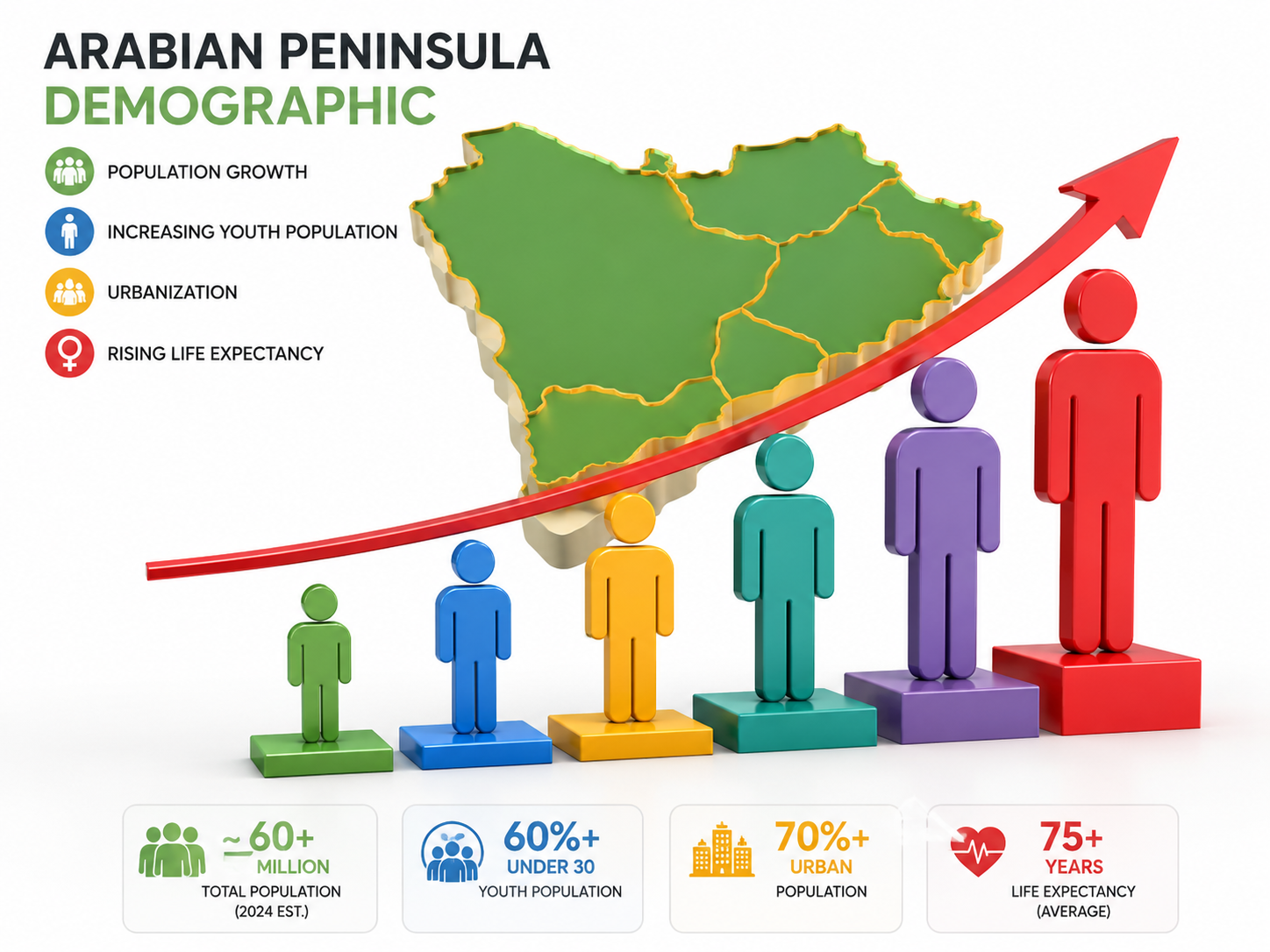

The Arabian Peninsula occupies a strategic position between Africa, Asia, and Europe.
Philip K. Hitti, Middle East Historian
The Arabian Peninsula stands as one of the most strategically vital landmasses on Earth. Stretching across the southwestern corner of Asia, it connects three continents and sits at the crossroads of global energy supply, trade routes, and geopolitical influence. Yet beyond its geography, the Arabian Peninsula population story is one of the 21st century's most striking demographic narratives a tale of explosive growth, mass migration, and rapid urban transformation.
Understanding population dynamics here matters not just for regional planners, but for global economists, energy analysts, and policymakers. From the oil-rich coasts of Kuwait to the rugged highlands of Yemen, demographic shifts are reshaping societies at an unprecedented pace.


Overview of the Arabian Peninsula
Geographical Boundaries and Significance
The Arabian Peninsula is bounded by the Red Sea to the west, the Arabian Sea and Gulf of Aden to the south, and the Persian Gulf (also called the Arabian Gulf) to the northeast. Covering approximately 3.2 million square kilometers, it is the world's largest peninsula. The region is dominated by vast desert terrain — including the Rub' al Khali (Empty Quarter), the largest continuous sand desert on the planet — alongside fertile coastal strips and mountainous zones in the southwest.
Its strategic importance is immense. Roughly 20% of the world's proven oil reserves lie beneath its sands, and major shipping lanes connecting Europe, Asia, and Africa pass through the Suez Canal and Strait of Hormuz, both directly influenced by peninsular geography. This makes the Arabian Peninsula not just a demographic subject of interest, but a region whose population trends reverberate across global markets.
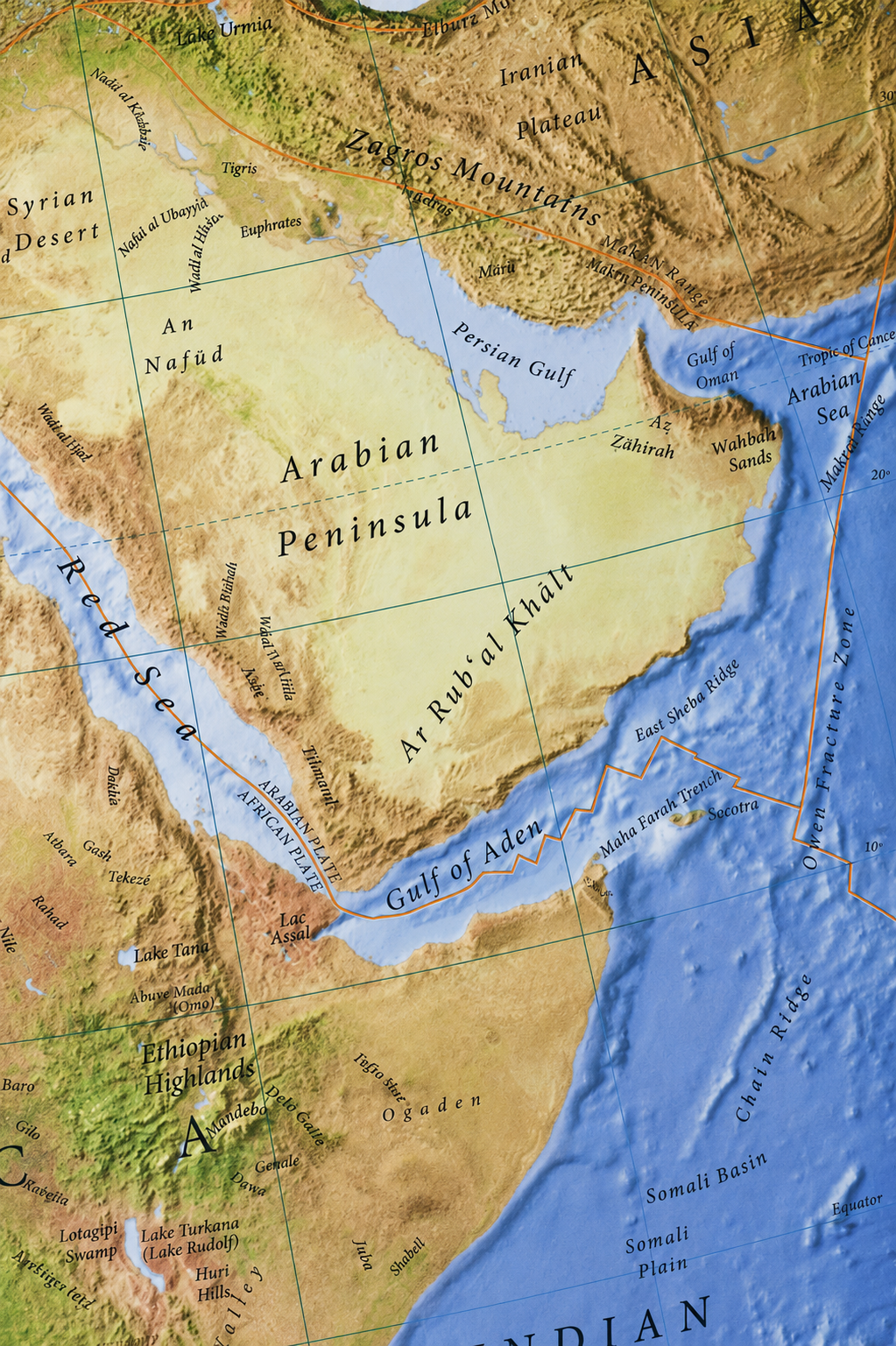
How Many Countries Are in the Arabian Peninsula?
How many countries are in the Arabian Peninsula is one of the most commonly searched questions about the region and the answer is seven sovereign nations. Each brings a distinct demographic profile, political structure, and economic character to the peninsula's overall composition.
| Country | Capital | Approx. Population |
|---|---|---|
| Saudi Arabia | Riyadh | ~37 million |
| Yemen | Sana'a | ~35 million |
| Oman | Muscat | ~4.9 million |
| United Arab Emirates | Abu Dhabi | ~10 million |
| Kuwait | Kuwait City | ~4.9 million |
| Qatar | Doha | ~3 million |
| Bahrain | Manama | ~1.8 million |
Population Statistics and Demographics
Total Arabian Peninsula Population and Distribution
The total arabian peninsula population across all seven countries currently stands at approximately 97–100 million people, though this figure is dynamic and contested due to the large share of unregistered migrant workers in several Gulf states. Saudi Arabia and Yemen together account for nearly 75% of this total, making them the demographic anchors of the region.
Population density varies enormously. Bahrain, the smallest nation by area, is one of the most densely populated countries in the Arab world, while Saudi Arabia's vast desert interior remains largely uninhabited. Urbanization is a dominant trend: over 85% of Gulf Cooperation Council (GCC) residents live in cities. Riyadh, Dubai, Abu Dhabi, Kuwait City, and Doha have all experienced explosive growth since the 1970s oil boom, transforming from modest settlements into global metropolises within two generations.
The Arabian Peninsula population is expected to surpass 120 million by 2040, driven primarily by high birth rates in Yemen and sustained labor migration into the GCC states.
Demographic Composition
The demographic composition of the arabian peninsula population is unlike almost anywhere else in the world. In GCC countries UAE, Qatar, Kuwait, Bahrain, Oman, and Saudi Arabia expatriates outnumber nationals by a significant margin. In Qatar and UAE, migrants represent over 85% of the total resident population, fundamentally altering the demographic character of these societies.
Age distribution skews young across the peninsula, particularly in Yemen, where nearly half the population is under 18. In contrast, GCC nations show a pronounced gender imbalance: male migrants from South and Southeast Asia dominate the labor force, creating male-to-female ratios as high as 3:1 in some Gulf states.
Ethnic diversity is considerable. Arab nationals form the core population, but significant communities of South Asians (Indians, Pakistanis, Bangladeshis, Nepalis), Southeast Asians (Filipinos, Indonesians), and East Africans reside throughout the region particularly in the UAE, Qatar, and Saudi Arabia
Factors Influencing Arabian Peninsula Population Growth
Natural Growth Rates
Natural population growth driven by births exceeding deaths remains robust across most of the peninsula. Yemen holds one of the highest total fertility rates in the Arab world, averaging around 3.8 children per woman, fueling a population that has more than tripled since 1980 despite ongoing conflict. Saudi Arabia's fertility rate has declined from above 7 in the 1980s to approximately 2.3 today, reflecting rising education levels, later marriages, and urban lifestyle shifts.
Death rates across the GCC are relatively low by global standards, thanks to advanced healthcare infrastructure and a predominantly young working-age population. However, Yemen's ongoing humanitarian crisis has significantly elevated mortality, complicating its demographic trajectory.
Migration and Labor Influx
No factor shapes the arabian peninsula population more dramatically than labor migration. The Gulf's development model has relied on imported labor since the 1960s, and today millions of workers from India, Pakistan, Bangladesh, the Philippines, and Ethiopia power the construction, hospitality, domestic service, and technology sectors of these economies.
The Kafala (sponsorship) system has been the primary legal framework governing migrant labor, though reforms are underway in Qatar, UAE, and Saudi Arabia following international pressure. Saudi Arabia's Vision 2030 initiative specifically addresses the need to reduce dependence on foreign labor by developing local human capital a policy that will significantly influence future arabian peninsula population figures.
Migration into the region is not one-directional: significant internal migration from Yemen to Saudi Arabia and the UAE also occurs, driven by conflict and economic opportunity.
The concentration of people along specific urban corridors is not accidental it is the direct result of decades of labor-driven migration shaping where cities grew and who built them. The video explores why the vast majority of Saudi Arabia's population is clustered within a remarkably small portion of the country's land area, a pattern rooted in the same economic forces that drew millions of migrant workers to the Arabian Peninsula. Watch it for a compelling visual explanation of how geography, oil wealth, and mass migration converged to produce today's settlement patterns.
Socio-Economic Implications of Population Trends
Economic Development
Population growth and the arabian peninsula's economic trajectory are deeply intertwined. Oil revenues have historically funded the social contracts of GCC states free education, healthcare, and subsidized utilities for nationals but a growing population creates fiscal pressure, particularly as hydrocarbon prices fluctuate. Saudi Arabia, Oman, and Bahrain have all launched diversification strategies to reduce oil dependency and create sustainable employment for their expanding young populations.
Yemen's case is starkly different. With a rapidly growing population, limited natural resources relative to its size, and a devastating civil war, its economic development has stalled and reversed. Remittances from Yemeni diaspora workers remain a lifeline for millions of families.
Urbanization and Infrastructure
The Arabian Peninsula's urban growth story is extraordinary. Cities like Dubai, Riyadh, and Doha have transformed almost beyond recognition over the past four decades. Dubai's population alone grew from around 265,000 in 1980 to over 3.6 million today a more than tenfold increase in 44 years. This has demanded massive investment in roads, metro systems, airports, water desalination, and housing.
Riyadh is currently undergoing one of the world's most ambitious urban transformation projects, with the NEOM megacity project and the development of several new special economic zones reshaping Saudi Arabia's settlement patterns. Meanwhile, smaller cities like Muscat and Manama are expanding their infrastructure networks to accommodate steady population growth.
1960s–70s
Oil boom begins; first wave of mass labor migration to the Gulf.
1980s
Gulf population doubles; major infrastructure buildout across GCC states.
1990s–2000s
Continued urbanization; Dubai and Doha emerge as global cities.
2010s
Arab Spring and Yemen conflict disrupt regional demographics; Vision 2030 launched.
2020s
Labor reform waves; post-pandemic migration shifts; population approaches 100 million.
Social Services and Education
Rapid population growth places sustained pressure on social services throughout the peninsula. GCC governments have invested heavily in world-class hospitals and universities to serve their expanding citizen populations King Abdullah University of Science and Technology (KAUST) in Saudi Arabia and Education City in Qatar are flagship examples. However, the sheer scale of expatriate populations creates parallel demand that strains planning systems.
In Yemen, the humanitarian crisis has devastated healthcare and education infrastructure. UNICEF estimates that millions of Yemeni children are out of school, and maternal mortality rates remain among the highest in the region. Addressing these disparities is central to any meaningful discussion of Arabian Peninsula population policy.
The Gulf states have built some of the world's most ambitious cities at record speed but population sustainability now depends on balancing growth with inclusion, opportunity, and long-term resource planning.
Regional Urban Planning Perspective
Future Projections and Challenges
Looking ahead, the arabian peninsula population is projected to grow significantly over the coming decades, though the pace varies sharply by country. United Nations estimates suggest the peninsula could house between 120 and 130 million people by 2040. Yemen is projected to drive much of this absolute growth, potentially reaching 50 million or more by mid-century if stability returns and fertility rates remain elevated.
GCC population growth will be more moderate in terms of nationals, but total resident populations may continue swelling if current economic development plans attract new waves of skilled and semi-skilled migrants. Saudi Arabia, as part of Vision 2030, aims to increase its resident population to 50 million by 2030 through immigration, tourism, and business investment reforms.
The arabian peninsula population narrative is one of contrasts and convergences: ancient civilizations and ultramodern skylines, extreme wealth and grinding poverty, demographic stagnation and explosive growth all within the same landmass. As governments across the region craft long-term visions for their economies and societies, demographic data becomes not just an academic exercise but a strategic imperative. Tracking how the arabian peninsula political map translates into population policies will be essential reading for anyone invested in the Middle East's future.
Summarise with AI:
Did you like this article? Leave a rating!

 Loading...