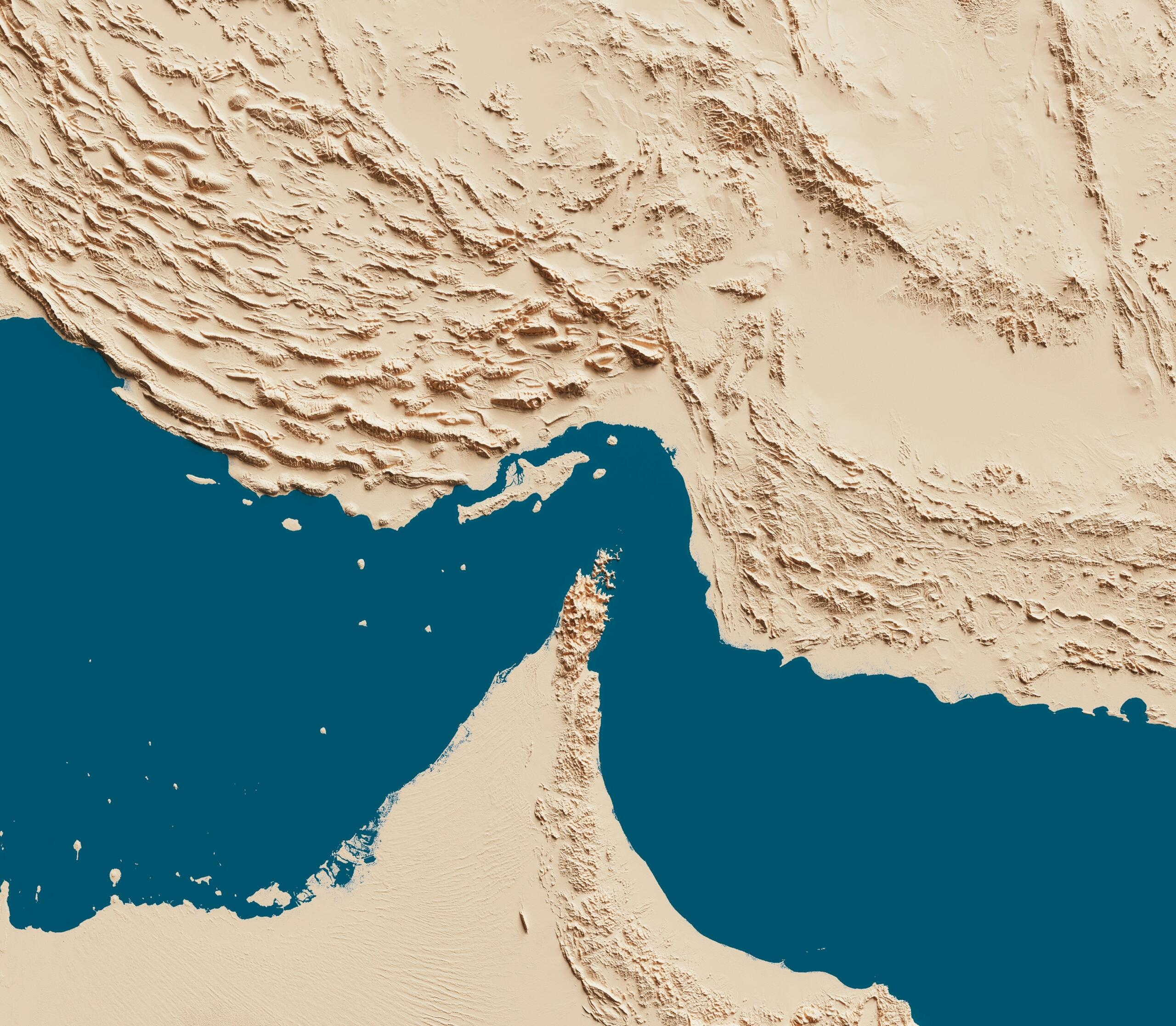

Every day, tankers loaded with millions of barrels of crude oil navigate a narrow stretch of water that keeps the global economy running. The Strait of Hormuz is not just a geographical feature it is the single most important maritime chokepoint on Earth. Connecting the Persian Gulf to the Gulf of Oman and the broader Arabian Sea, this waterway is the lifeline of international energy trade. Understanding what makes this passage so vital and so vulnerable matters to anyone who pays attention to energy prices, geopolitics, or global stability.
Approximately 20% of the world's petroleum passes through this chokepoint daily
Connects the Persian Gulf to the Gulf of Oman and the Arabian Sea
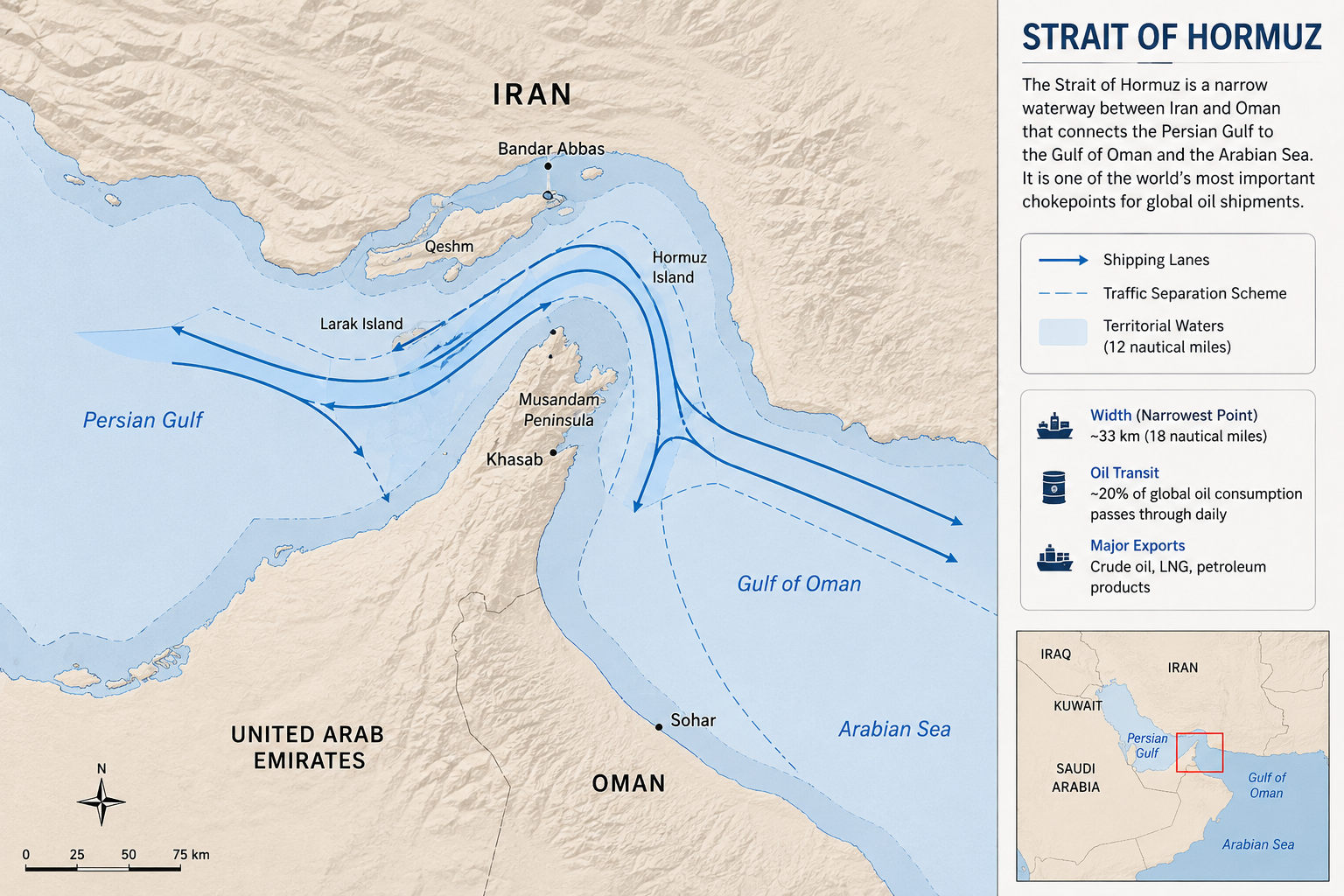
Width varies between 35 to 60 miles; the navigable shipping lanes are only about 2 miles wide
Bordered by Iran to the north and Oman's Musandam Peninsula to the south


Geographical Overview
Location and Dimensions
The Strait of Hormuz sits at the mouth of the Persian Gulf, positioned between Iran to the north and the Musandam Peninsula of Oman to the south. Stretching approximately 104 miles in length, the strait varies in width from roughly 35 to 60 miles. Despite this width, the internationally recognized shipping lanes are remarkably tight just two two-mile-wide lanes, one for inbound traffic and one for outbound, separated by a two-mile buffer zone.
The hormuz canal, as it is sometimes colloquially called, lies at a strategic crossroads between the Middle East's oil-producing heartland and the open waters of the gulf of hormuz, which leads vessels into the Arabian Sea and beyond. The geography alone makes it irreplaceable: there is simply no comparable alternative route for supertankers departing Gulf terminals.
The Strait of Hormuz is the world's most important oil chokepoint a passage so narrow that two supertankers can barely pass side by side, yet so vital that its closure would shake the foundations of the global economy.
U.S. Energy Information Administration
Surrounding Territories and Islands
Several islands dot the waters of the strait, the most significant being Qeshm, Hormuz, and Larak all under Iranian jurisdiction. Iran's port city of Bandar Abbas, located on the northern shore, is one of the busiest naval and commercial ports in the region and serves as a critical hub for Iranian maritime operations. The Musandam Peninsula on the Omani side, though geographically separated from the Omani mainland, forms the southern gateway of the passage.
Historical Significance
Ancient Trade Routes
Long before the age of oil, the waters around the hormuz canal were bustling with merchant vessels carrying spices, textiles, and precious metals between Mesopotamia, the Indian subcontinent, and East Africa. The island of Hormuz itself was once a powerful medieval trading kingdom, so wealthy and cosmopolitan that the Portuguese navigator Afonso de Albuquerque seized it in 1507. That conquest and the subsequent Portuguese dominance of the strait for over a century illustrates how empires have always understood the chokepoint's commercial leverage.
Modern Conflicts and Key Events
1507
Portuguese capture the island of Hormuz, establishing dominance over strait trade
1980–1988
Iran-Iraq War the "Tanker War" phase sees hundreds of merchant vessels attacked in the Gulf
1987–1988
US Navy escorts Kuwaiti tankers under Operation Earnest Will to protect oil shipments
2011
Iran threatens to close the strait in response to Western sanctions
2019
Multiple tanker seizures and attacks near the strait escalate US-Iran tensions
2023–2024
Heightened military posturing as regional instability again focuses attention on the chokepoint
2026
Armed conflict erupts between the United States, Israel, and Iran. In response to military strikes on its territory, Iran closes the Strait of Hormuz to foreign shipping; the IRGC issues warnings forbidding passage, boards and attacks merchant ships, and lays sea mines in the strait.
Economic Importance
Oil and Gas Transit
The numbers surrounding the Strait of Hormuz are staggering. Roughly 20 to 21 million barrels of crude oil and petroleum products pass through the chokepoint every single day, accounting for approximately 20% of global petroleum consumption. The passage is equally critical for liquefied natural gas (LNG): Qatar, the world's largest LNG exporter, ships virtually all of its output through this corridor, making the gulf of hormuz the gateway for a significant share of global gas supply as well.
The countries most dependent on Hormuz transit include China, Japan, South Korea, and India collectively the world's largest oil importers. For these economies, any disruption in the strait translates almost immediately into fuel shortages, price spikes, and industrial slowdowns.
| Year | Estimated Daily Oil Transit (Million Barrels) |
|---|---|
| 2010 | ~15.5 |
| 2015 | ~17.0 |
| 2019 | ~20.6 |
| 2022 | ~21.0 |
| 2024 | ~20.5 (est.) |
Impact of Potential Closures
For decades, economists modeled what a Strait of Hormuz closure might cost the world. In 2026, those models became reality.
When the strait effectively shut down in early March 2026, the consequences were immediate and severe. Oil prices surged past $120 per barrel the sharpest monthly rise ever recorded. Qatar's LNG exports froze entirely. Gulf producers had no choice but to curtail output as storage filled and exports stalled, pulling millions of barrels per day off the global market almost overnight.
The damage spread far beyond fuel. Supply chains for plastics, fertilizers, pharmaceuticals, and electronics came under pressure within weeks. War-risk insurance premiums made the passage commercially unviable for most shipping companies, and vessels either rerouted around longer, costlier paths or sat idle in port.
Geopolitical Dynamics
Territorial Jurisdictions
The strait falls under the territorial waters of both Iran and Oman, meaning there is no international water passage through it vessels must transit through one nation's waters or the other. Iran controls the northern half and has repeatedly signaled its willingness to use the strait as a geopolitical lever, particularly during periods of tension with the United States or during debates over international sanctions. Oman, by contrast, has historically maintained a more neutral diplomatic posture, serving as a back-channel between Iran and Western nations.
International Maritime Law
Under the United Nations Convention on the Law of the Sea (UNCLOS), the Strait of Hormuz is subject to the doctrine of "transit passage," which guarantees all vessels including warships the right of unimpeded passage through international straits used for navigation. Iran is notably one of the few major maritime nations that has not ratified UNCLOS, meaning it does not formally recognize this right of transit passage. This legal ambiguity has been a persistent source of tension, as Iran has from time to time claimed the authority to regulate or restrict passage.
Environmental and Geological Aspects
Unique Geological Features
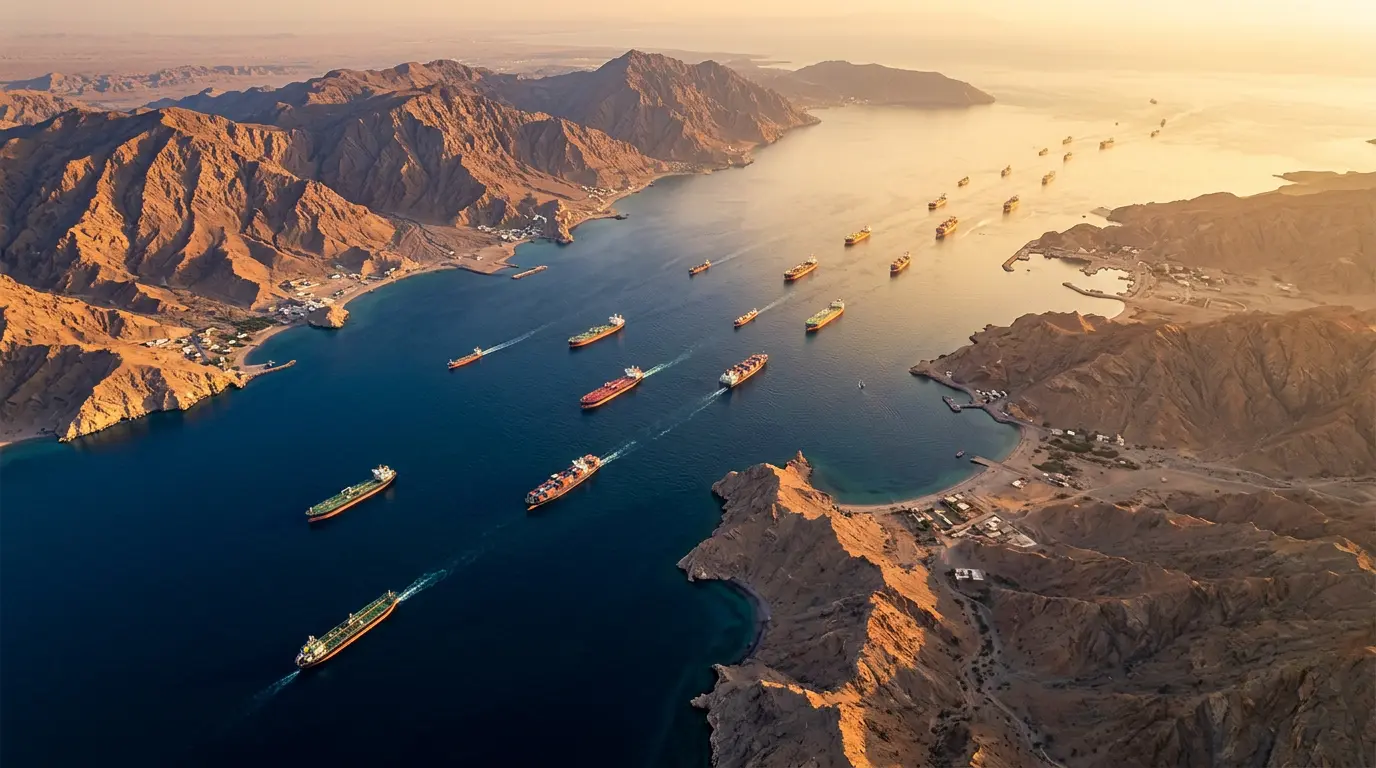
The strait's formation is the product of the same tectonic forces that built the Zagros Mountains. The collision of the Arabian Plate with the Eurasian Plate created a folded and faulted landscape, and the strait itself is the flooded remnant of a river valley that was submerged as sea levels rose after the last Ice Age. The seabed geology is complex, featuring salt domes that have historically made navigation challenging for submarines, a factor that plays into the military calculus of any power projecting force into the region.
The hormuz canal sits in a zone of ongoing seismic activity, a geological reminder that the physical stability of the passage is itself not guaranteed over geological timescales.
Environmental Concerns
The sheer volume of tanker traffic through the gulf of hormuz creates persistent environmental pressure. Ballast water exchanges, minor oil spills, and the risk of catastrophic accidents from fully loaded supertankers all pose threats to the marine ecosystems of the Arabian Gulf. Coral reefs and mangroves along the Omani coastline are particularly vulnerable. The narrow waterway concentrates vessel traffic in ways that magnify any environmental incident, and the region's extreme summer heat further stresses marine life already exposed to naturally high salinity levels.
Current Developments and Future Outlook
Recent Events
The years 2025 and 2026 marked a turning point for the Strait of Hormuz. What had long been treated as a theoretical vulnerability became an active crisis almost overnight. In early 2026, armed conflict erupted in the region and Iran responded by closing the strait to foreign shipping. Tanker traffic collapsed by 90%, oil prices surged past $120 per barrel, and QatarEnergy halted all LNG exports. Energy agencies described it as the worst supply disruption in the history of global oil markets.
As of June 8, 2026, the Strait of Hormuz has been effectively closed for 94 days the longest uninterrupted disruption to the world's most critical oil chokepoint in modern history. In that time, oil prices surged past $120 per barrel, Gulf states lost an estimated $1.1 billion per day in oil revenues, and QatarEnergy halted all LNG exports. Fuel shortages have been reported across parts of Asia, freight costs have multiplied, and global inflation has accelerated. What was once the world's busiest energy corridor now sees a fraction of its normal traffic with no clear reopening date in sight.
Diplomatic efforts struggled to keep pace with events on the ground. A UN Security Council resolution calling for the strait's reopening was vetoed in early April. Tehran briefly declared the passage open on April 17, only for the IRGC to reverse that decision within 24 hours. As of mid-2026, the strait remains effectively closed, with a fragile ceasefire in place but almost no commercial shipping moving through.
Strategic Initiatives and the Road Ahead
The 2026 crisis exposed just how few real alternatives exist to the Strait of Hormuz. Saudi Arabia and the UAE have bypass pipelines, but their combined capacity covers only a fraction of normal daily throughput. Iraq, Kuwait, Qatar, and Iran have no bypass options at all for these countries, the strait is the only exit.
Beyond the energy dimension, the crisis accelerated a broader strategic rethink. Governments across Europe and Asia have begun diversifying supply sources and fast-tracking energy transition investments, not out of environmental idealism but out of necessity. Whether this crisis ultimately shortens the world's dependence on Gulf oil remains to be seen but the direction of travel has shifted, and the strait's chokehold on global energy will likely define geopolitical calculations for years to come.
Summarise with AI:
Did you like this article? Leave a rating!

 Loading...