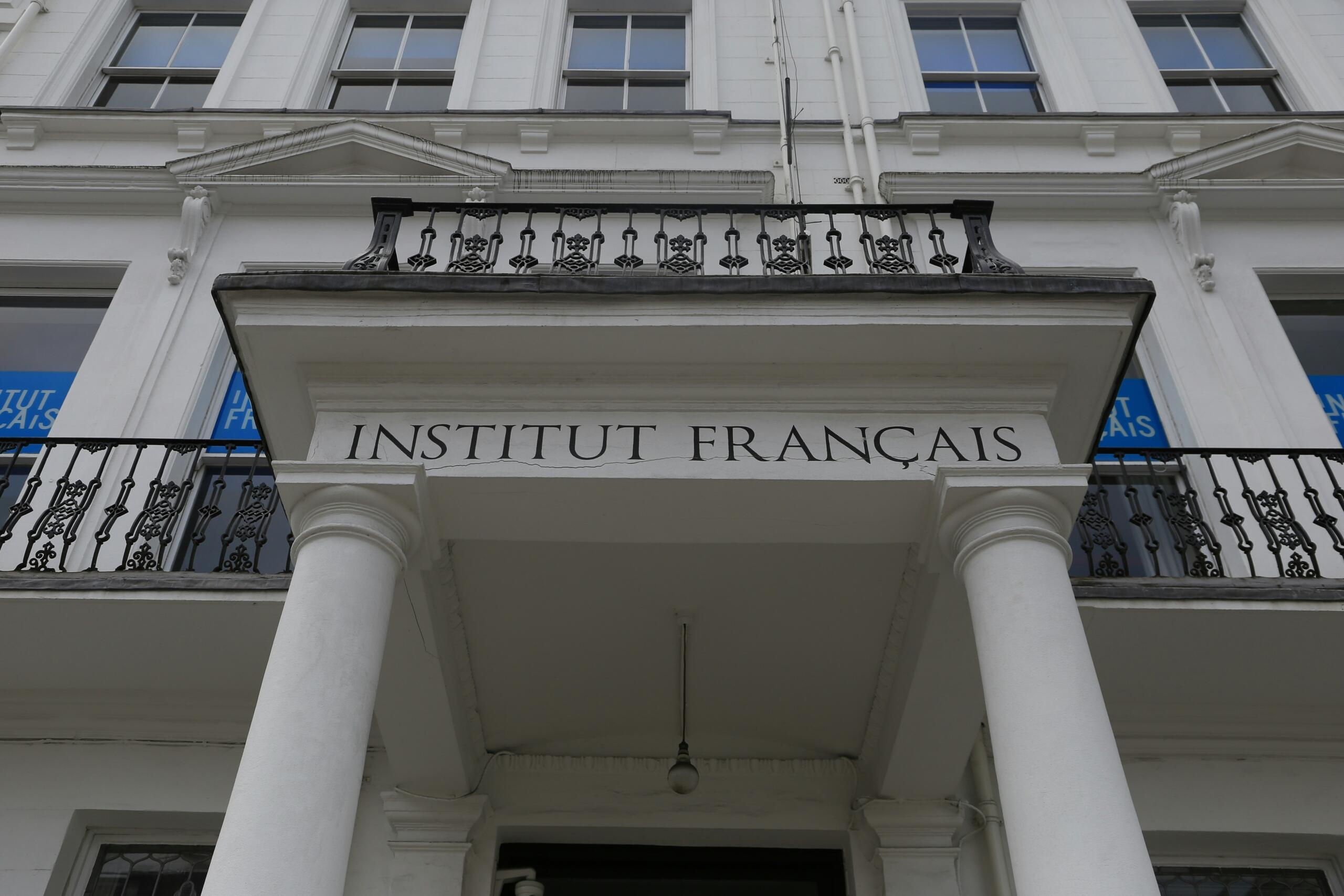

The French school system is a nationally structured education model divided into clear stages: early childhood, elementary school, middle school, and high school. It follows a standardized French curriculum set by the Ministry of Education, with consistent expectations across most schools in France and many French curriculum schools abroad. Students progress through specific cycles, study core academic subjects, and finish high school with the baccalauréat, the main national diploma that opens the path to higher education.
🗣️ Language of Instruction: French (with intensive foreign language tracks)
👶 Compulsory Age: 3 to 16 years old
📊 Core Assessment: 20-point grading scale
🎓 Key Diploma: Baccalauréat (Lycée completion)
🏛️ Governing Body: French Ministry of National Education


What is the French school system?
The french school system is renowned worldwide for its centralized organization, academic rigor, and structured pedagogical approach. Overseen directly by the French Ministry of National Education (Ministère de l'Éducation nationale), the framework ensures that every student across the country receives the same baseline education, regardless of their location.
Unlike decentralized education models where local districts set learning goals, the French school curriculum is uniform. This centralized architecture provides seamless transitions for students moving between towns or attending international French schools globally.
A national education system with shared standards
At the heart of the French school system is the commitment to equity and academic excellence. The national framework breaks schooling down into multi-year "cycles" designed to build analytical thinking, written expression, and foundational skills. Teachers follow strict national learning goals, ensuring that a pupil in Paris covers the exact same material as one in Lyon or Marseille.
How the French model differs from more decentralized systems
Compared to Anglo-American education models which often emphasize early subject choices, extracurricular performance, and localized testing the French model focuses heavily on core academic disciplines, critical reasoning, and standardized written examinations. Personal development is integrated, but academic achievement remains the central metric of progression.
| Stage | French Name | Age Range | Duration | Key Diploma / Target |
|---|---|---|---|---|
| Preschool | École maternelle | 3 to 6 years | 3 years | Socialization & early language |
| Elementary | École élémentaire | 6 to 11 years | 5 years | Core literacy & numeracy foundations |
| Middle School | Collège | 11 to 15 years | 4 years | Diplôme National du Brevet (DNB) |
| High School | Lycée | 15 to 18 years | 3 years | Baccalauréat (General, Tech, or Vocational) |
How the French school system is organized by school stage
Navigating the primary and secondary education pathway in France involves four sequential levels. Understanding this progression helps parents support their children effectively through key academic transitions.
Stage 1: Early Childhood (École Maternelle)
Ages: 3 to 6 years old (Compulsory) Structure: Petite Section (PS) ➔ Moyenne Section (MS) ➔ Grande Section (GS) Focus: Language acquisition, socialization, emotional maturity, motor skills, and early introduction to counting and arts. Sets the foundation for lifelong learning.
Stage 2: Elementary School (École Élémentaire)
Ages: 6 to 11 years old (5-year duration) Structure: CP ➔ CE1 ➔ CE2 ➔ CM1 ➔ CM2 Focus: Building essential competencies in reading, writing, fundamental mathematical operations, and civic studies.
Stage 3: Middle School (Collège)
Ages: 11 to 15 years old (4-year duration) Structure: 6ème ➔ 5ème ➔ 4ème ➔ 3ème Focus: Transition to subject specialization with dedicated teachers. Expands abstract thinking, foreign languages, scientific inquiry, and historical analysis. Key Milestone: Concludes with the Diplôme National du Brevet (DNB) exam.
Stage 4: High School (Lycée)
Ages: 15 to 18 years old (3-year duration) Structure: 2nde ➔ 1ère ➔ Terminale Focus: Academic stream selection tailored to higher education aspirations, critical reasoning, and exam readiness. Key Milestone: Concludes with the national Baccalauréat examination.
French curriculum explained
The national french curriculum provides a comprehensive and balanced educational framework. It ensures that students develop broad knowledge alongside rigorous intellectual disciplines.
What students learn in the French curriculum
The overarching french school curriculum is structured around the Socle commun de connaissances, de compétences et de culture (Common core of knowledge, skills, and culture). This framework mandates mastery in five core areas:
- Languages for thinking and communicating.
- Methods and tools for learning.
- Formation of the person and the citizen.
- Natural systems and technical systems.
- Representations of the world and human activity.
Core subjects across all levels
While depth increases at higher stages, key subject pillars remain constant:
- French Language & Literature: Grammar, spelling, literary analysis, and oral debate.
- Mathematics: Problem-solving, geometry, algebra, and logic.
- Sciences: Biology, geology, physics, and chemistry.
- Humanities: History, geography, and moral/civic education (EMC).
- Modern Languages: English plus a secondary foreign language (Spanish, German, Italian, etc.).
- Arts & Sports: Visual arts, music history, and physical education.
How the curriculum balances academics and personal development
While academic rigor is paramount, the french curriculum reserves dedicated time for physical education, creative arts, and citizenship studies. Students learn personal responsibility, democratic values, and structured debate alongside pure academic subjects.
French curriculum for elementary school
The french curriculum for elementary school focuses on mastering fundamental academic tools. The core philosophy centers on the principle that strong reading, writing, and mathematical fluency are essential prerequisites for all future learning.

Primary Academic Focus
- Literacy: Intensive phonics, daily reading comprehension, grammar analysis, and dictation (dictée).
- Numeracy: Mental arithmetic, place value, basic operations, and geometric shapes.
Secondary & Exploratory Subjects
- Science & Tech: Observing living organisms, matter, and simple technical objects.
- Humanities: Local history, geography, civic rules, and artistic discovery.
What children learn in primary grades
In CP and CE1, reading fluency and basic mathematics dominate the daily timetable. As children move into CE2, CM1, and CM2, lessons expand to include formal history and geography modules, basic scientific experimentation, art history, and an introduction to a foreign language (most commonly English).
Language and mathematics as the core focus
French elementary schools dedicate over half of weekly instructional time to language arts and mathematics. A signature feature of the french curriculum for elementary school is la dictée (spelling dictation), which reinforces grammar rules, vocabulary, and agreement rules in context.
Other subjects in elementary school
Physical education, musical instruction, and visual arts are integrated throughout the week. Civic education (Éducation morale et civique) teaches pupils community participation, digital safety, and environmental stewardship.
How learning is evaluated
Assessment in elementary school avoids high-stakes numerical grades in early years, preferring competency skill checklists (Livret Scolaire Unique). Teachers assess whether specific skills are acquired, developing, or requiring additional support.
French curriculum for high school
High school (lycée) represents the academic peak of secondary education. The french curriculum for high school transitions students from general studies toward specialized academic disciplines required for university entry.
"The high school reform ensures that students build a strong general academic foundation while selecting specialized disciplines that match their higher education goals."
Educational Policy Overview
Lycée structure and study tracks
High school spans three years:
- Seconde (10th Grade): A general transition year where all students follow a common curriculum while testing elective options.
- Première (11th Grade): Students select three specialized subjects (spécialités) alongside core general classes.
- Terminale (12th Grade): Students narrow their focus to two specialized subjects, preparing directly for the final exams.
Students choose between three primary pathways:
- General Track (Voie générale): Theoretical and academic preparation for university and higher education.
- Technological Track (Voie technologique): Applied sciences, management, industrial technologies, and healthcare.
- Vocational Track (Voie professionnelle): Direct career preparation leading to trade certificates (CAP) or vocational diplomas (Bac Pro).
How specialization works in high school
Under the modern french curriculum for high school, traditional rigid streams (S, ES, L) have been replaced by flexible specialty combinations. Students can combine mathematics with humanities, or biology with economics, creating personalized educational profiles.
The role of the baccalauréat
The Baccalauréat (commonly called le Bac) is both the secondary school exit diploma and the entry qualification for university. It combines continuous assessment (contrôle continu, accounting for 40% of the final mark) with final national examinations (accounting for 60%, including a major oral presentation called the Grand Oral).
How grading and assessment work in the French school system
Assessment in the French school system is rigorous, transparent, and structured around a precise numerical scale.
🏆 20 / 20 : Exceptional (rarely awarded)
🌟 16 – 19 : Outstanding / Excellent
✨ 14 – 15 : Very Good (Mention Bien)
👍 12 – 13 : Good (Mention Assez Bien)
✅ 10 – 11 : Satisfactory / Passing grade
⚠️ Below 10 : Failing grade (Rattrapage or retake needed)
The French grading scale
Work in French secondary schools is marked out of 20. Achieving a perfect 20/20 is exceptionally rare, as marks above 16 reflect superior work. A mark of 10/20 is the standard passing threshold for tests, subject modules, and national diplomas.
Classroom assessment vs final exams
Throughout the term, students sit for regular written tests, oral assessments, and unannounced quizzes (interrogations écrites). Progress report cards (bulletins scolaires) are issued quarterly or bi-annually, providing detailed teacher feedback and class averages.
Promotion to the next grade or cycle
At the end of each school year, the teaching staff council (conseil de classe) reviews student performance. If a pupil experiences significant academic delays, the council may recommend repeating the year (redoublement), though this practice has become increasingly regulated in recent years.
🎓 Key Diplomas & Progression Routes
The french school system features clear qualifications marking transitions between educational tiers. Students progress through structured checkpoints that validate their learning before moving on to higher levels.
From collège to lycée
At the end of middle school (3ème), students sit for their first major state examination: the Diplôme National du Brevet (DNB). This assessment evaluates core competencies in French, mathematics, history, geography, sciences, and oral expression, certifying that the student has successfully completed their compulsory lower secondary education.
Baccalauréat and its importance
Obtaining the Baccalauréat (or le Bac) is a crucial milestone in the French academic journey. Serving as both the high school exit diploma and the entry credential for higher education, it confirms a student's academic maturity. Passing the Bac grants automatic rights to register at public French universities while opening competitive pathways toward elite higher education institutions.
After high school: study options
Once students graduate, they can choose from several distinct post-secondary pathways:
- Universities: Public academic institutions offering standard degree programs (Licence, Master, Doctorate).
- Grandes Écoles: Highly selective higher education institutions accessed through competitive entrance exams (concours) or two-year preparatory classes (CPGE).
- Technical Institutes: Short, professionalized degree tracks such as the BTS or BUT, which focus on practical skills and direct workforce integration.
French curriculum schools abroad: what changes and what stays the same?
Families living outside France often choose French international schools accredited by the Agency for French Education Abroad (AEFE). These institutions deliver the official french school curriculum worldwide.
| Feature | Schools in France | French Curriculum Schools Abroad |
|---|---|---|
| Curriculum & Standards | Official Ministry Curriculum | Identical Official Ministry Curriculum |
| Language of Instruction | Primarily French | French with enhanced bilingual/multilingual tracks |
| School Calendar | Standard French term dates | Adjusted for local regional holidays |
| Diplomas Offered | Brevet and Baccalauréat | Brevet, Baccalauréat, and local certifications |
| Student Body | Predominantly local French | Mix of French expats, local nationals, & third-country expats |
🇦🇪 French Curriculum Schools in Dubai
Accredited French curriculum schools in dubai follow strict AEFE guidelines, ensuring seamless transferability to France or any global hub.
Ideal For:
- French expats needing continuous curriculum standards.
- Families seeking trilingual fluency (French, English, Arabic).
- Students targeting top-tier European and global universities.
📋 Parent Checklist Before Enrolling
- Accreditation: Verified by the French Ministry of Education (AEFE)?
- Local Quality: High KHDA (Dubai Education Authority) rating?
- Language Support: FLE (Français Langue Étrangère) programs for non-native speakers?
- Language Tracks: Balanced English, Arabic, and third-language options?
Summarise with AI:
Did you like this article? Leave a rating!

 Loading...