

A German international school represents a distinct blend of structured European academics, holistic personal development, and global cultural integration. Designed specifically for German-speaking expatriate families, multilingual households, and international students seeking high academic standards, these institutions offer a seamless bridge between European education systems and the dynamic educational landscape of the United Arab Emirates. For families living in the UAE, finding the right educational environment is a top priority. This comprehensive guide covers the primary educational pathways across Dubai, Sharjah, and Abu Dhabi, outlining everything parents need to know about curriculum structures, entry requirements, campus facilities, and admissions processes before submitting an application.
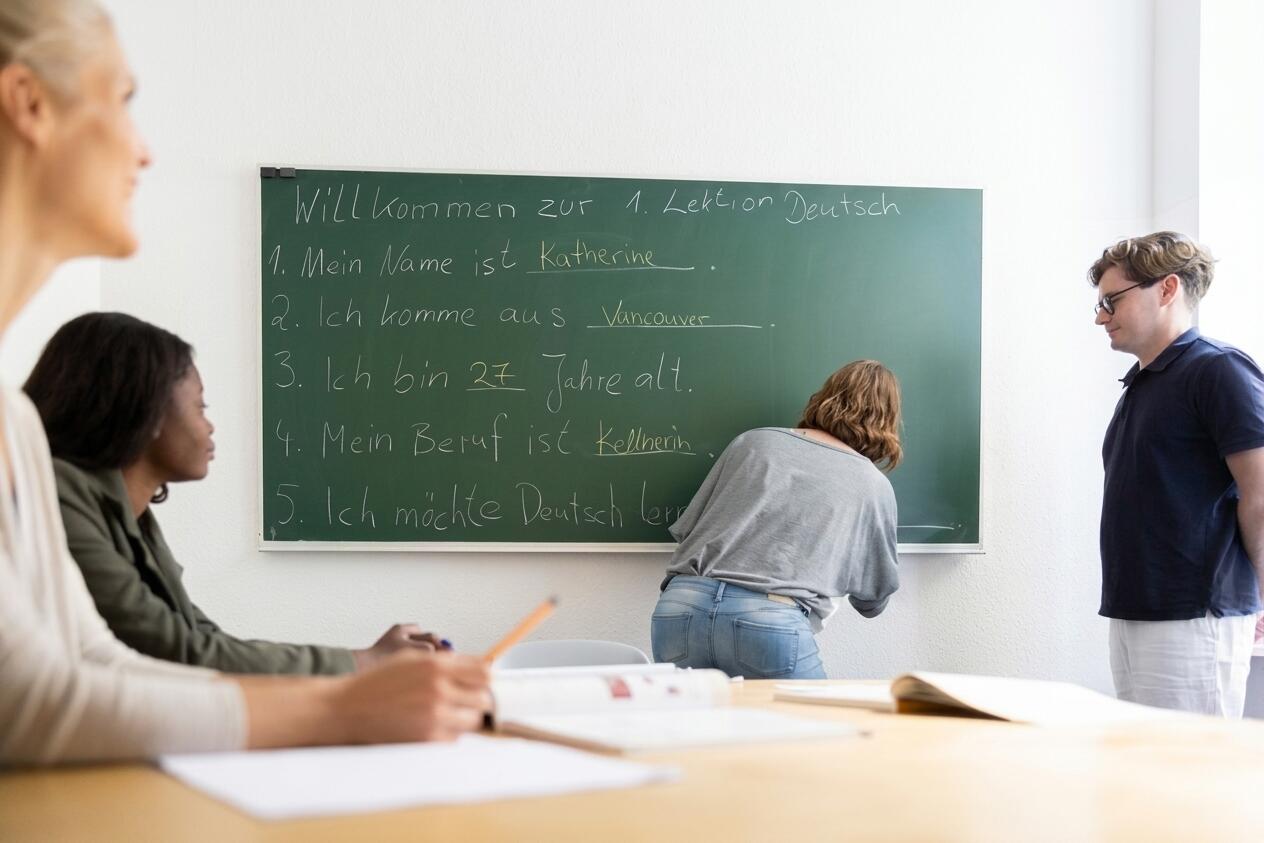
A German international school is an educational institution that follows a recognized German state curriculum or a German-language education framework, often culminating in qualifications such as the Deutsches Internationales Abitur (DIA) or the Gemischtsprachiges International Baccalaureate (GIB). In the UAE, parents actively searching for a German school in Dubai, Sharjah, or Abu Dhabi generally seek an environment that pairs rigorous academic standards and multilingual fluency with cultural continuity and global university recognition.


What Is a German International School?
Definition and educational model
A German international school is characterized by its adherence to the educational standards set by the Standing Conference of the Ministers of Education and Cultural Affairs in Germany (KMK). Unlike standard international schools that may only offer German as a foreign language elective, these institutions deliver core subjects such as mathematics, sciences, history, and literatureeither fully in German or through a dual-language immersion track. The educational model balances rigorous cognitive development with practical inquiry, fostering analytical thinking, independent problem-solving, and deep subject mastery from early childhood through secondary education.
Who the school is suitable for
- German, Austrian, and Swiss expatriates: Families who desire educational continuity so their children can seamlessly reintegrate into home country school systems upon return.
- Multilingual families: Households looking to raise fully bilingual or trilingual children with native-level proficiency in both German and English.
- Ambitious local and international students: Learners whose families value structured, STEM-focused academics and European cultural literacy.
- Future European university applicants: Students aiming to pursue higher education in Germany, Austria, Switzerland, or across the European Union without needing additional foundation years.
What parents can expect
Parents enrolling their children in a German international school can expect a disciplined, supportive environment centered on linguistic mastery and academic integrity. Classes are designed to build critical thinking rather than rote memorization. Furthermore, students benefit from a diverse, international student body that promotes cross-cultural understanding while preserving core European educational values.
🏫 German International School: Full German state curriculum, primary instruction in German/bilingual, leads to the Abitur or GIB.
🗣️ German-Language School: Emphasizes German language acquisition alongside a local or international curriculum framework.
🌍 International School with German Tracks: Standard IB or British curriculum school offering advanced German language electives.
| School Type | Primary Language of Instruction | Main Exit Qualification | Ideal Candidate |
|---|---|---|---|
| German International | German / English (Bilingual) | Abitur / DIA / GIB | Expat & bilingual families seeking European pathways |
| German-Language Track | English (with heavy German modules) | IB Diploma / A-Levels | Native English speakers wanting strong German skills |
| Standard International | English | IB / High School Diploma | Students seeking global exposure without German focus |
Why Choose a German International School?
Academic strengths
The core strength of the German curriculum lies in its structured progression and early emphasis on foundational literacy, numeracy, and scientific inquiry. Primary education (Grundschule) focuses on fundamental understanding and social competence, building a resilient foundation. As students progress into secondary education (Gymnasium level), the curriculum increases in analytical rigor, preparing students for complex problem-solving in mathematics, natural sciences, and humanities.
Cultural and language benefits
Attending a main kw German international school guarantees continuous language development in both German and English, often accompanied by Arabic and French or Spanish in upper grades. For expatriate families, this environment preserves cultural identity, traditions, and native linguistic nuances. For non-German families, it provides an authentic immersive experience that opens lifelong global opportunities.
Long-term education pathway
The qualifications earned at an accredited German international school—specifically the Abitur—are globally recognized and highly respected. Holders of the Abitur gain direct entry into public universities across Germany, Switzerland, and Austria, which are famous for world-class engineering, medicine, and tuition-free higher education. Moreover, top universities in North America and the UK hold the Abitur in equal standing with A-Levels and the IB Diploma.
"A German-based education does not merely teach facts; it trains young minds to analyze critically, communicate across cultures, and solve complex global challenges with precision."
Education Specialist & Curriculum Analyst
German School Options in the UAE
For families committed to the German educational model in the UAE, geographical convenience is a key consideration. The dynamic cities of Dubai, Sharjah, and Abu Dhabi each provide distinct opportunities for accessing a German school Dubai curriculum, though the institutional landscape varies significantly between them. While Dubai remains a central hub with established campuses, residents of Sharjah often utilize efficient commutes to nearby Dubai locations, and families in the capital, Abu Dhabi, have dedicated local options serving a professional expatriate community. Choosing the right city and school depends on balancing academic rigor with daily lifestyle and transport needs.
German School Dubai
- Focus: Top-tier academics & high KHDA ratings.
- Facilities: Modern STEM labs & K–12 pathways.
- Community: Ideal for expats in central Dubai.
- Best For: Families in Meydan, Academic City, & central areas.
German School Sharjah
- Focus: Residential proximity & family living.
- Logistics: Daily bus routes to neighboring campuses.
- Flexibility: Affordable lifestyle with top schooling.
- Best For: Families commuting from Sharjah to Dubai.
German School Abu Dhabi
- Focus: ADEK-accredited capital standards.
- Network: Strong diplomatic & corporate ties.
- Curriculum: Full German state alignment.
- Best For: Residents on Abu Dhabi Island & mainland.
What to Look for in the Best German International School
Curriculum and accreditation
Ensure the school is officially recognized by the Central Agency for German Schools Abroad (ZfA) and holds accreditation as an "Exzellente Deutsche Auslandsschule" (Excellent German School Abroad). Verify whether the secondary school pathway offers the traditional Abitur, the Deutsches Internationales Abitur (DIA), or the bilingual Gemischtsprachiges IB (GIB).
Admission requirements
Understanding entry criteria prevents delays. Schools typically assess language proficiency based on the student's age:
- Kindergarten & Early Primary: Minimal prior German required; immersive exposure provided.
- Late Primary & Lower Secondary: Basic to intermediate German comprehension tested.
- Upper Secondary (Gymnasium): High German proficiency (B2/C1 level) required to handle complex academic subjects.
Facilities and student support
Top institutions boast modern science laboratories, dedicated robotics spaces, extensive sports fields, indoor swimming pools, and creative arts studios. Additionally, review the pastoral care frameworks and inclusion policies to ensure comprehensive support for children with diverse learning needs.
Parent experience
A strong German international school maintains transparent, regular communication with parents via dedicated portals, parent-teacher committees, and community events. Look for institutions that foster a tight-knit family atmosphere through seasonal festivals (like St. Martin or Christmas Markets) and robust extracurricular programs.
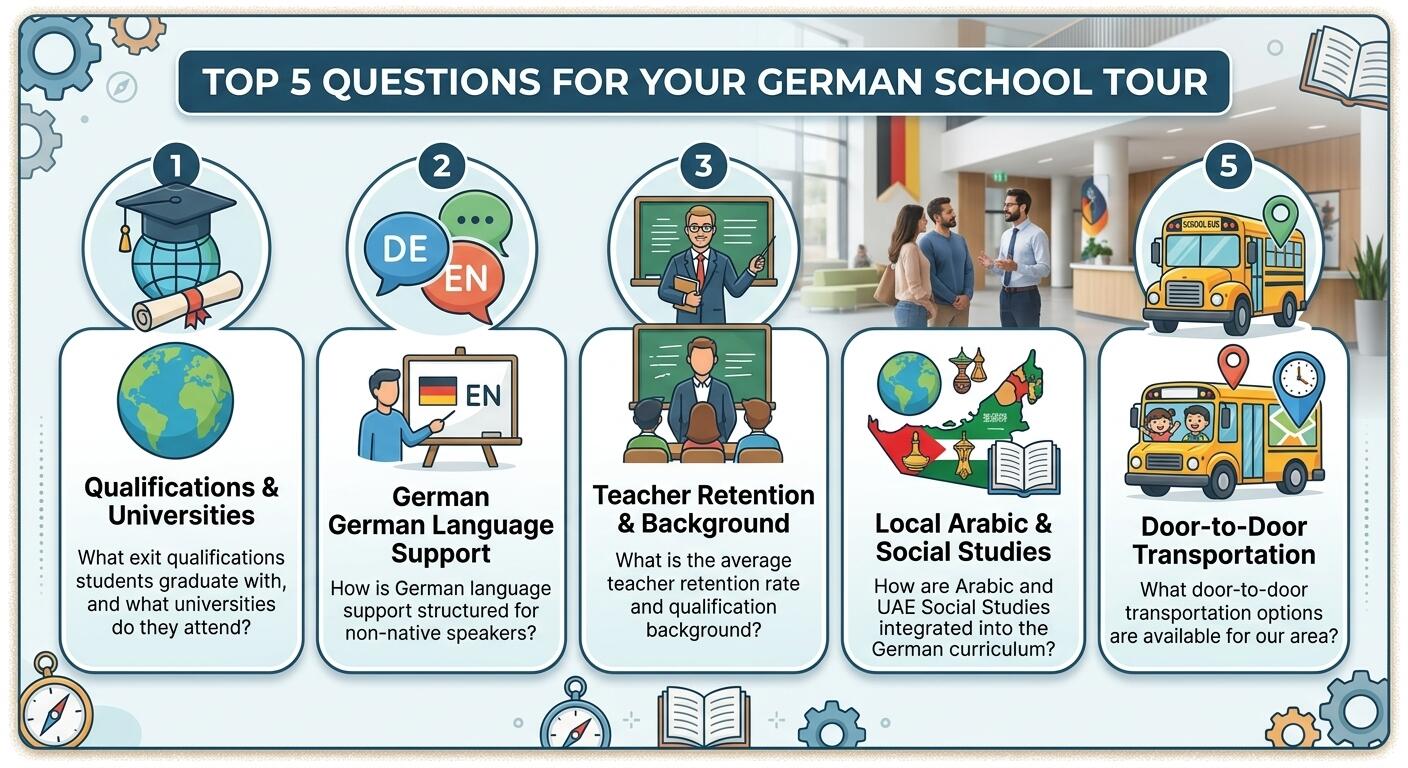
Is a German International School Right for Your Child?
Best fit scenarios
- Your family intends to return to Germany, Austria, or Switzerland in the future.
- You want your child to graduate with fluent multilingual skills (German, English, Arabic).
- You value a structured, highly academic educational philosophy with strong analytical standards.
- Your target higher education destinations include top European universities.
When it may not be the best fit
- Your child is entering upper secondary school with zero prior exposure to the German language.
- Your family prefers a completely unstructured, purely project-based alternative educational model.
- The daily travel time from your residence to the campus creates an exhausting commute for the child.
How to decide
Evaluate your child's current language level, long-term university plans, and daily lifestyle constraints. Visiting campuses in person and speaking directly with admissions officers and current parents will give you the clearest picture of whether a German international school environment aligns with your educational goals.
Admission Process for a German International School
Step-by-step overview
Navigating admissions requires early planning and attention to documentation deadlines:
Step 1
Online Inquiry & Application
Submit an initial application form via the school portal along with preliminary student records.
Step 2
Document Submission
Upload all required legal documents, academic transcripts, and medical records.
Step 3
Assessment & Interview
The student attends a age-appropriate assessment evaluating German/English language skills and mathematical capabilities.
Step 4
Formal Offer & Seat Acceptance
Upon successful assessment, receive the official offer letter and pay the registration deposit to secure the seat.
Step 5
Ministry Registration
Finalize local ministry registration (KHDA or ADEK) using Emirates ID details.
Common documents required
To ensure a smooth admission process, prepare the following documents well in advance:
- Student and parents' passport copies with valid UAE residence visas.
- Student and parents' Emirates ID copies (front and back).
- Official birth certificate (attested if required).
- Transfer certificate from the previous school (attested by educational authorities).
- Last two years of official school report cards/transcripts.
- Up-to-date vaccination and medical history records.
Useful preparation tips
Apply as early as possible—often up to a year in advance—as places in early primary grades and kindergarten fill up quickly. If your child is transitioning from a non-German curriculum, consider arranging private language tutoring prior to the entrance assessment to build vocabulary and confidence.
Fees, Calendar, and Practical Considerations
Tuition overview
Tuition fees at a German international school in the UAE vary depending on the grade level, campus infrastructure, and specialized services. Generally, fees scale upward from Kindergarten (KG) to Secondary II (Oberstufe). Parents should also factor in additional mandatory or optional expenses, including:
- Application and registration deposits.
- Annual text books and digital learning materials.
- Official school uniforms and PE kits.
- School bus transportation services.
- After-school extracurricular activities and educational field trips.
School calendar
The academic year typically runs from late August or early September to late June or early July, divided into three terms or two semesters. The calendar aligns with UAE official holidays while also observing key traditional European school breaks, such as Autumn break, Winter break, Spring break, and May/June holidays.
Commute and accessibility
Given the urban layout of UAE cities, selecting a school with convenient highway access or reliable door-to-door bus transportation is critical. Ensure that bus routes cover your residential neighborhood before finalizing your enrollment decision.
When budgeting for a German international school, remember to include mandatory regulatory fees, examination fees for the Abitur/GIB in senior years, uniform costs, canteen subscriptions, and optional instrumental or sports coaching fees.
Why German International Schools Stand Out in the UAE
Multilingual advantage
Students graduating from a German international school possess true native or near-native fluency in German and English, supplemented by functional Arabic and additional European languages. This multilingual capability provides a significant competitive edge in global job markets and international relations.
Strong academic structure
The curriculum emphasizes deep understanding, self-discipline, and structured work ethics. Students learn to plan projects independently, analyze scientific data methodically, and construct well-reasoned arguments in written and oral forms.
International yet culturally rooted
These schools offer a welcoming environment where European traditions are celebrated alongside local UAE culture and history. This dual focus prepares open-minded global citizens who respect cultural diversity while holding strong personal values.
Check out the embedded videos and campus tours below to explore German international schools across Dubai, Sharjah, and Abu Dhabi firsthand.
Summarise with AI:
Did you like this article? Leave a rating!

 Loading...