
Emirati food reflects the deep history, rugged geography, and legendary hospitality of the United Arab Emirates. Rooted in ancient Bedouin traditions, coastal fishing life, and centuries of maritime trade, the local culinary scene brings together rich flavors from across the Arabian Gulf, India, Persia, and East Africa. Understanding what is Emirati food offers a fascinating window into the region's heritage before its rapid modernization.
Emirati food is the traditional, heritage-rich cuisine of the United Arab Emirates. Built upon slow-cooked meats, Basmati rice, freshly caught fish, native dates, and warm aromatic spices, it centers deeply around communal family gatherings and desert hospitality rituals.
Machboos: Aromatic spiced rice layered with tender meat or fish.
Harees: Comforting, slow-cooked wheat and meat porridge.
Thareed: Rich vegetable and lamb stew over paper-thin crisp bread.
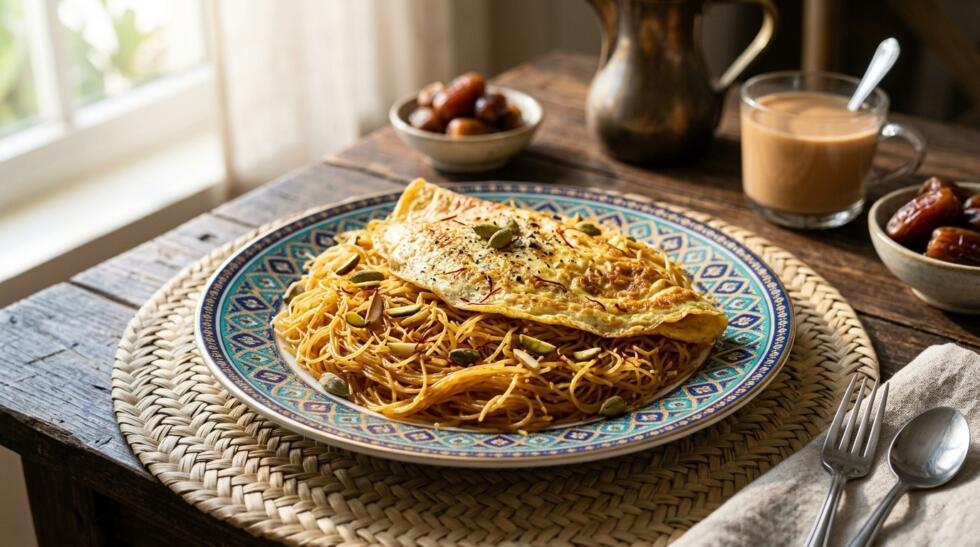
Balaleet: Sweet saffron-cardamom vermicelli topped with a savory egg.


What Is Emirati Food?
Understanding the foundations of this unique gastronomy requires looking beyond the international dining rooms of modern Dubai and Abu Dhabi.
Simple Definition of Emirati Cuisine
At its heart, Emirati cuisine represents the traditional eating habits and recipes developed by the indigenous people of the UAE. It encompasses everything from simple, heart-warming home cooking to elaborate celebratory feasts and crispy street foods served at local heritage markets. While heavily focused on communal eating, it balances hearty main dishes with subtle sweet-savory snacks.
Where Emirati Food Comes From
The story of traditional Emirati food is written by three main environmental and historic influences:
- Bedouin Roots: Nomadic life in the desert demanded survival-based cooking. Meals relied heavily on preserved meats, camel milk, dates, and simple unleavened breads cooked over open fires.
- Coastal Influences: Along the Gulf coast, abundance came from the sea. Freshly caught fish, shellfish, and dried seafood became staples, paired with local spices.
- Trade Routes: As a historical crossroads for trading ships, the UAE integrated aromatic spices, Basmati rice, and specialized tea blending techniques from India, Persia, and East Africa into its pantry.
What Makes It Different From Other Gulf Cuisines
While sharing similarities with neighboring Arabian Peninsula cultures such as the love for spiced rice and slow-cooked meats Emirati dishes feature unique spice blends like bezar, specialized local breads like regag, and distinct preparation methods tailored to coastal and desert life.
At a Glance: Emirati Cuisine in 5 Facts
- Deep Roots: Shaped by Bedouin desert survival and coastal Gulf fishing.
- Signature Spice: Relies on Bezar, a unique local warm spice blend.
- Hospitality First: Meals always open with fresh dates and Gahwa (Arabic coffee).
- Patience Required: Slow-cooking and braising are the core culinary techniques.
- Communal Culture: Food is traditionally served on large platters designed for sharing.
Key Characteristics of Traditional Emirati Food
The flavors of the UAE are distinct, aromatic, and comforting. The cooking style honors patience, letting simple ingredients slowly transform into complex meals.
Core Ingredients
The traditional pantry relies heavily on several non-negotiable staples:
- Rice & Grains: Basmati rice and whole wheat form the base of most heavy dishes.
- Meats & Seafood: Lamb, goat, chicken, and locally caught fish such as Kingfish (Canaad) and Hammour.
- Dates & Sweets: Used both fresh and as date syrup (dibs) to sweeten dishes or welcome guests.
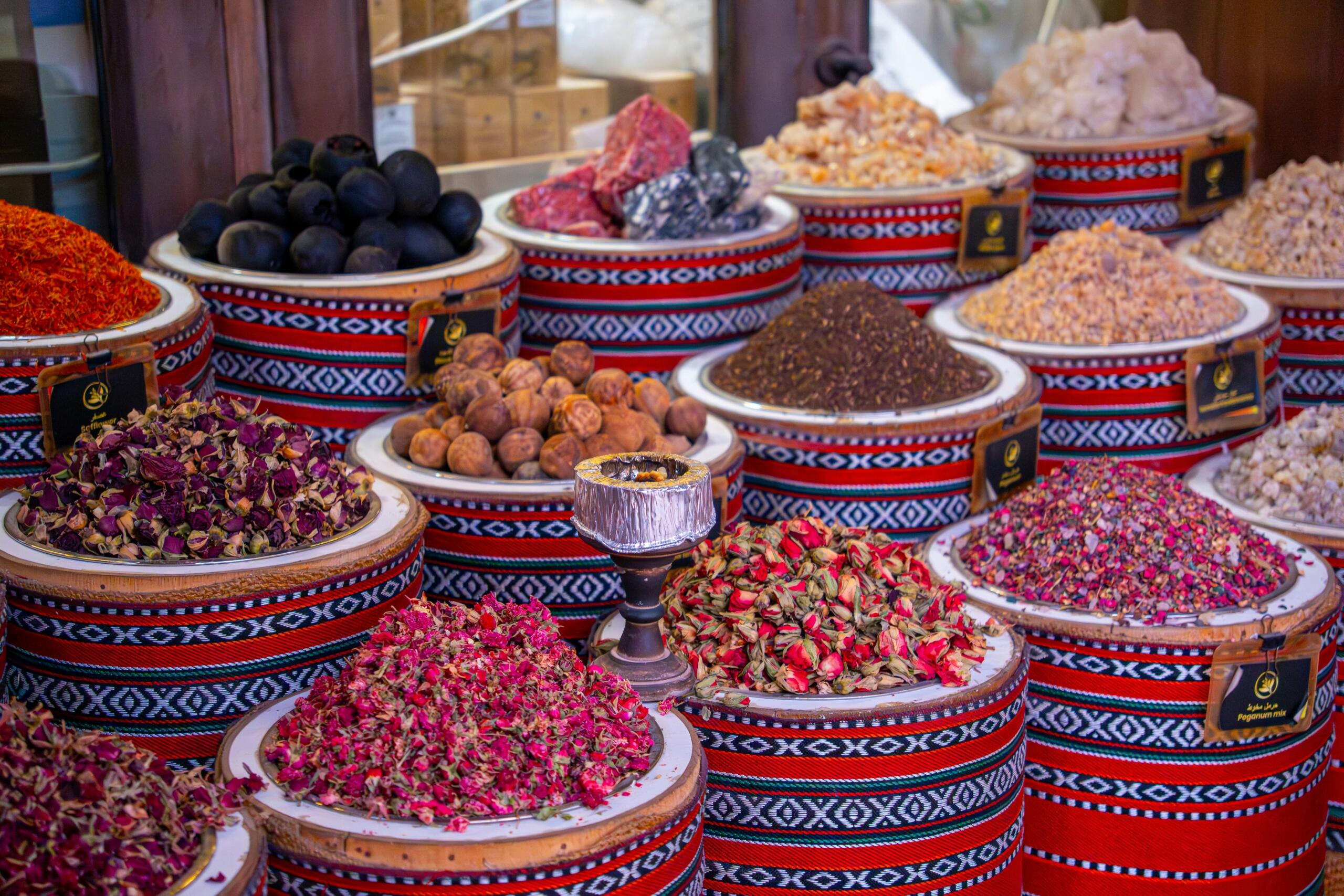
- Aromatic Spices: Turmeric, saffron, cardamom, cinnamon, cumin, coriander, and loomi (dried black lime).
Common Cooking Methods
Slow-cooking is central to many traditional Emirati dishes, and it is what gives them their depth. Stews simmer for hours, wheat is pounded continuously to reach a velvety porridge texture, and rice is layered with aromatic spiced gravies so every grain absorbs maximum flavor. Baking paper-thin breads on flat iron pans and deep-frying sweet dough balls round out the daily techniques.
Flavors and Texture Profile
Expect warm, layered spice profiles rather than blistering heat. Dishes feature rich savory aromas, delicate floral undertones from rosewater and cardamom, and a comforting contrast between tender, melt-in-your-mouth meats and crispy unleavened breads.
| Core Ingredient | Role in Emirati Cuisine | Flavor Contribution |
|---|---|---|
| Loomi (Dried Lime) | Essential in slow-cooked stews and rice | Sour, earthy, smoky complexity |
| Bezar (Spice Mix) | Everyday spice blend for meat and fish | Warm, savory, deeply aromatic |
| Cardamom & Saffron | Infused into coffee, desserts, and rice | Floral, luxurious, elevated aroma |
| Dates & Date Syrup | Hospitality starter and natural sweetener | Rich caramel sweetness |
Must-Know Traditional Emirati Food Dishes
If you are looking to explore United Arab Emirates food for the first time, these iconic dishes are absolute must-tries.
Machboos
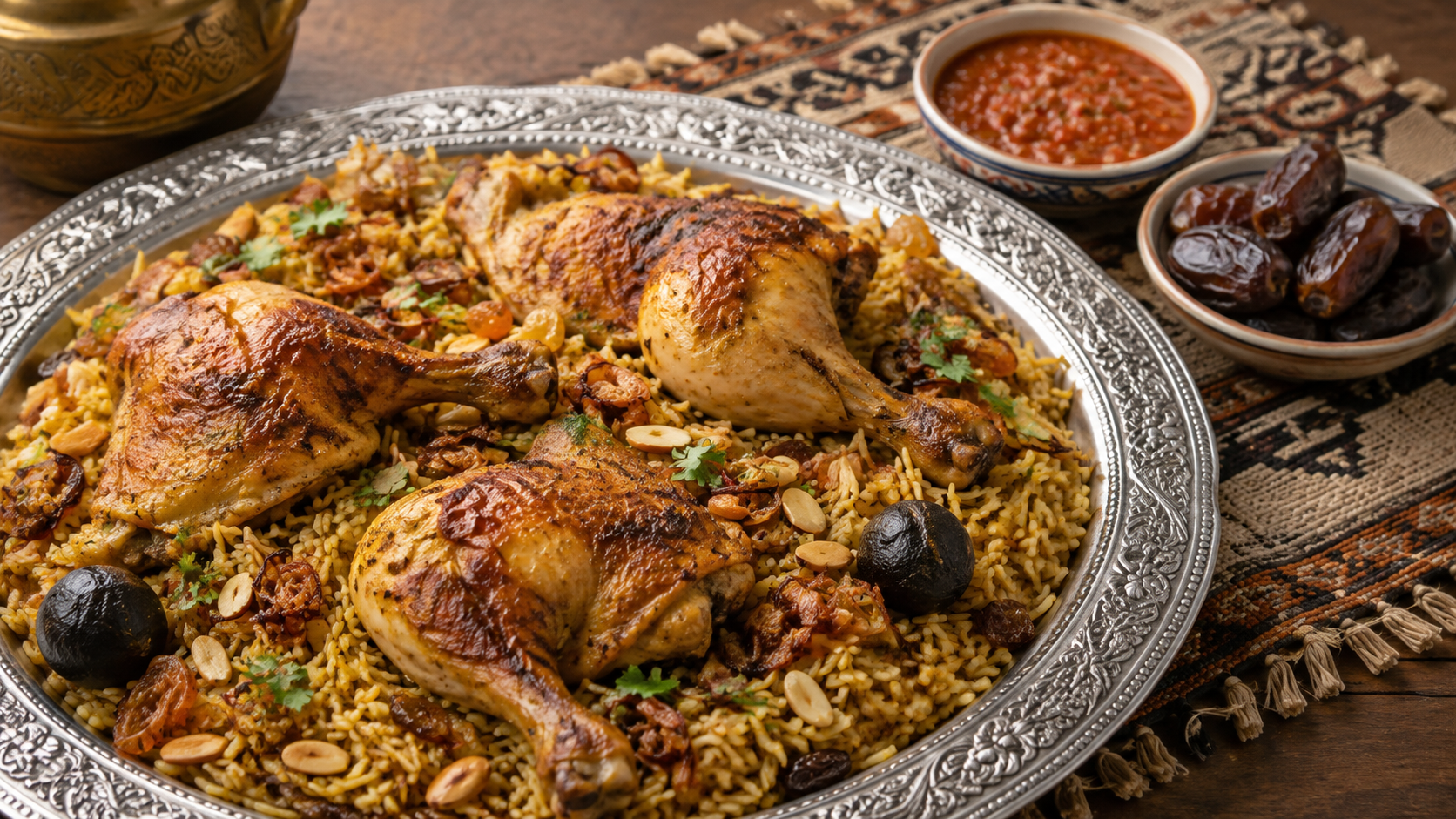
Often considered the national dish, Machboos is a majestic spiced rice preparation served with meat, chicken, or fish. The meat is braised in a rich broth infused with bezar, dried black limes, cardamom, and cinnamon. The rice is then cooked in this deeply savory stock, absorbing every drop of flavor before being topped with fried onions and raisins.
Harees
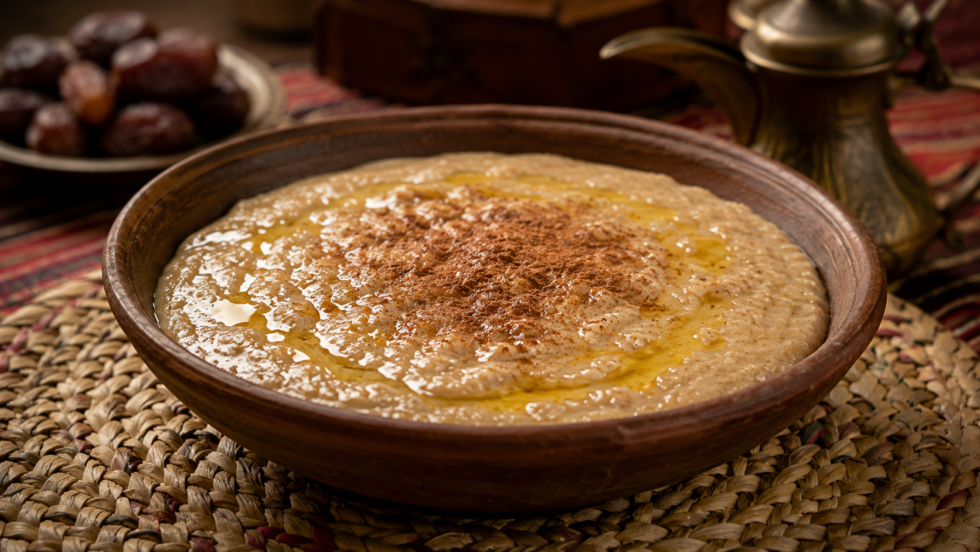
Harees is a dish defined by patience and tradition. Made from coarse cracked wheat braised slowly with lamb or chicken for hours, it is beaten vigorously until the meat breaks down into a smooth, thick porridge-like consistency. Finished with a drizzle of melted local ghee (samn), it offers ultimate comfort.
Thareed
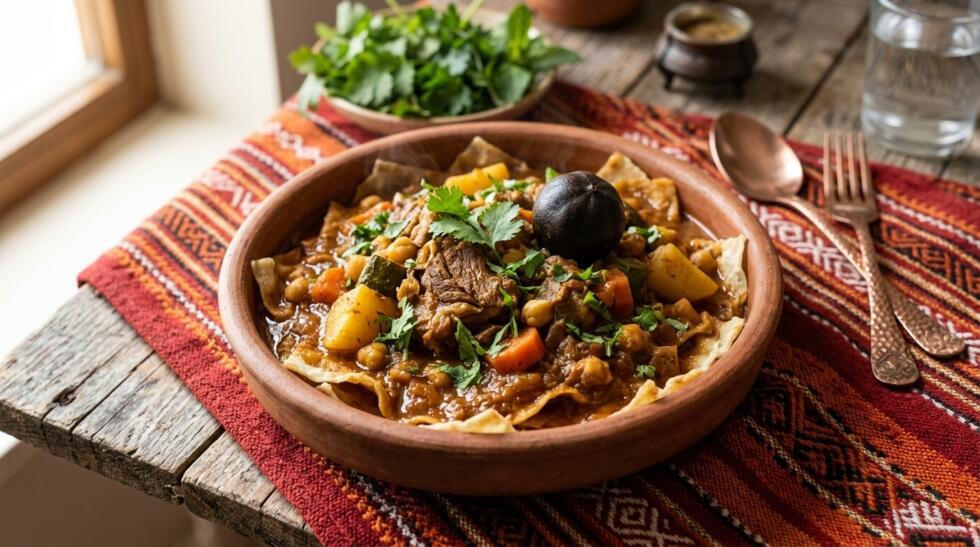
Deeply satisfying and home-style, Thareed consists of a rich vegetable and meat stew poured generously over pieces of paper-thin regag bread. As the bread absorbs the flavorful tomato broth, it softens into a delicious, hearty layer at the bottom of the bowl.
Balaleet
A signature breakfast dish that showcases the Emirati love for sweet and savory pairings. Fine vermicelli noodles are cooked with sugar, cardamom, cinnamon, and saffron, then topped with a thin, savory egg omelet.
Luqaimat
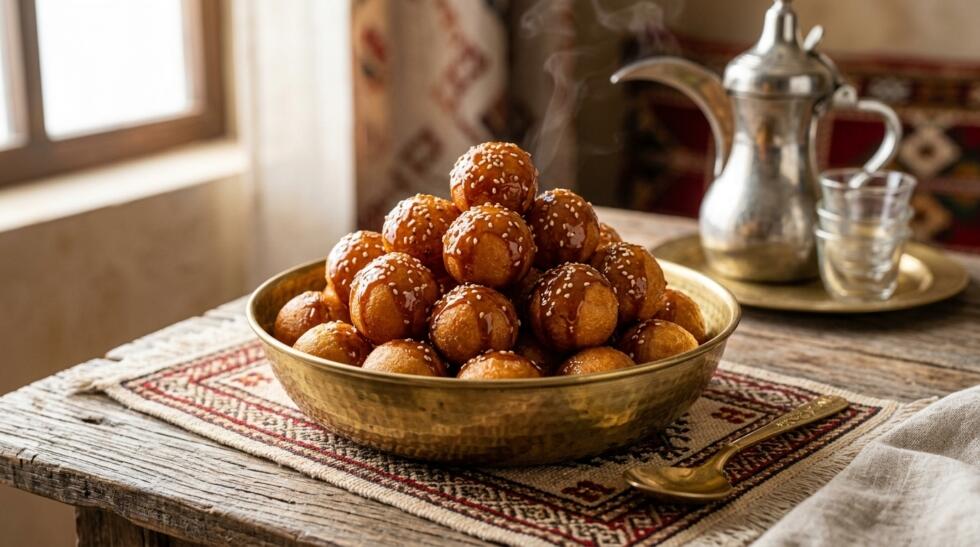
No culinary guide to Emirati food is complete without Luqaimat. These crispy, golden-brown fried dough balls are crunchy on the outside, soft on the inside, and drenched in sticky date syrup (dibs) and toasted sesame seeds.
Regag
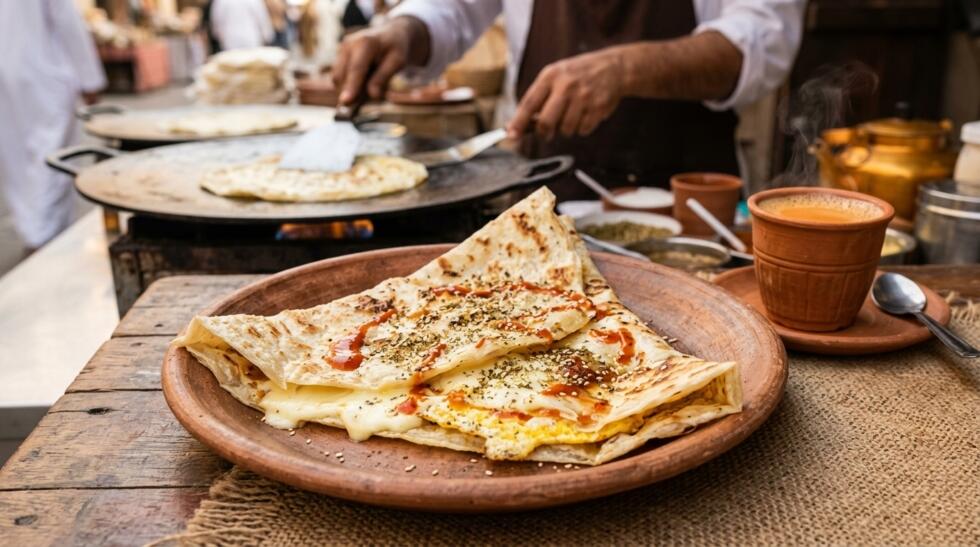
Regag is a paper-thin, crispy flatbread baked on a hot metal plate. It can be eaten plain with tea, dipped into stews, or folded over savory fillings like Kraft cheese, egg, or hot sauce at local food stalls.
Seafood-Focused Dishes
Given the long coastlines of Dubai, Sharjah, and Abu Dhabi, seafood holds a legendary place in local history. Fish Machboos and Jasheed (scrambled baby shark cooked with aromatic spices and dried lime) represent the coastal soul of the country.
Main Dishes Summary
- Machboos: Spiced rice with meat or fish.
- Harees: Slow-cooked wheat and meat porridge.
- Thareed: Meat stew over soaked crispy bread.
Snacks & Desserts Summary
- Balaleet: Sweet vermicelli with savory egg.
- Luqaimat: Crispy fried dough with date syrup.
- Regag: Paper-thin griddled flatbread.
Traditional Emirati Food by Meal Type
Structuring meals around traditional routines helps travelers navigate authentic dining experiences throughout the day.
Breakfast Foods
A traditional Emirati breakfast balances lightness with energy. You will typically find:
- Balaleet served warm with fresh tea.
- Freshly baked Regag folded with cheese, spread with cream, or topped with fried eggs.
- Sweet dates paired with warm camel milk or fresh tea infused with mint or cardamom.
Lunch and Dinner Dishes
Lunch is traditionally the heaviest meal of the day, bringing extended families together around large platters:
- Show-stopping rice dishes like Machboos.
- Hearty stews such as Thareed or Saloona (a spicy meat and vegetable broth).
- Festive dishes like Harees served during weekend family gatherings.
Snacks and Street-Style Foods
Street markets and beachside heritage stalls serve fresh bites cooked right before your eyes. Crisp Regag bread hot off the griddle and crispy vegetable samosas influenced by historical Indian trade channels are popular quick treats.
Desserts and Sweets
Emirati desserts reflect a well-known affinity for natural sweets. Beside Luqaimat, traditional meals often end with Khabees (a sweet dish of toasted flour, butter, saffron, and cardamom) or Asida (a rich pumpkin or wheat sweet pudding).
Drinks and Hospitality Staples
- Gahwa (Arabic Coffee): Lightly roasted coffee beans spiced with green cardamom and saffron, poured from a traditional curved teapot (dallah) into small handleless cups (finjan).
- Karak Tea: Strongly brewed black tea simmered with milk, cardamom, and sugar.
| Meal Type | Traditional Dishes | Key Beverage Pairing |
|---|---|---|
| Morning / Breakfast | Balaleet, Regag with Cheese, Chbabi Pancakes | Karak Tea or Mint Tea |
| Midday / Lunch | Fish or Meat Machboos, Saloona Stew | Cold Laban (Yogurt Drink) |
| Evening / Dinner | Thareed, Harees, Grilled Local Fish | Gahwa (Arabic Coffee) |
| Sweets & Snacks | Luqaimat, Fresh Dates, Khabees | Gahwa or Karak Tea |
Emirati Food and Hospitality Culture
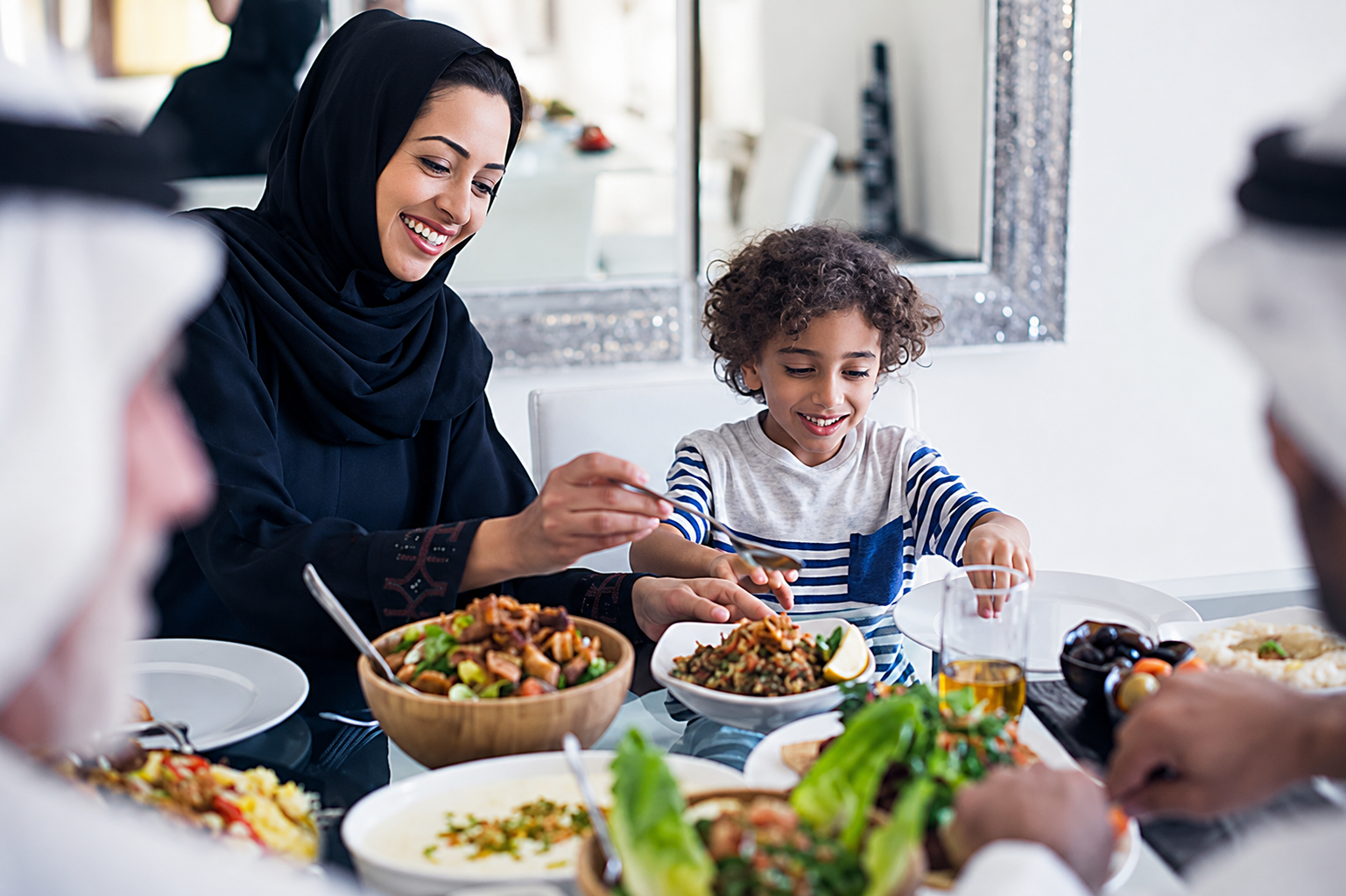
In the UAE, food is far more than physical nourishment; it is the ultimate expression of respect, community, and ancient desert hospitality.
The Role of Hospitality in Emirati Life
Bedouin survival depended on mutual aid. Today, that ancient instinct lives on through lavish generosity. Guests entering an Emirati home are instantly greeted with fresh dates, chilled water, and warm poured cups of Gahwa. Refusing host hospitality is unthinkable, and platters are always served in abundant portions.
Food in Celebrations and Religious Occasions
- Ramadan: The holy month brings families together at sundown. Meals almost always begin with dates and water, followed by Harees, Thareed, and endless bowls of Luqaimat.
- Eid & Weddings: Large communal platters of whole roasted lamb over spiced Machboos rice (Ouzi) mark significant life milestones.
Community and Family Cooking
Traditional cooking remains a multi-generational affair. Recipes are rarely written down in grams; instead, they are passed down through observation, smell, and practice from grandmothers and mothers to younger generations.
Ramadan Season
Focus on comforting stews like Thareed and long-simmered Harees.
Eid Celebrations
Festive grand platters of Whole Ouzi Lamb over spiced rice.
Winter Camping (Kashta)
Outdoor open-fire bread baking, hot Karak tea, and fresh grilled fish.
Heritage Festivals
Live street cooking of Luqaimat and hot griddled Regag.
Authentic Emirati Food: How to Recognize It
Given the UAE's diverse population, generic Levantine dishes like hummus and shawarma are often mistaken for local cuisine. Knowing how to identify authentic Emirati food is essential for genuine culinary exploration.
Signs of Authentic Emirati Food
Look for a heavy reliance on key ingredients: loomi (dried black lime), whole wheat, local Gulf fish, date syrup (dibs) as a primary sweetener, and distinctive flatbreads like Regag or Khameer.
Common Misconceptions
- Myth: Hummus and Tabbouleh are Emirati.
- Fact: These are Levantine (Lebanese, Syrian, Palestinian) dishes, widely available but not native to the UAE.
- Myth: All Gulf rice dishes are identical.
- Fact: Emirati Machboos is unique, relying on the specific local bezar spice blend.
Regional Variations
Culinary traditions vary by geography within the Emirates. Coastal areas (like Dubai) focus heavily on seafood, while mountain and desert communities prefer preserved meats and hardy wheat dishes.
| Culinary Feature | Authentic Traditional Preparation | Modernized / Internationalized Version |
|---|---|---|
| Primary Sweetener | Natural Date Syrup (Dibs) or local dates | Refined sugar syrups or chocolate spreads |
| Spice Profile | Whole roasted Bezar mix & Loomi | Generic commercial curry powders |
| Bread Type | Freshly griddled Regag or Khameer | Standard factory-made pita bread |
| Primary Drink | Cardamom-infused Gahwa & Karak | Commercial sweetened iced coffees |
Scan the menu for key indicators: Bezar spices in descriptions, local fish (Hammour, Kanaad), fresh dates with coffee, and traditional breads like Regag.
Emirati Food in the Modern UAE
Emirati cuisine is enjoying a cultural renaissance, adapting heritage recipes for contemporary diners.
Where to Experience It Today
Travelers can explore local flavors in a variety of settings:
- Heritage Restaurants: Authentic dining experiences in historical settings.
- Heritage Villages: Markets in Abu Dhabi, Dubai, and Sharjah with live cooking stalls.
Preservation and Tourism
A new generation of Emirati chefs is creating modern takes on traditional dishes like Harees, using modern plating and farm-to-table ingredients. For tourists, United Arab Emirates food provides a rich, authentic connection to the country's past.
How to Enjoy Emirati Food Like a Local
Mastering simple dining customs will enhance your culinary experience in the Emirates.
Top Dishes to Order
- Machboos: The quintessential spiced rice main.
- Harees: Ultimate comfort food (wheat and meat porridge).
- Luqaimat: The signature dessert (fried dough with date syrup).
Basic Dining Etiquette
- Accepting Hospitality: Always accept the dates and coffee offered—it's a respectful gesture.
- Hand Etiquette: If eating by hand (common in traditional floor-seated meals), use only your right hand.
- Coffee Sign: Gently shake your small cup (finjan) side-to-side when you are finished.
Summarise with AI:
Did you like this article? Leave a rating!

 Loading...