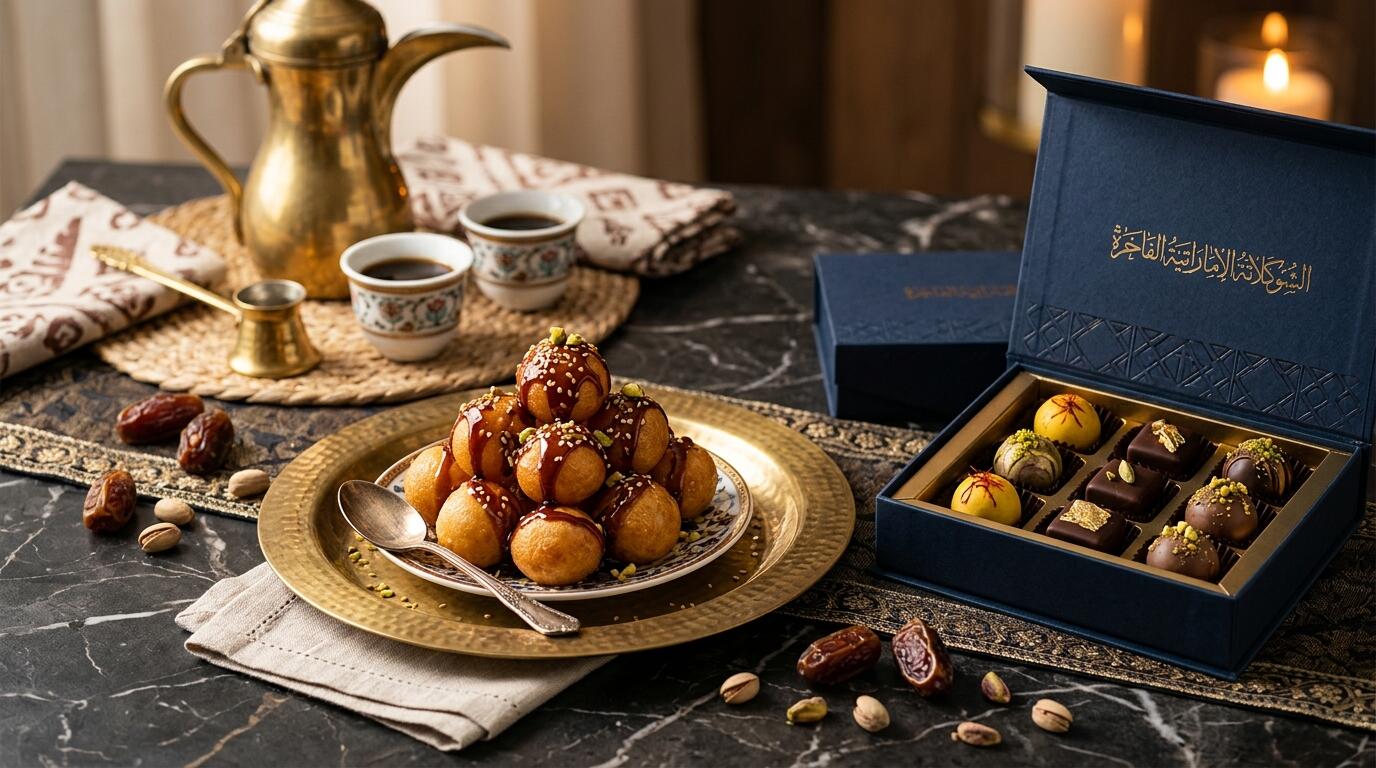

Emirati sweets are far more than mere confections; they represent a vibrant chapter of United Arab Emirates heritage and everyday hospitality. Whether served in a traditional majlis or enjoyed at modern family gatherings, these treats range from cherished centuries-old family recipes to contemporary luxury items. Exploring emirati sweets allows you to discover how rich, aromatic spices and locally sourced ingredients shape an irreplaceable culinary culture.
🫚 Warm cardamom & saffron
🌹 Delicate rose water
🌴 Sweet dates & rich ghee
🌰 Roasted local nuts
🧆 Golden Luqaimat
🥣 Warm Khabeesa & Asida
🍳 Sweet-savory Balaleet
🥮 Khanfaroosh & stuffed dates
🇦🇪 Premium emirati chocolate
🐫 Rich camel milk cocoa
🫖 UAE aromatic infusions
🎁 Artisanal date fillings
Emirati sweets are traditional desserts from the UAE made with ingredients like dates, saffron, cardamom, rose water, semolina, flour, and ghee. The most famous examples include luqaimat, khabeesa, balaleet, asida, and date-based sweets, while modern emirati chocolate blends local flavors with premium cocoa for a contemporary twist.


What Are Emirati Sweets?
To understand emirati sweets, one must appreciate the history of the Arabian Peninsula. Deeply woven into the fabric of UAE culinary heritage, these confections represent warmth, generosity, and community. Unlike many mass-produced pastries found globally, traditional emirati desserts carry deep roots linked to nomadic desert life and seafaring trade routes, relying heavily on pantry staples that could withstand warm climates. These sweets are just one chapter of the wider story of Emirati cuisine.
What makes a dessert “Emirati”?
A dessert earns its authentic classification through three core attributes:
- Local Ingredients: Heavy reliance on native dates, locally clarified butter (ghee), and prized spices like saffron and cardamom imported through historical spice routes.
- Cultural Usage: These sweets are intrinsically linked to social gatherings, welcome rituals, and religious observances.
- Traditional Preparation Methods: Most traditional emirati desserts are cooked slowly in large pots, fried to order, or meticulously hand-shaped.
When are Emirati desserts typically served?
Hospitality in the UAE dictates that a guest should never leave without enjoying a sweet treat and hot beverage. Desserts are served during:
- Ramadan: Breaking the fast (Iftar) and late-night gatherings (Suhoor) always feature deep-fried confections and date-based dishes.
- Eid Celebrations: Festive mornings begin with rich, aromatic sweet dishes prepared for visiting relatives.
- Weddings and Special Events: Elaborate platters of emirati desserts are presented to express joy and abundance.
- Guests / Majlis Culture: Welcoming visitors with dates, fresh pastries, and Arabic coffee is a fundamental cultural etiquette.
- Everyday Family Meals: Comforting warm puddings or semolina dishes often wrap up traditional family dinners.
The Most Famous Traditional Emirati Desserts
When exploring the culinary landscape of the UAE, several specific dishes stand out as absolute essentials. Below is a detailed reference guide outlining the most famous traditional emirati desserts.
| Dessert Name | Main Ingredients | Texture / Taste | Best Occasion |
|---|---|---|---|
| Luqaimat | Flour, yeast, saffron, date syrup, sesame seeds | Crunchy outside, soft inside; sweet & aromatic | Ramadan, family gatherings, festivals |
| Khabeesa | Semolina or flour, ghee, sugar, cardamom, saffron | Crumbly, warm, rich spice flavor | Eid breakfasts, cool winter evenings |
| Balaleet | Vermicelli, sugar, cardamom, saffron, eggs | Sweet-and-savory; soft noodles with crisp egg | Breakfast, special morning feasts |
| Asida | Wheat flour or pumpkin, sugar, ghee, cardamom | Dense, smooth, pudding-like richness | Winter season, postpartum nutrition, Eid |
| Khanfaroosh | Rice flour, eggs, sugar, cardamom, saffron | Soft, sponge-like fritter cake | Afternoon tea, guest visits |
| Date-Based Sweets | Fresh or dried dates, nuts, tahini, sesame | Chewy, naturally sweet, nutty | Daily hospitality, year-round snacking |
Emirati Chocolate: The Modern Evolution of Local Sweets
Modern Craftsmanship Meets Heritage
In recent years, the UAE sweet landscape has witnessed a dramatic culinary shift. Contemporary chocolatiers have redefined local confections by introducing artisanal emirati chocolate. This modern evolution fuses world-class European cocoa processing techniques with time-honored regional ingredients, creating an exciting bridge between age-old traditions and global gourmet trends. Chocolate is only one of many modern takes on Emirati heritage flavors.
What flavors are commonly used in Emirati chocolate?
To capture the essence of regional heritage, luxury chocolatiers infuse their creations with iconic Emirati pantry staples:
- Rich Date Fillings: Smooth date purees or caramel-like date syrups encased in dark or milk chocolate shells.
- Saffron & Cardamom: Warm, aromatic spices blended into velvety chocolate ganaches.
- Pistachio & Tahini: Creamy nut pastes providing a savory contrast to sweet cocoa.
- Camel Milk Chocolate: Utilizing rich, locally sourced camel milk for a distinctively smooth, slightly salty milk chocolate profile.
Why Emirati chocolate is popular
The explosive growth of emirati chocolate can be attributed to several factors:
- Souvenir & Gifting Appeal: Elegantly packaged chocolate boxes serve as ideal luxury gifts for international travelers and corporate clients.
- Modernization of Traditional Flavors: It offers younger generations and global audiences a familiar vehicle to experience authentic regional spices.
- Premium Tourism Demand: Visitors seeking high-end gastronomic experiences frequently turn to locally crafted luxury chocolates.
How it connects to traditional Emirati desserts
Phase 1 (Bedouin Era)
Reliance on whole dates, ghee, and simple unleavened sweet doughs.
Phase 2 (Trade Expansion)
Integration of imported spices like cardamom, saffron, and rice flour for dishes like Khanfaroosh and Khabeesa.
Phase 3 (Modern Era)
Emergence of emirati chocolate, encapsulating classic regional spice profiles inside fine cocoa.
Though modern in format, premium chocolate crafted in the UAE respects the exact flavor heritage of emirati sweets. By incorporating saffron, dates, and nuts, it maintains historical taste profiles while offering better portability and extended shelf life.
Key Ingredients Used in Traditional Emirati Desserts
Cardamom, Saffron, Rose Water, Dates & Ghee
Iconic Traditional Desserts & Modern Sweets
Local Heritage & Traditional Ingredients
The distinct identity of emirati sweets relies on a select, highly aromatic pantry. Organizing these ingredients highlights how simple components are transformed into complex delicacies.
Sweeteners and bases
- Dates & Date Syrup (Dibs): The primary source of natural sugar across the Arabian Peninsula.
- Granulated Sugar & Honey: Used to sweeten syrups and caramelize pudding bases.
- Semolina & Wheat Flour: Form the structural foundation for cakes, doughs, and halwa-style dishes.
- Vermicelli: Fine pasta threads roasted and sweetened for breakfast delicacies.
Aromatics and spices
- Cardamom: Delivers a warm, pungent, eucalyptus-like aroma essential to regional cooking.
- Saffron: Provides a bright yellow hue and an irreplaceable, luxurious floral fragrance.
- Rose Water & Orange Blossom Water: Distilled floral essences added to syrups and batters for delicacy.
- Cinnamon: Used subtly to add woody warmth to boiled doughs and grain-based desserts.
Rich elements and toppings
- Ghee (Clarified Butter): Imparts a rich, nutty flavor to semolina and flour desserts.
- Nuts (Pistachios, Almonds, Walnuts): Roasted and crushed for texturing soft puddings.
- Sesame Seeds & Tahini: Add an earthy, roasted nuttiness that balances sweet syrups.
Why these ingredients matter
The reliance on these specific ingredients stems directly from geography and history. Dates flourished in desert oases, while spices were acquired through bustling maritime trade ports in the Gulf. This historic convergence built the unique flavor signature defining traditional emirati desserts today.
Emirati Desserts by Occasion
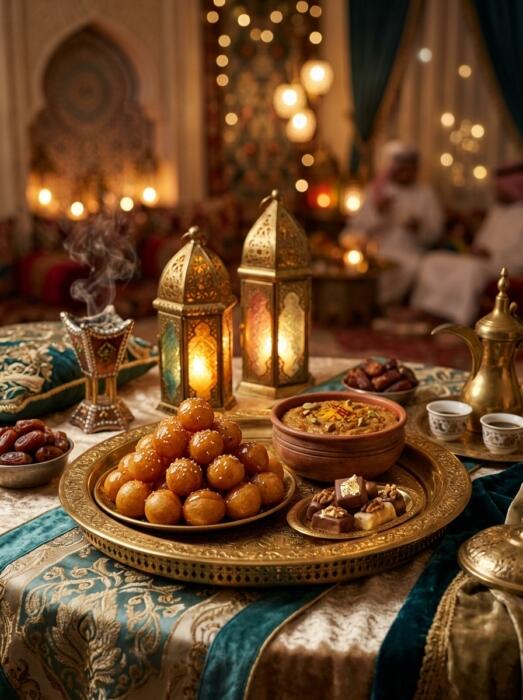
🌙 Ramadan & Eid Celebrations
- Ramadan Favorites: Breaking the fast calls for instant energy. Tables are dominated by freshly fried luqaimat drizzled with date syrup, warm bowls of asida, and stuffed dates.
- Eid Festivities: Festive mornings feature highly aromatic, celebratory dishes like freshly made khabeesa, golden khanfaroosh, and luxury emirati chocolate gift sets shared with visiting family.
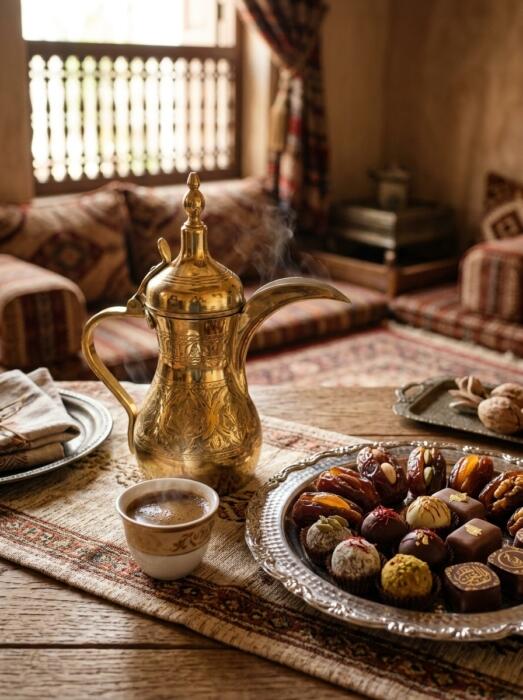
☕ Everyday Comfort & Majlis Hospitality
- Everyday Family Meals: Daily dinners wrap up with simple, comforting classics like sweet balaleet vermicelli, home-baked semolina cakes, and warm cardamom milk.
- Majlis Hospitality: Welcoming guests demands total generosity. Hosts serve piping-hot luqaimat, stuffed dates with tahini, and premium emirati chocolate boxes—always accompanied by unsweetened Arabic coffee (Gahwa).
Emirati Sweets vs. Other Arabic Desserts
While middle eastern culinary traditions overlap, emirati sweets maintain clear distinctions when compared to broader regional confections.
What makes Emirati sweets distinct?
- Dominance of Dates and Saffron: Levant pastries rely heavily on sugar syrups and orange blossom water, whereas UAE desserts lean deeply into natural date sweetness, heavy cardamom, and saffron.
- Rustic, Homestyle Roots: Many traditional emirati desserts retain a warm, comforting, homemade character rather than the intricate, multi-layered filo pastry structure seen in Ottoman-influenced bakeries.
- Maritime & Desert Influences: Dishes were historically tailored for easy preparation over campfires or on trading dhows.
How they compare to wider Gulf and Arabic sweets
The UAE shares similarities with Saudi Arabia, Oman, and Kuwait—such as a love for cardamom coffee pairings and date preparations. However, local Emirati variations are often recognized by subtle differences in spice proportions, cooking duration, and topping choices.The same difference shows up in savory traditional Emirati dishes like machboos and harees.
How Emirati Sweets Are Served and Eaten
The presentation of emirati sweets is an art form tied directly to cultural etiquette:
- Temperature: Fried pastries like Luqaimat and grain dishes like Khabeesa are universally served hot or warm. Date assortments and chocolates are served at room temperature.
- Beverage Pairings: Desserts are almost always accompanied by hot Gahwa (Arabic coffee spiced with cardamom and saffron) or Karak tea. The bitterness of un-sweetened Gahwa perfectly balances rich, sweet treats.
- Presentation Style: Sweets are served on large communal platters or ornate silver trays inside traditional majlis settings, high-end hotel lounges, and cultural heritage festivals.
Best Emirati Sweets to Try First
Stepping into the world of Emirati confectionery can be overwhelming for first-timers given the sheer variety of spices, aromas, and textures. To help you navigate your first tasting experience, here is an expertly curated starter ranking:
- Luqaimat – The absolute golden baseline for local treats.
- Khabeesa – The ultimate warm, spiced, and comforting dish.
- Emirati Chocolate with Date Filling – The pinnacle of modern luxury fusion.
- Stuffed Date Sweets – An essential daily staple packed with natural sweetness.
- Khanfaroosh – Soft cakelets perfect for afternoon tea lovers.
- Balaleet – A unique dish for adventurous eaters who love sweet-and-savory pairings.
Where to Find Emirati Sweets
Locating authentic confections across the UAE is an exciting journey through old heritage districts and ultra-modern shopping hubs:
- Traditional Emirati Restaurants: Dedicated heritage eateries cook fresh Luqaimat, Balaleet, and Asida to order in an authentic setting.
- Neighborhood Souk Bakeries: Tucked away in historic markets, these local sweet shops offer freshly baked Khanfaroosh and warm pans of Khabeesa.
- Luxury Confectionery Boutiques: Premium malls and airport lounges house flagship chocolatiers crafting high-end emirati chocolate gift boxes.
- Cultural Festivals & Ramadan Tents: Heritage events feature live outdoor cooking stations where local artisans prepare doughs on traditional flat griddles.
What to look for when buying
To guarantee the best culinary experience, keep these purchasing standards in mind:
- Freshness of Luqaimat: Always insist on made-to-order batches; once cold, Luqaimat loses its signature crunch.
- Purity of Ingredients: Look for real saffron threads and pure date syrup rather than artificial flavorings or corn syrups.
- Chocolate Freshness: Pay close attention to shelf-life labels on artisan emirati chocolate, especially varieties containing fresh nut pastes, tahini, or camel milk.
Why Emirati Sweets Matter in UAE Culture
"In our culture, food is not merely nourishment—it is a language of welcome. Offering a sweet dish to a visitor is the highest form of Emirati respect and generosity."
— UAE Cultural & Heritage Authority
Ultimately, emirati sweets act as a living bridge connecting the nomadic past with a cosmopolitan present. Every dish tells a tale of historical maritime trade routes, desert survival, and unyielding hospitality. As modern hubs like Dubai and Abu Dhabi innovate with gourmet confections like artisan emirati chocolate, preserving age-old traditional emirati desserts ensures that the nation's sweet identity remains timeless.
Summarise with AI:
Did you like this article? Leave a rating!

 Loading...