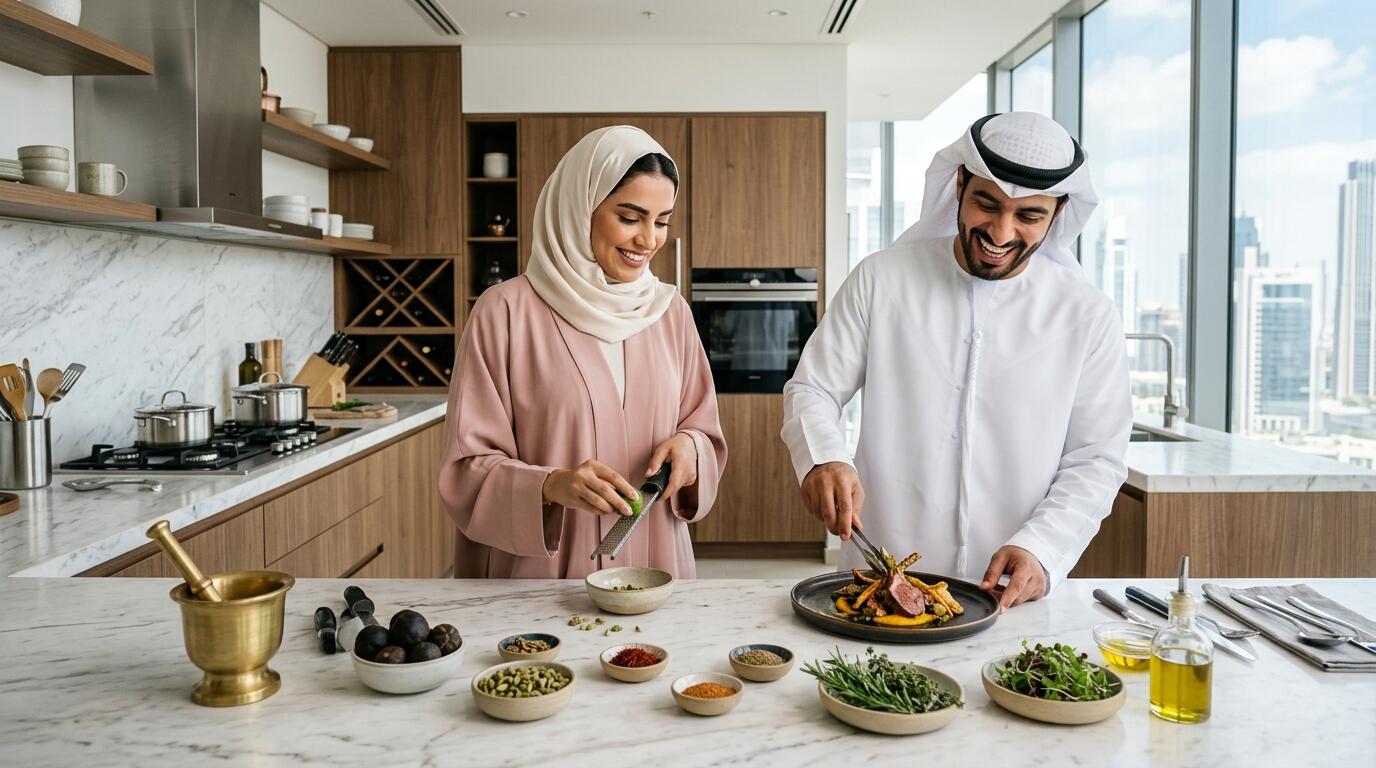

Emirati food with a contemporary twist keeps the soul of traditional Emirati cuisine spices, rice, seafood, dates, and communal hospitality while presenting dishes in lighter, more refined, and more globally inspired ways.
Today, chefs in the UAE reinterpret classics like machboos, luqaimat, balaleet, and harees using modern plating, premium local ingredients, and fusion techniques, making emirati food contemporary twist on emirati food more accessible without losing its identity. By blending age-old heritage with progressive culinary arts, modern culinary masters invite food enthusiasts to experience a fresh perspective on authentic Gulf gastronomy.
Cardamom, Saffron, Black Lime, Turmeric
Classic local recipes reimagined with fine dining techniques
Key methods chefs use to honor traditional roots


What Makes Emirati Food Distinct?
Before exploring modern reinterpretations, it is essential to establish the foundation of traditional Gulf gastronomy. Rooted in harsh desert climates and rich maritime trade routes, authentic Emirati cuisine reflects an enduring history of resilience, cultural exchange, and generous hospitality.
Core Characteristics of Traditional Emirati Cuisine
At its heart, the traditional culinary identity of the UAE is defined by communal dining and deeply ingrained hospitality. Meals are rarely served in individual portions; instead, large platters are placed at the center of the table, inviting family and guests to share.
- Hospitality and Sharing: The act of serving coffee (gahwa) and dates to visitors is an essential gesture of respect and welcome.
- Essential Staples: The pantry relies heavily on rice, local fish, camel or lamb meat, dates, cardamom, saffron, turmeric, and dried limes (loomi).
- Geographical Influences: The harsh desert environment forced reliance on preserved foods, slow-cooking techniques, and ingredients that could withstand long journeys.
- Cultural Crossroads: Coastal settlements prioritized fresh seafood and pearl-diving diets, while Bedouin tribes relied on dairy, meat, and dates. Meanwhile, historical trade routes introduced complex spice blends from across Asia.
How Emirati Cuisine Relates to Other Regional Cuisines
Understanding modern Emirati cuisine requires looking at its regional connections. While sharing a flavor foundation of slow-cooked stews, rice platters, and flatbreads with neighboring arabic dishes, the local palate was heavily shaped by centuries of Indian Ocean trade.
Historic routes with southern Iran introduced floral aromatics, dried fruit, souring agents like dried lime, and rice-steaming techniques. However, while top 10 iranian dishes highlight delicate herbs and sweet-and-sour notes (like Ghormeh Sabzi or Fesenjan), Emirati recipes lean toward warm spices like turmeric, cumin, and cardamom, distinguishing them from standard persian dishes and iranian dishes.
Trade also built a strong bridge to South Asia. Diners often ask what is indian national food or search for an official indian national food name. Although India has no single national dish, biryani-style rice preparations directly influenced Gulf cooking, shaping staples like Emirati Machboos.
Primary Spices: Cardamom, saffron, black lime, turmeric & cinnamon 🌿
Hospitality Rule: Coffee (gahwa) & dates served first ☕🌴
Traditional Method: Slow-cooked stews over wood fires or underground 🪵🍲
Modern Adaptation: Sous-vide, deconstructed plating & light emulsions ✨🌱
Traditional Emirati Dishes That Inspire Modern Versions
To appreciate contemporary updates, one must first recognize the traditional Emirati dishes that form the backbone of UAE culinary heritage.
Rice-Based Dishes
- Machboos / Majboos: The quintessential national rice dish, traditionally cooked with whole chicken, lamb, or fish, infused with bezar (a signature Emirati spice blend), dried lime, and saffron.
- Gulf Biryani Variations: Influenced by historical trade with South Asia, these dishes feature spiced meats cooked alongside seasoned basmati rice.
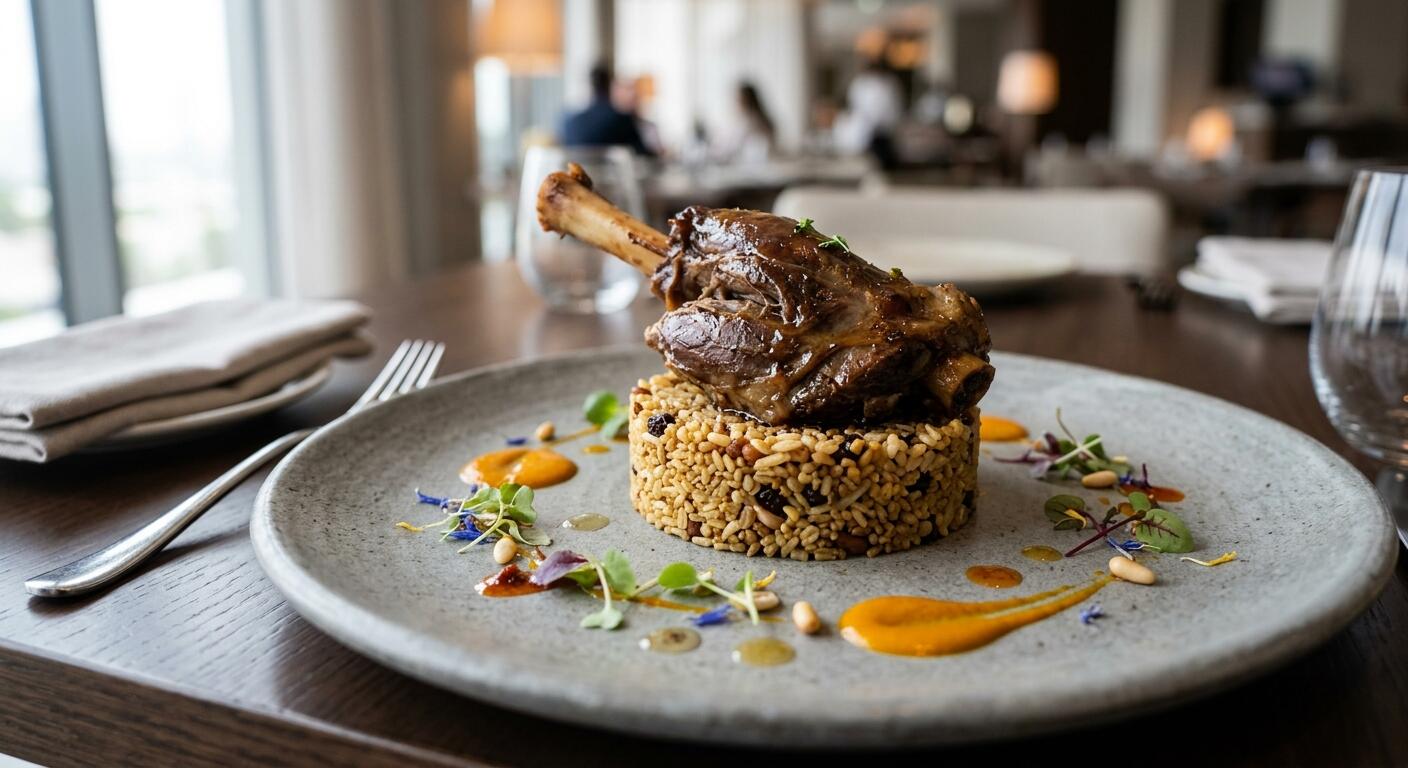
- Modern Refinements: Today, fine-dining chefs elevate machboos by using slow-braised lamb shanks, duck confit, or wild-caught sea bass, balancing the heavy spice profiles with refined jus instead of heavy oils.
Breakfast and Light Dishes
- Balaleet: A unique sweet-and-savory dish consisting of fine vermicelli noodles sweetened with sugar, cardamom, and rose water, topped with an omelet.
- Chebab: Fluffy Emirati pancakes spiced with saffron and cardamom, traditionally served with date syrup (dibs) and cream cheese.
- Khameer: A yeasted flatbread often baked with sesame seeds, anise, or date paste filling.
Slow-Cooked and Festive Dishes
- Harees: Wheat and meat (usually calf or chicken) beaten into a smooth, porridge-like consistency after hours of slow simmering, finished with clarified butter (smen).
- Thareed: A comforting stew of spiced vegetables and meat poured over crispy, razor-thin regag bread until softened.
Desserts and Sweets
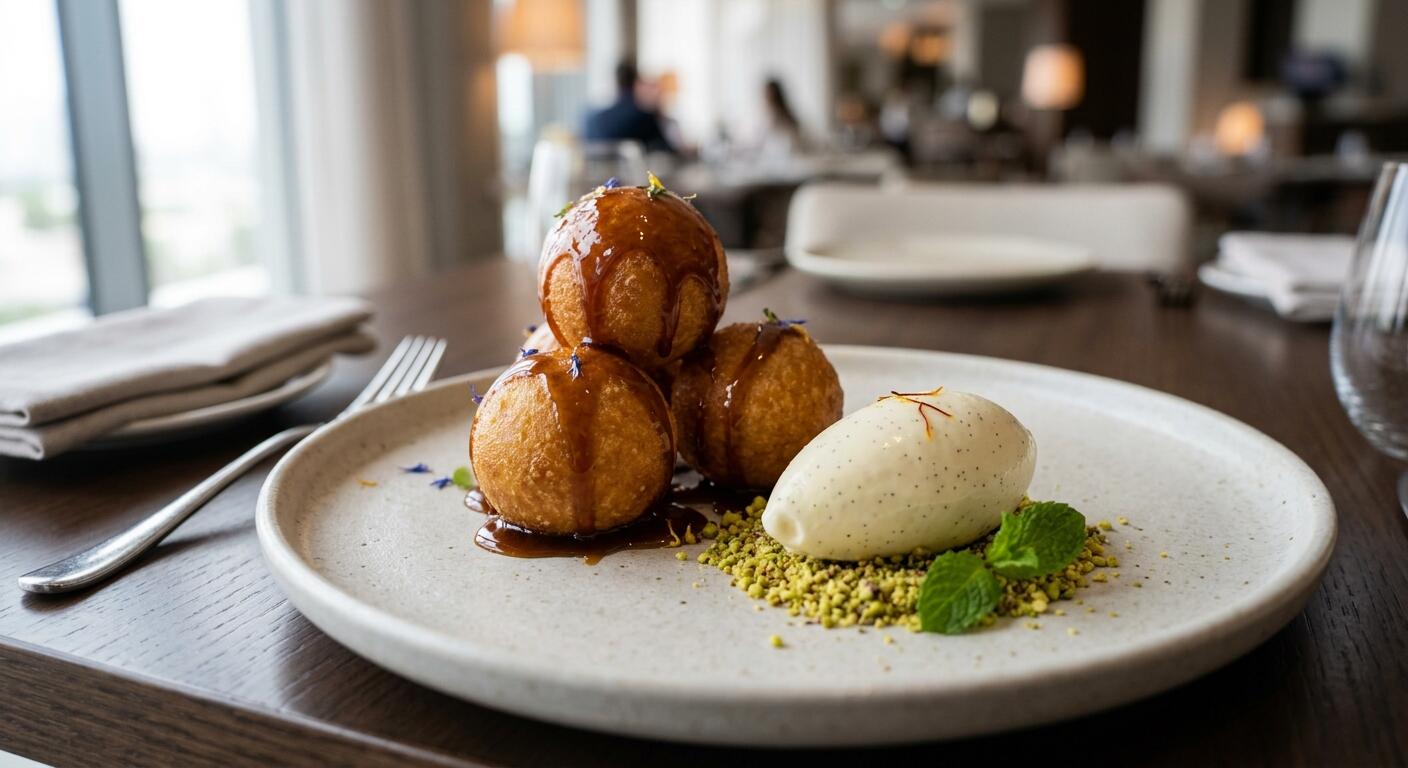
- Luqaimat: Golden, crispy deep-fried dough balls coated in sticky date syrup and sprinkled with sesame seeds.
- Date-Based Delicacies: Rich puddings, halwa, and baked goods highlighting local date varieties.
- Modern Garnishes and Plating: Pastry chefs reimagined these sweets with saffron gelato, cardamom foams, micro-herbs, and deconstructed tart structures.
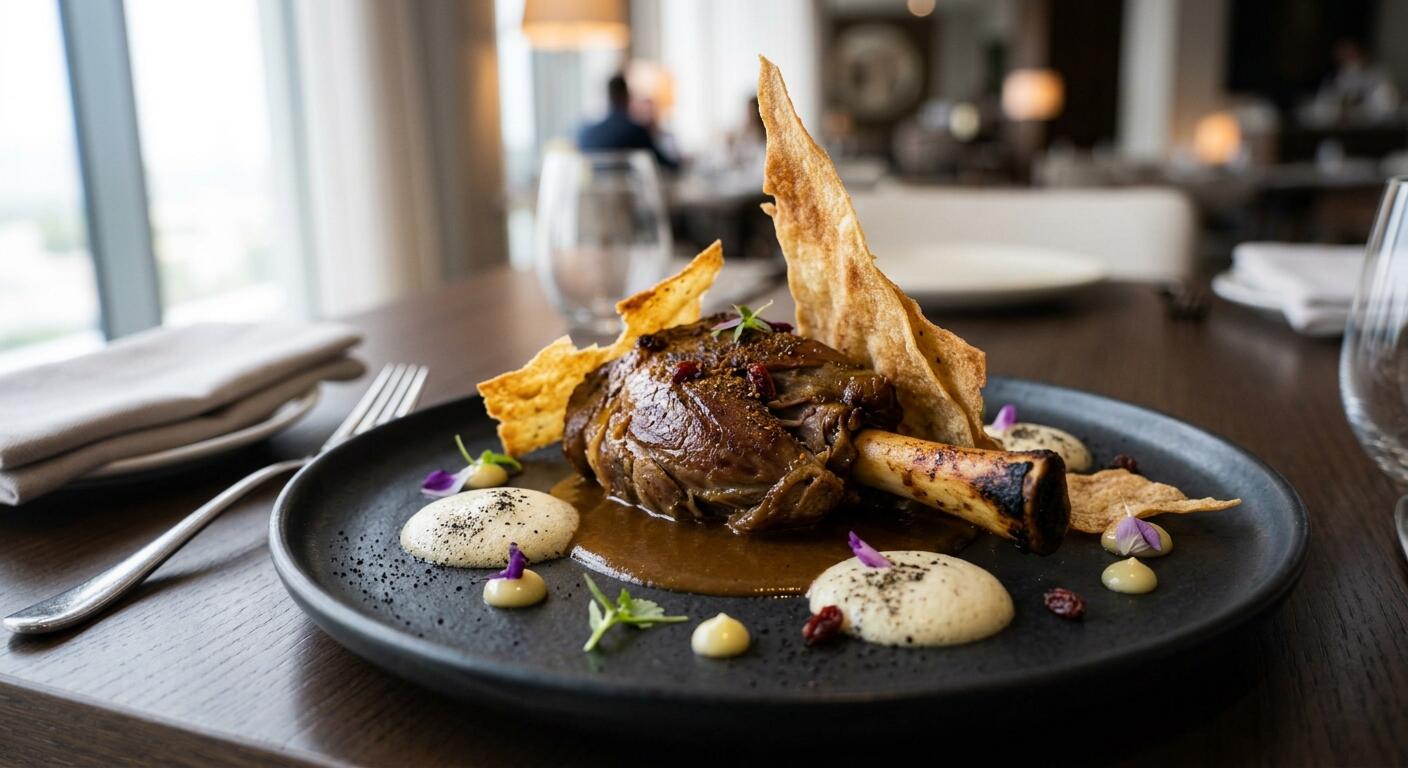
What Is a Contemporary Twist on Emirati Food?
A emirati food contemporary twist on emirati food is not about replacing traditional culinary heritage; it is about celebrating classic flavors through progressive culinary techniques.
The Main Ways Emirati Dishes Are Modernized
- Lighter Cooking Methods: Transitioning from long boiling or heavy oil frying to sous-vide precision, steam baking, and charcoal searing.
- Tasting-Menu Portions: Shifting from massive communal sharing platters to multi-course tasting menus designed for individual sensory exploration.
- Elevated Presentation & Plating: Replacing rustic, single-pot arrangements with artful architectural plating, sauces drawn with precision, and vibrant edible garnishes.
- Premium Local Sourcing: Incorporating high-grade local ingredients, organic UAE farm vegetables, and artisanal camels' milk butter.
- Global Culinary Techniques: Integrating French sauce reductions, Japanese raw-curing techniques, and modern gastronomy methods like foams, gels, and spherical emulsions.
What Remains Traditional
- Signature Spices: Uncompromised use of bezar, cardamom, saffron, and dried black lime.
- Core Ingredients: Heavy reliance on dates, local seafood, lamb, and rice.
- Culture of Hospitality: Warm service, welcoming tea/coffee rituals, and storytelling.
- Dish Identity: Respecting original naming and heritage roots.
What Changes in Modern Versions
- Texture Refinement: Converting heavy porridge textures into smooth emulsions or crispy bite-sized items.
- Flavor Balance: Reducing grease and salt to allow delicate spices to highlight primary proteins.
- Visual Styling: Individual fine-dining plating designed for modern aesthetics.
- Cross-Cultural Techniques: Incorporating sous-vide, foaming, and pastry molding techniques.
Examples of Contemporary Emirati Dishes and Plating Ideas
To see how these concepts translate onto the plate, let us look at real-world examples of modern innovation in UAE dining rooms. Even the Emirati breakfast table is getting a modern update, with dishes like balaleet and chebab appearing in new forms.
Modern Takes on Classic Mains
- Deconstructed Machboos: 48-hour sous-vide lamb shoulder with a cylinder of saffron basmati rice and black-lime lamb jus.
- Smoked Confit Lamb Thareed: Tender lamb confit served with crispy regag bread and vegetable broth poured tableside.
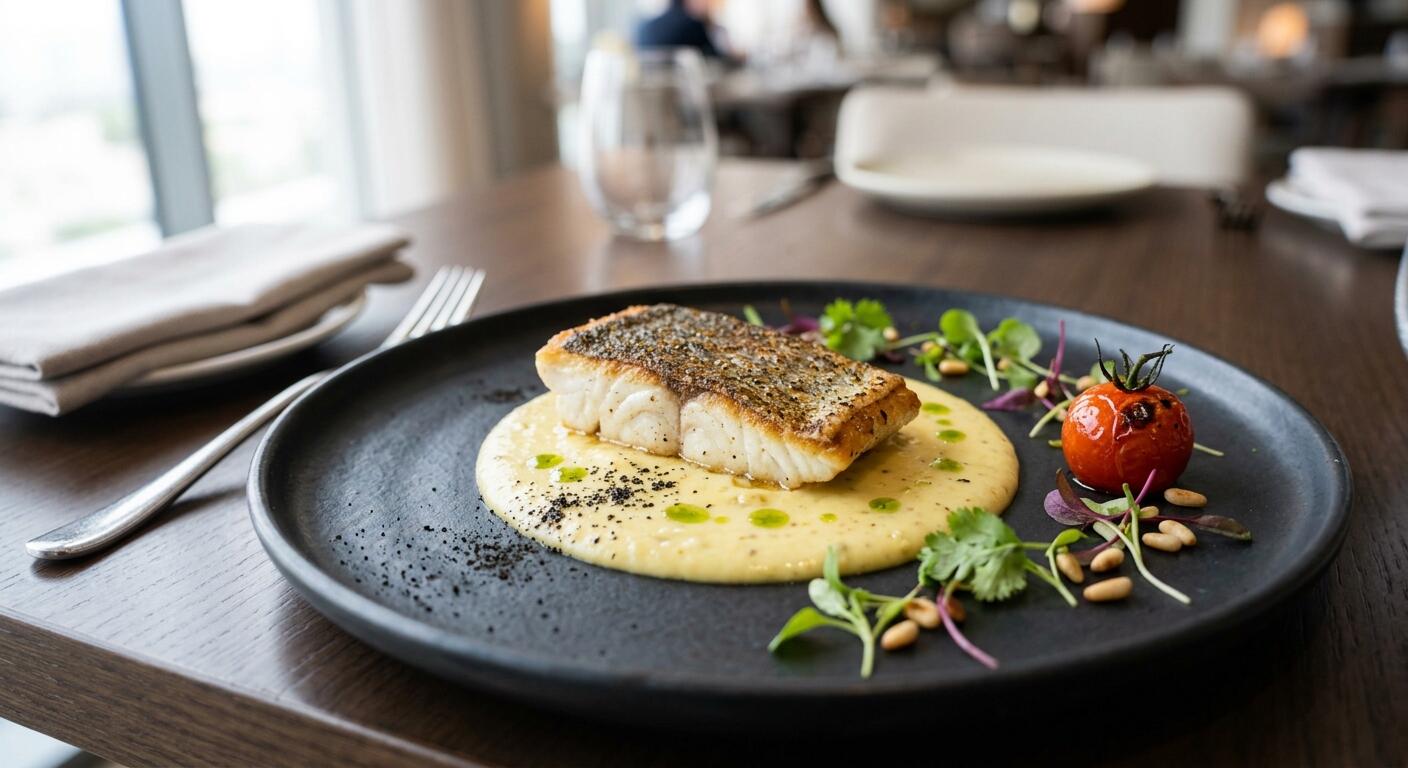
- Seafood with Saffron Emulsion: Pan-seared Kenaad fish over turmeric pearl barley, finished with a saffron-cardamom air foam.
Modernized Snacks and Street-Food Style Bites
- Mini Luqaimat Canapés: Bite-sized spheres filled with date custard, glazed in date molasses, and topped with gold leaf.
- Savory Chebab Tacos: Saffron pancake tacos packed with pulled spiced chicken, pickled onions, and garlic tahini.
Desserts with a Modern Finish
- Date & Cardamom Tart: Crisp pastry shell with roasted date crémeux, smoked cardamom ice cream, and candied walnuts.
- Deconstructed Balaleet: Saffron pastry cream layered with crispy caramelised vermicelli nests and mango-passionfruit gel.
Beverage Pairings
- Cold-Brewed Karak Tea: Cardamom-infused black tea with condensed milk, nitrogen-charged for a velvety foam head.
- Sparkling Date & Rose Mocktail: Organic date juice, rose distillate, fresh lime, and sparkling water over hand-cut ice.
Pre-1950s (Bedouin & Maritime Era)
Simple, hearth-cooked meals dependent on seasonal fish, dates, camel milk, and basic trade spices.
1970s–1990s (Cultural Preservation)
Home cooking dominates; classic arabic dishes remain intact as families preserve recipes passed down through generations.
2010s (Heritage Restaurant Movement)
Emergence of traditional venues (such as Al Fanar) dedicated to serving authentic communal platters in heritage settings.
2020s+ (Contemporary & Fine Dining Evolution)
Emirati chefs and international restaurants introduce modern plating, tasting menus, and fusion concepts to global acclaim.
Influences Behind Contemporary Emirati Cuisine
Modern Gulf gastronomy is shaped by maritime trade routes connecting East Africa, Persia, and South Asia. The influence of persian dishes and iranian dishes introduced dried lime (loomi) and floral aromatics, while South Asian trade brought foundational warm spices like cumin and cardamom echoing global rice traditions seen when exploring what is indian national food or the indian national food name. Unlike olive oil-heavy Levantine arabic dishes, Emirati cuisine centers on ghee, dates, dried citrus, and emirati food contemporary twist on emirati food. Today, Michelin recognition, global tourism, and younger generations drive chefs to combine heritage with modern techniques.
"Modernizing our national cuisine isn't about altering our heritage it is about telling our ancestors' story in a language that the modern culinary world understands."
— Chef Faisal Naser, Emirati Culinary Pioneer
How Emirati Food Differs from Other Traditional Cuisines
Food enthusiasts often draw comparisons across emerging global dining scenes. For instance, exploring traditional african food or specific regional staples like traditional south african food reveals shared cultural values: slow-cooked meats, communal eating, and an emphasis on grain bases (such as pap or samp).
However, while traditional south african food incorporates heavy braai grilling techniques, dutch-malay spice influences, and maize-based staples, Emirati food remains uniquely anchored by dried limes, saffron-infused rice, date syrup, and maritime seafood traditions. Similarly, broad traditions within traditional african food rely on cassava, plantains, and peanut stews, contrasting with the Gulf's focus on rice, cardamom, and trade-route aromatics.
Why These Comparisons Matter
- Global Context: Helps international readers locate Emirati flavors within the worldwide landscape of heritage cooking.
- Preserving Authenticity: Proves that contemporary Emirati cuisine is not an imitation of other traditions, but a distinct food culture with deep trade roots.
- Appreciating Complexity: Highlights how spice routes shaped Gulf cooking long before modern fine-dining trends emerged.
Where to Experience Contemporary Emirati Food
Whether you are a local resident or a visiting traveler, finding authentic modern takes requires knowing where to look.
Fine-Dining Restaurants
Look for chef-driven establishments in Dubai and Abu Dhabi that feature tasting menus. Leading venues often take inspiration from classic arabic dishes, presenting deconstructed Machboos or date-infused pastries in elegant, modern settings.
Heritage Restaurants and Cultural Spaces
For those who want to compare modern takes with traditional originals, cultural institutions such as the Sheikh Mohammed Centre for Cultural Understanding (SMCCU) in Dubai offer authentic traditional meals. Visiting heritage spots allows diners to appreciate the contrast when trying modern menu versions later.
Food Experiences and Festivals
Events such as the Dubai Food Festival and seasonal pop-ups across Abu Dhabi showcase innovative food trucks and local chefs experimenting with street-food adaptations like savory Chebab wraps and nitro Karak tea. Sweet stalls at these events also showcase modern Emirati desserts, from mini luqaimat to date-based chocolates
Which modern Emirati transformation would you try first?
How to Judge Whether a Contemporary Emirati Dish Is Successful
Not all fusion food succeeds. A well-executed modern twist requires technical skill and cultural respect.
Authenticity Markers
- Clear Heritage Reference: The dish should instantly evoke its original inspiration in flavor, even if the appearance is completely transformed.
- Respectful Naming: Keeping native dish names (Machboos, Luqaimat, Harees) honors cultural roots.
Culinary Quality Markers
- Spice Balance: Spices should be layered harmoniously rather than used as a harsh mask.
- Texture Contrast: Introducing crisp elements to traditionally soft dishes (like adding toasted grain chips to Harees) enhances sensory enjoyment.
Cultural Respect Markers
- Storytelling: Chefs or service staff explain the cultural significance of the dish.
- Avoiding Gimmicks: True innovation goes beyond adding edible gold flake—it refines flavor, cooking technique, and ingredient quality.
Summarise with AI:
Did you like this article? Leave a rating!

 Loading...