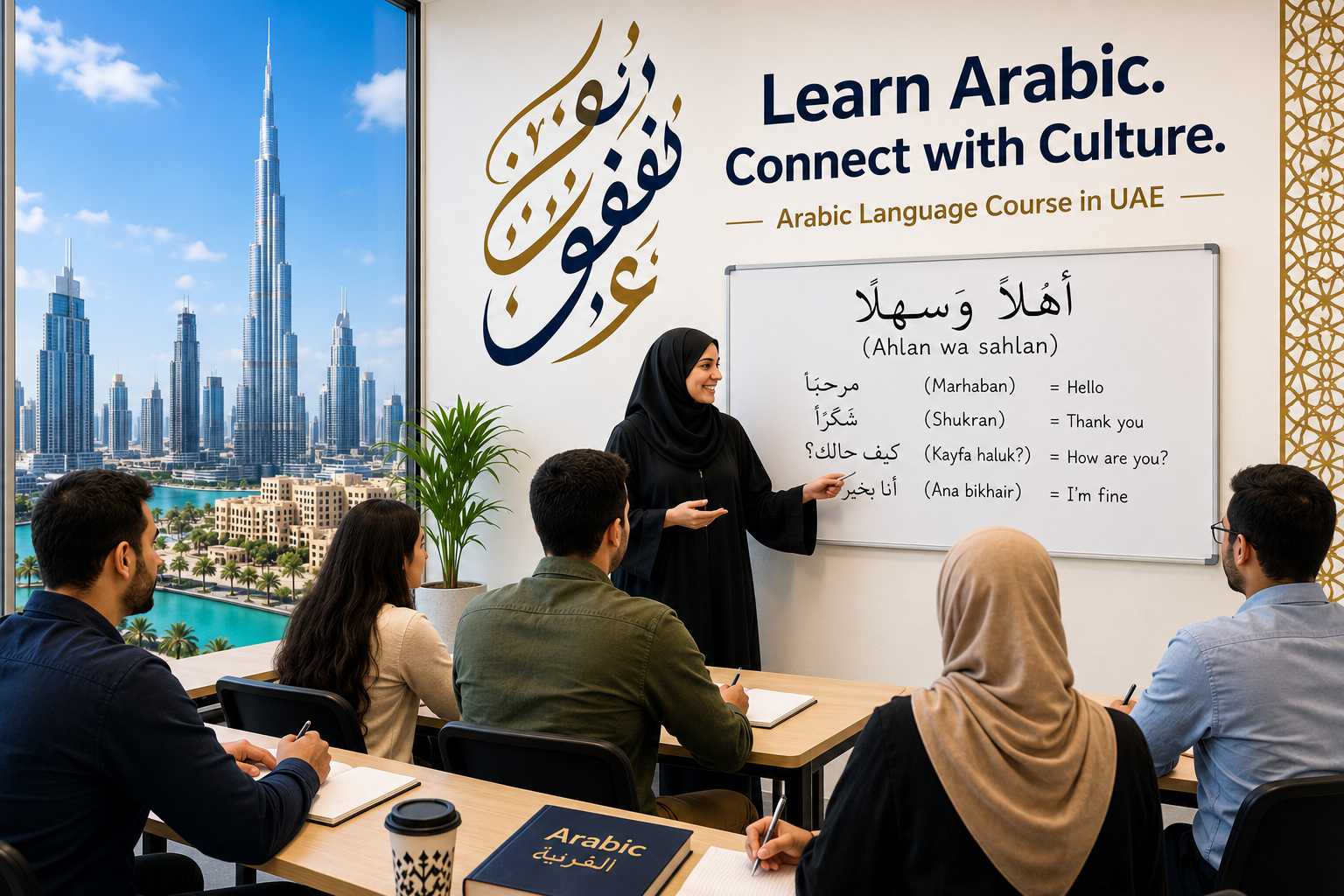

The United Arab Emirates is one of the world's most cosmopolitan nations a place where over 200 nationalities coexist, and dozens of languages echo through its cities daily. From the towering skyscrapers of Dubai to the historic souks of Abu Dhabi, the UAE's linguistic landscape is as diverse as its people. Yet amid this multilingual tapestry, one language serves as the cornerstone of national identity, governance, and culture.
The national language of UAE is Arabic. Modern Standard Arabic is used in all official government functions, legal proceedings, and national media, while Gulf Arabic serves as the everyday spoken dialect among Emirati citizens.


The Official Language of the UAE
Arabic holds the status of the sole official language of the UAE, enshrined in the country's constitution. This designation is not merely symbolic it governs how the state communicates with its citizens, how laws are written, and how the national identity is expressed. Visitors and newcomers often wonder what language is spoken in the UAE before they arrive the short answer is Arabic officially, but English practically everywhere. The roots of this decision trace back to the UAE's founding in 1971, when the federation's leaders chose Arabic as the linguistic pillar of the new nation a deliberate act of cultural unity binding seven emirates with one shared tongue. Today, that choice resonates in every courtroom, classroom, and official ceremony across the country
Modern Standard Arabic
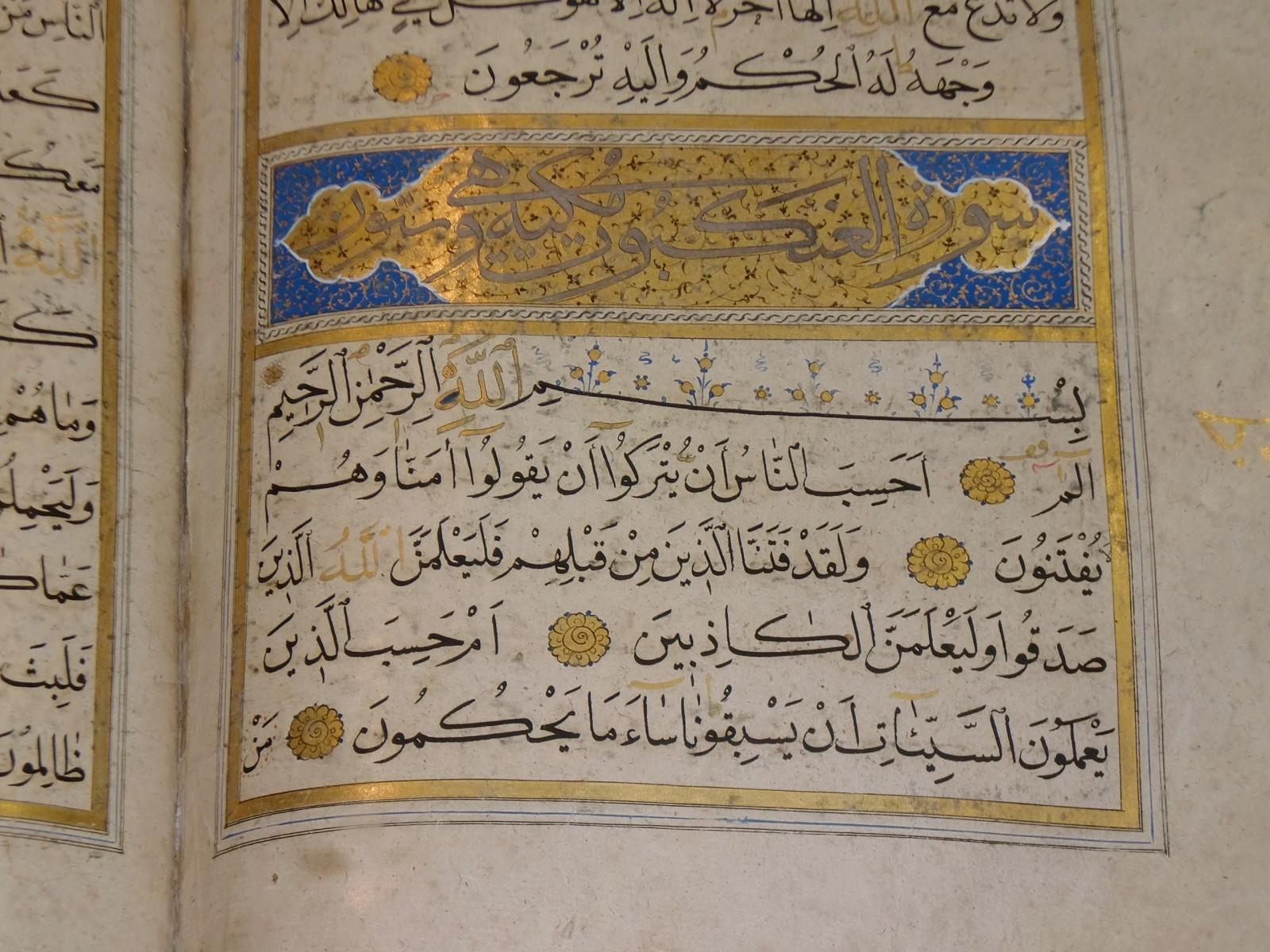
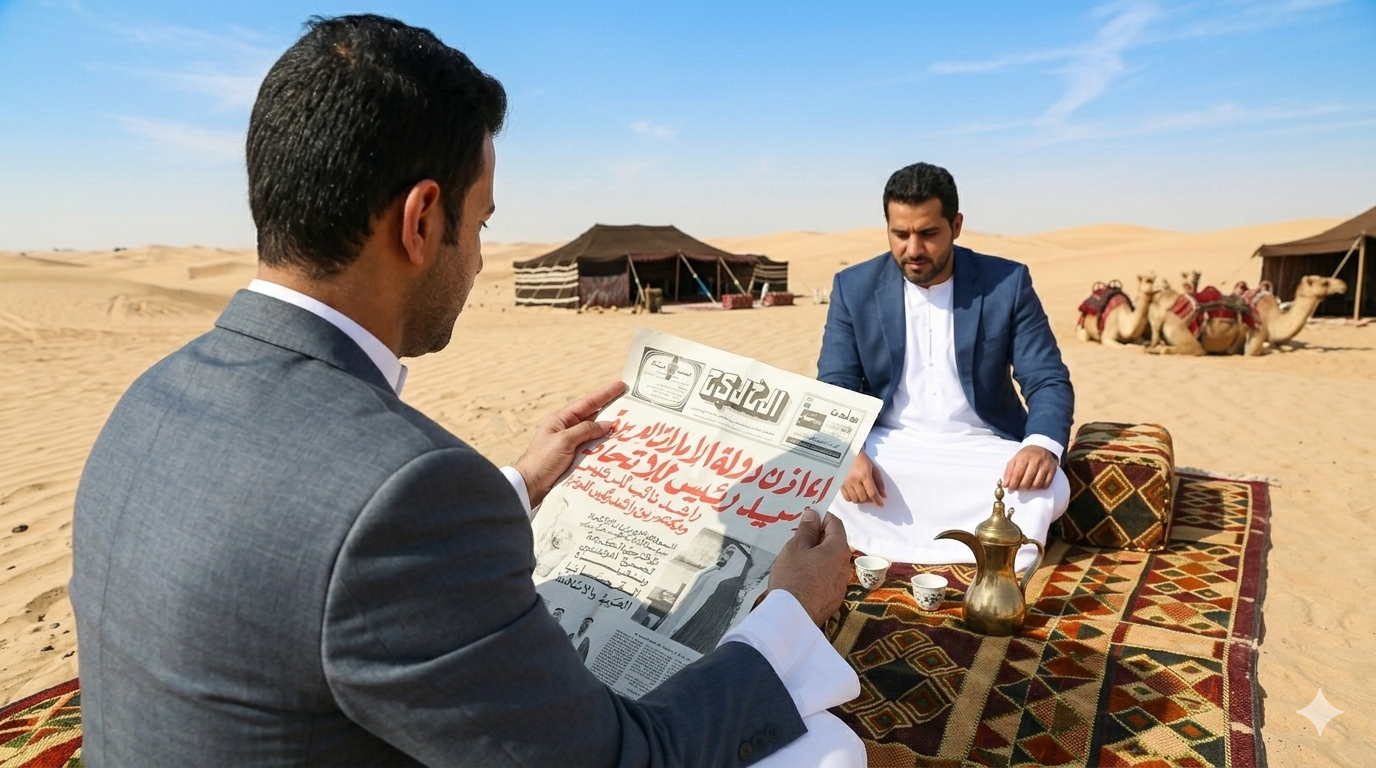
Modern Standard Arabic (MSA), known in Arabic as Al-Fusha, is the formal register used across the Arab world. In the UAE, MSA appears in all official government documents, parliamentary proceedings, court rulings, and national broadcasting. It is the medium of instruction for Arabic language classes in public schools and the language of major newspapers such as Al Ittihad and Al Bayan.
MSA creates a shared written standard across Arabic-speaking nations, allowing the UAE's official communications to be understood from Morocco to Oman. For foreigners learning Arabic to engage professionally in the UAE, MSA is typically the recommended starting point.
Gulf Arabic Dialect
While MSA rules the formal sphere, the streets, homes, and social gatherings of the UAE resonate with Gulf Arabic locally called Khaleeji. This dialect is the mother tongue of Emirati nationals and carries the warmth of everyday life: the greetings exchanged at a majlis, the conversations at a traditional market, the storytelling passed down through generations.
Gulf Arabic features distinct vocabulary, phonology, and expressions that differ meaningfully from other Arabic dialects such as Egyptian or Levantine Arabic. For expatriates building genuine relationships with Emirati colleagues and neighbors, picking up even basic Gulf Arabic phrases goes a long way.
Languages Spoken in the UAE
While Arabic is the national language of UAE, the country's expatriate population which makes up roughly 89% of residents has shaped a remarkably multilingual environment. Knowing how many languages are spoken in UAE reveals just how unique this nation is: estimates suggest over 50 languages are regularly spoken across the country.
| Language | Primary Use |
|---|---|
| Arabic | Official, government, education |
| English | Business, tourism, expatriate communication |
| Hindi/Urdu | South Asian expat community |
| Tagalog | Filipino community |
| Persian (Farsi) | Iranian community |
English
Those asking what language is spoken in the UAE in a business context will almost always land on English it functions as the country's de facto lingua franca in meetings, hospital consultations, hotel lobbies, and international schools. The UAE's ambition as a global trade and tourism hub has made English fluency a practical necessity for most professionals. The language spoken in UAE's private sector is overwhelmingly English multinational corporations, financial institutions, and tech companies largely operate in it, and many Dubai and Abu Dhabi residents live their entire working lives here without needing Arabic beyond the basics, though learning it is always appreciated.
Other Common Languages
The sheer scale of the UAE's South Asian workforce has made Hindi and Urdu among the most commonly heard languages in the UAE, particularly in construction, retail, and hospitality. Tagalog is widely spoken within the large Filipino community, which plays a significant role in healthcare, domestic work, and service industries. Persian (Farsi) is common among the sizable Iranian expat community, especially in Dubai's business districts. Malayalam, Bengali, and Tamil also have substantial speaker communities. This diversity is precisely what makes the question of how many languages are spoken in UAE so fascinating the answer is constantly evolving.
Multilingualism in the UAE
Few nations on earth manage cultural multiplicity the way the UAE does. The coexistence of Arabic, English, and dozens of other languages in daily life is not a challenge to be solved it is a feature of the UAE's identity, deliberately cultivated as part of its vision as an open, global nation.
Cultural Diversity
Walk through the Global Village in Dubai — an annual cultural festival that hosts pavilions from 90+ countries and you will hear Arabic, English, Hindi, Russian, Tagalog, and French within the space of a few minutes. This linguistic diversity mirrors the UAE's broader social philosophy: unity through openness. The national language of UAE anchors the nation's identity while the surrounding multilingualism fuels its economy and cultural vibrancy.
The UAE's strength lies not in speaking one language, but in understanding many.
A reflection of the country's multicultural governance philosophy
Language in Education and Media
UAE public schools follow an Arabic-medium curriculum for core subjects, with English taught as a compulsory second language from an early age. The Mohammed bin Rashid Al Maktoum initiative has in recent years pushed for stronger English integration in STEM subjects, recognizing global competitiveness as a priority. Private and international schools typically operate entirely in English, French, German, or other languages depending on their curriculum.
In media, the UAE caters to its multilingual audience comprehensively. Arabic channels like Abu Dhabi TV serve Emirati and Arab audiences; English outlets like The National and Dubai Eye radio serve expats; Hindi and Urdu channels serve South Asian communities. This is the language spoken in UAE media not one, but many, working in parallel.
Preservation and Promotion of Arabic
Despite or perhaps because of the UAE's embrace of multilingualism, the government has made Arabic preservation a top national priority. As English increasingly dominates professional and social spaces, protecting the national language of UAE has become both a cultural and political imperative.
This tension is not unique to the UAE nations worldwide grapple with balancing global languages against mother tongues. But what sets the UAE apart is the speed of the challenge: in just five decades, the country transformed from a small Gulf federation into a global metropolis, compressing into years what other nations experienced over generations. Preserving Arabic here is not nostalgia it is nation-building in real time.
Government Initiatives
The UAE government has launched several high-profile efforts to revitalize Arabic. The Arabic Language Charter, signed by UAE leaders, commits to promoting the use of Arabic in government, business, and education. The annual Arabic Language Day celebrated on December 18th includes poetry competitions, literary festivals, and school programs across the country.
The Year of Zayed and subsequent national campaigns have consistently highlighted Arabic as a pillar of Emirati heritage. The government mandates that all official signage, commercial communications, and government websites must include Arabic. Sheikh Mohammed bin Rashid Al Maktoum himself has been a vocal champion of Arabic literature, sponsoring prizes worth millions of dollars for Arabic poetry and writing.
2008
Arabic Language Charter established
2012
Arabic Language Day declared (Dec 18)
2016
Federal decree mandating Arabic in government communications
2021
"50 Years of Arabic" campaign launched for UAE Golden Jubilee
Challenges and Future Outlook
The dominance of English in the UAE's private sector poses a genuine challenge to Arabic's everyday vitality. Many young Emiratis educated partly or entirely in English-medium schools find themselves more comfortable writing professional emails in English than in Arabic. In mixed social settings where Arabic and non-Arabic speakers mingle, English naturally takes over as the common ground.
Globalization, digital culture, and the continued influx of non-Arabic-speaking expatriates intensify this dynamic. Social media, dominated by English content, pulls younger generations further from formal Arabic literacy. Yet the UAE's resolve appears firm: recent years have seen stricter enforcement of Arabic requirements in government jobs and renewed investment in Arabic-language digital content. The future of the united arab emirates national language is one of determined coexistence Arabic as identity and anchor, English as the tool of global ambition, and dozens of other tongues enriching the nation's human fabric.
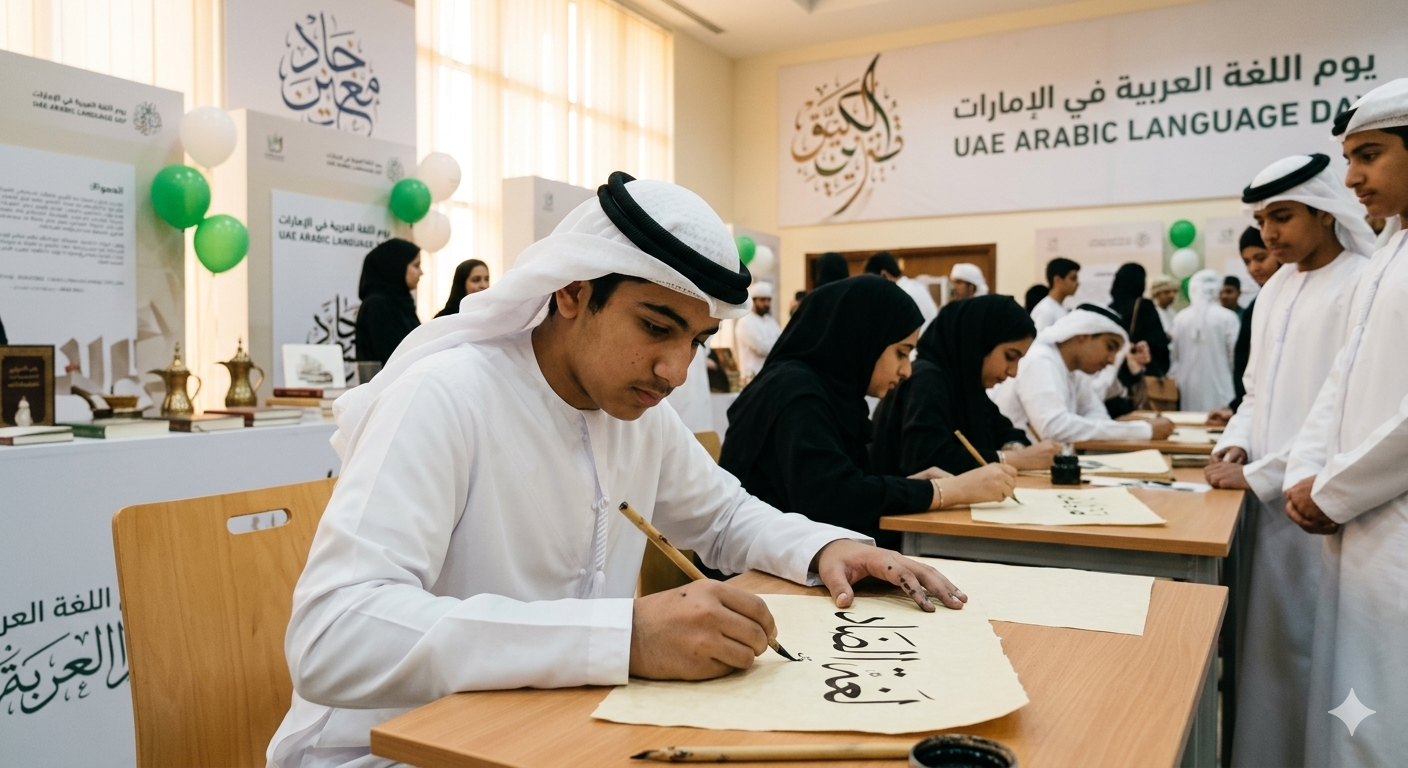
Arabic is far more than the official administrative language of the UAE it is the living thread connecting Emiratis to their history, faith, poetry, and identity. From the eloquence of Modern Standard Arabic in the halls of government to the warmth of Khaleeji dialect in everyday life, Arabic shapes what it means to be Emirati. At the same time, the UAE's extraordinary openness to other languages English, Hindi, Tagalog, Farsi, and dozens more reflects a nation confident enough in its own identity to welcome the world. The national language of UAE stands not as a wall, but as a foundation.
Which Arabic would you learn first if you moved to the UAE?
Summarise with AI:
Did you like this article? Leave a rating!

 Loading...