
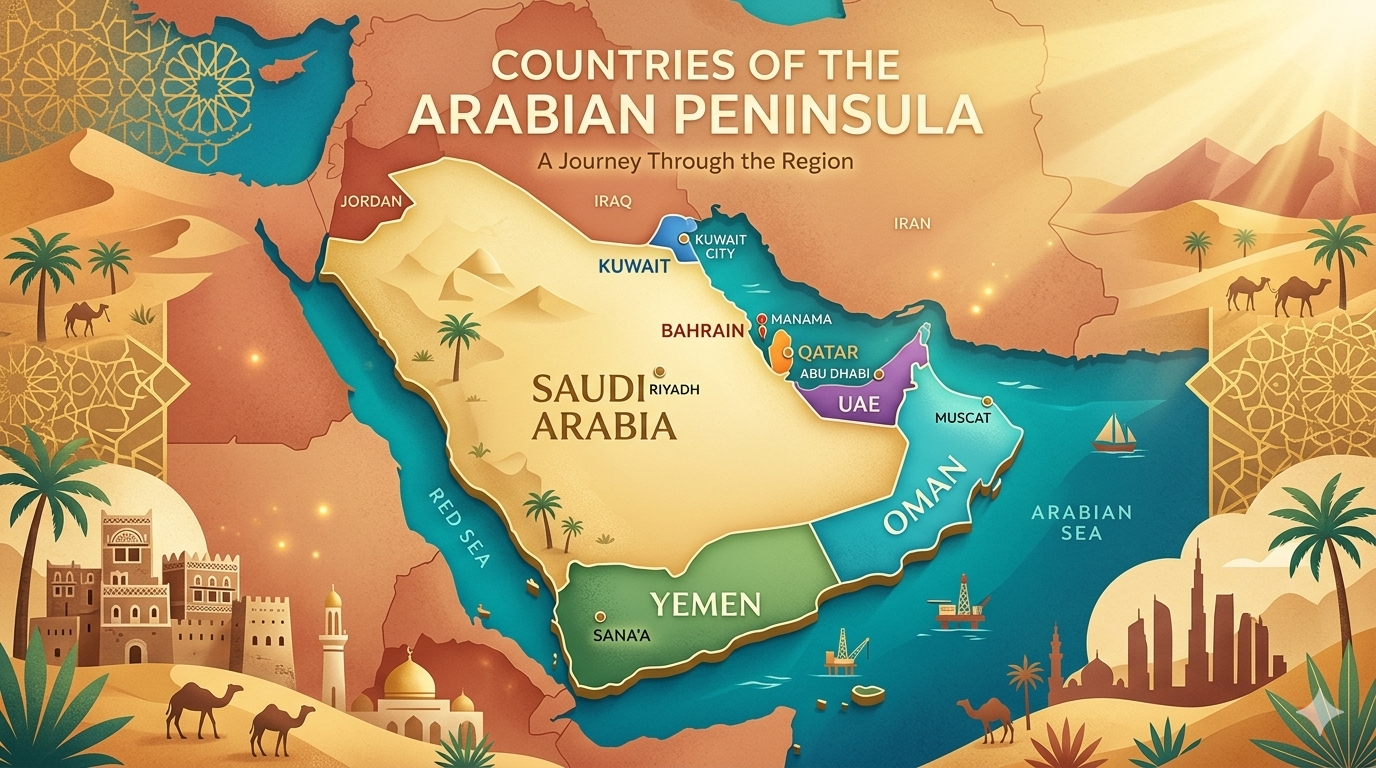

The Arabian Peninsula is home to seven countries: Saudi Arabia, Yemen, Oman, United Arab Emirates (UAE), Kuwait, Qatar, and Bahrain. Together, these Arabian Peninsula countries cover roughly 3.2 million km² and are home to over 86 million people.
Few regions on Earth pack as much history, geography, and global influence into one landmass as the Arabian Peninsula. Stretching across the southwestern corner of Asia, this vast peninsula has shaped civilization, commerce, and culture for thousands of years and today it sits at the heart of the world's energy economy. Whether you're a student, a traveler, or simply curious, understanding what countries are in the Arabian Peninsula gives you a foundational lens for grasping some of the most important dynamics in modern geopolitics.
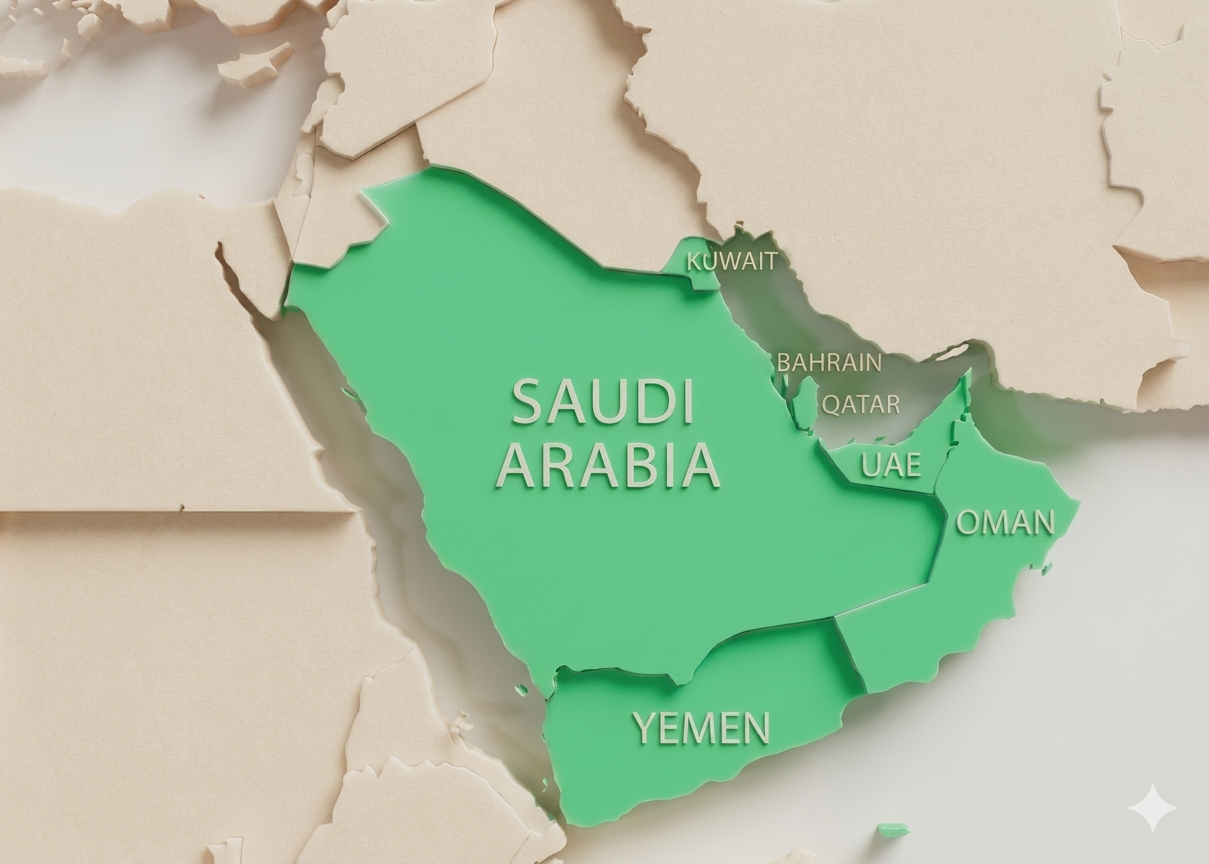


Overview of the Arabian Peninsula
The Arabian Peninsula juts southward from the Middle East, bordered by three major bodies of water: the Red Sea to the west, the Arabian Sea to the south, and the Persian Gulf to the northeast — forming what geographers recognize as the world's largest peninsula. In the northwest, the narrow Bab el-Mandeb Strait separates the peninsula from the Horn of Africa making it one of the most strategically critical waterways in the world. On land, the peninsula connects to the rest of Asia through modern-day Iraq, Jordan, and Syria in the north.
The terrain varies dramatically: from the endless sand dunes of the Rub' al Khali the world's largest continuous sand desert to the green mountains of southern Yemen and the dramatic fjords of Oman's Musandam peninsula. Coastal plains, salt flats, and gravel plateaus complete the picture of a geographically diverse region.
The Arabian Peninsula is the birthplace of Islam, the world's second-largest religion, which emerged in the 7th century CE in the Hejaz region of modern-day Saudi Arabia. Long before that, the peninsula lay at the crossroads of ancient trade routes connecting the Mediterranean world to India, East Africa, and China the legendary Incense Route carried frankincense and myrrh from Yemen's valleys to Roman markets one chapter in a rich and layered history that shaped the ancient world. These deep historical roots give Arabian Peninsula countries a cultural weight that extends far beyond their borders.
Arabia is not a peninsula of sand it is a peninsula of stories, stretching from the first caravan routes to the latest oil pipeline.
Regional historians on the enduring significance of the Arabian world
Countries of the Arabian Peninsula
So, what countries are in the Arabian Peninsula, and what makes each one unique? Below is a country-by-country breakdown covering geography, government, and culture.
📊 Key Statistics: Arabian Peninsula at a Glance
Saudi Arabia
Capital: Riyadh
Government: Absolute Monarchy
Population: ~35 million
As the largest country in the Arabian Peninsula, Saudi Arabia dominates the region both physically and politically. It occupies approximately 80% of the entire peninsula's landmass around 2.15 million km² making size comparisons with its neighbors almost incomprehensible. The terrain is defined by the Rub' al Khali (Empty Quarter) in the south, the Hejaz mountain range along the Red Sea coast, and vast gravel plains in the interior. The terrain is defined by the Rub' al Khali (Empty Quarter) in the south, the Hejaz mountain range along the Red Sea coast, and vast gravel plains in the interior.
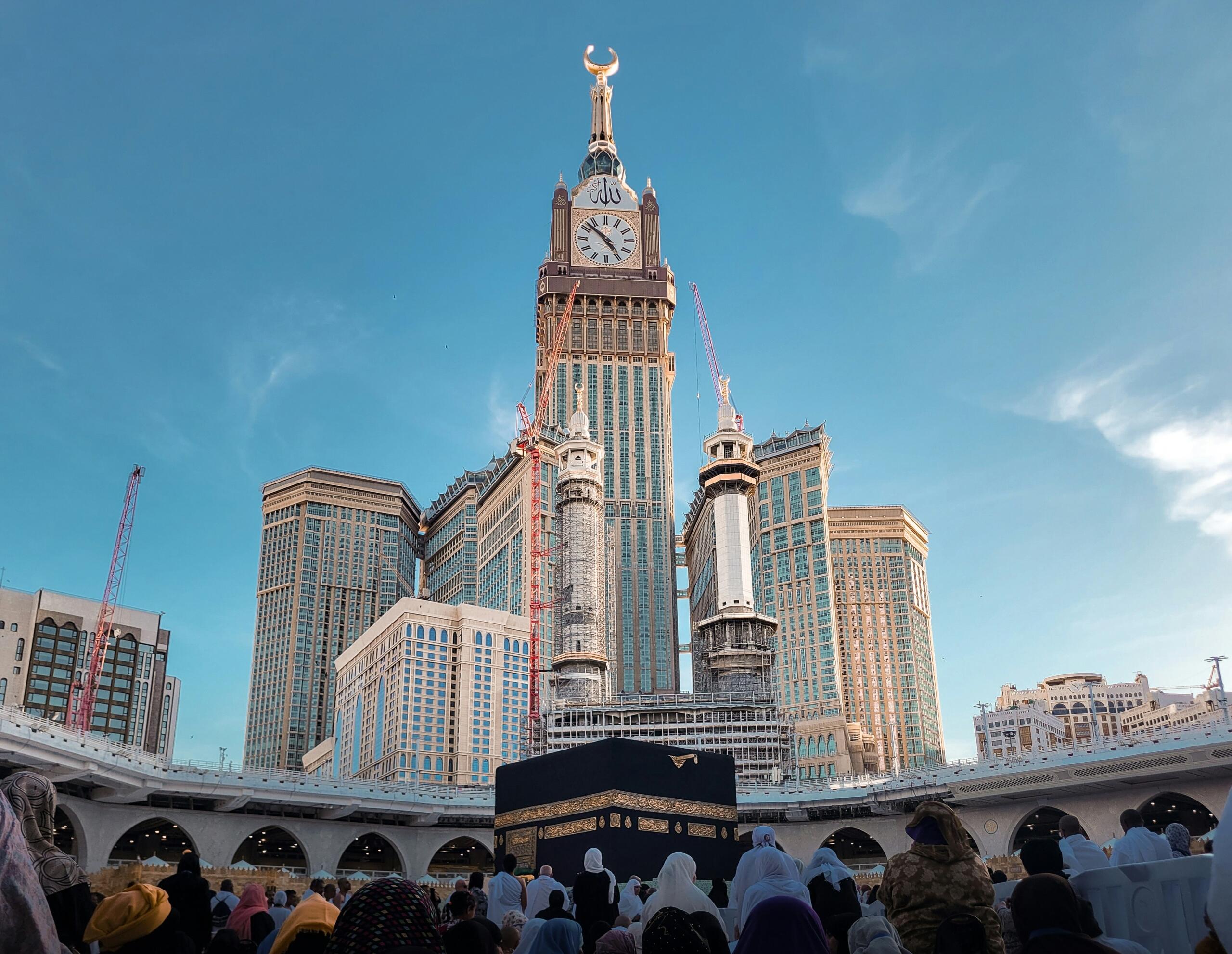
Saudi Arabia is the guardian of Islam's two holiest cities Mecca and Medina drawing millions of pilgrims each year for the Hajj and Umrah. Under Vision 2030, the Kingdom is aggressively diversifying its economy beyond oil, investing in tourism, entertainment, and technology.
Yemen
Capital: Sana'a
Government: Republic
Population: ~33 million
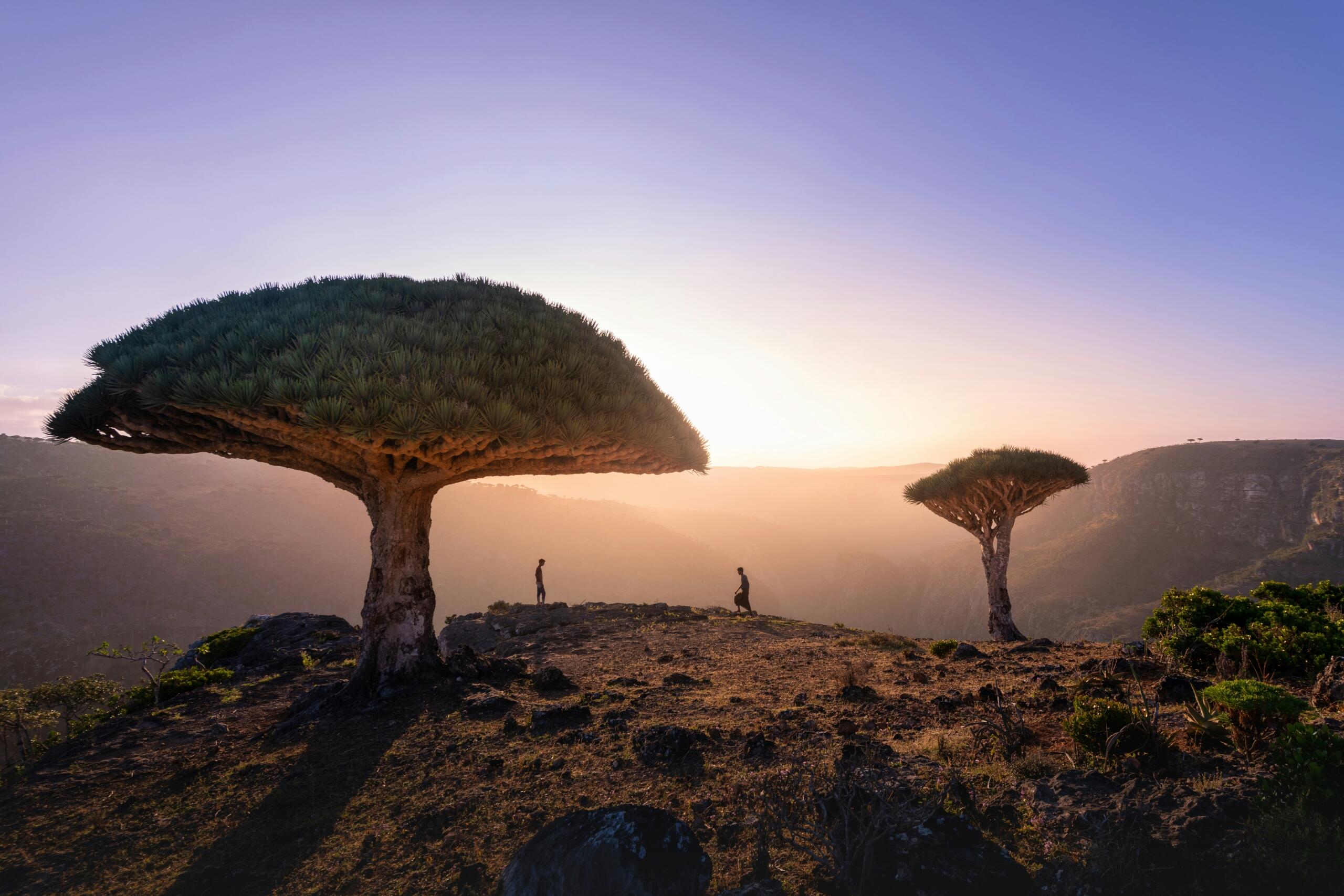
Yemen holds deep historical significance as the seat of the ancient Sabaean and Himyarite kingdoms. Today, the country is navigating a complex humanitarian crisis stemming from a civil conflict that began in 2015, making it one of the most challenging situations in the contemporary Arab world.
United Arab Emirates (UAE)
Capital: Abu Dhabi
Government: Federal Constitutional Monarchy
Population: ~10 million
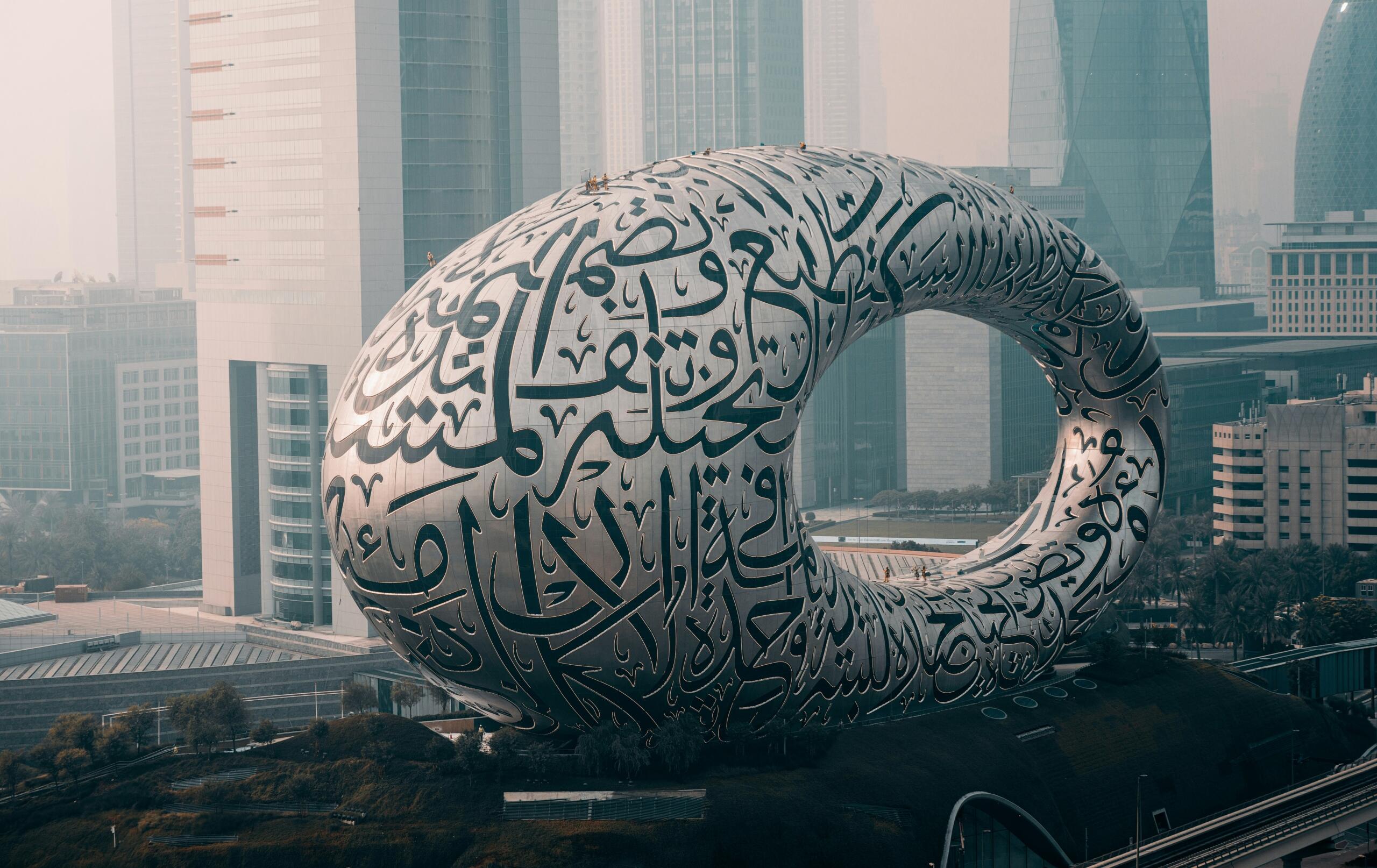
The UAE, a federation of seven emirates including Abu Dhabi (the capital) and Dubai, sits along the Persian Gulf coast in the northeastern part of the peninsula. Its landscape ranges from coastal salt flats and mangroves to the rolling dunes of the Liwa Desert. Though small in area (~83,600 km²), the UAE punches far above its weight economically and culturally.
Oman
Capital: Muscat
Government: Absolute Monarchy (Sultanate)
Population: ~4.5 million
Oman occupies the southeastern corner of the peninsula, with a long coastline stretching along both the Arabian Sea and the Gulf of Oman. The Hajar Mountains dominate the north, while the Dhofar region in the south receives monsoon rains giving it a lush, green character unlike anywhere else in the Arabian Peninsula — a striking example of the region's surprisingly diverse climate. The exclave of Musandam, separated from the main country by UAE territory, controls the southern shore of the critical Strait of Hormuz.
Oman is celebrated for its political stability, tolerant culture, and well-preserved heritage. The country has long maintained diplomatic neutrality, often serving as a quiet mediator in regional disputes.
Kuwait
Capital: Kuwait City
Government: Constitutional Emirate
Population: ~4.5 million
Kuwait occupies the northwestern corner of the Arabian Peninsula, bordering Iraq to the north and west, Saudi Arabia to the south, and the Persian Gulf to the east. Despite its small size (~17,818 km²), Kuwait holds some of the world's largest proven oil reserves estimated at around 6% of global supply giving it immense economic leverage.
Kuwait has one of the most open political systems in the Gulf, with a functioning parliament and a history of democratic engagement. Its oil wealth has built a highly developed welfare state for its citizens.
Qatar
Capital: Doha
Government: Absolute Monarchy
Population: ~2.9 million
Qatar is a small peninsula that juts northward into the Persian Gulf from the Saudi Arabian mainland. Covering just ~11,571 km², it is one of the smallest Arabian Peninsula countries by area yet it boasts one of the highest per capita GDPs in the world, powered by enormous natural gas reserves (it shares the world's largest natural gas field with Iran).
Doha has emerged as a major global city, hosting the 2022 FIFA World Cup and housing Al Jazeera, one of the world's most-watched news networks. Qatar's diplomatic independence has sometimes put it at odds with its neighbors but has also elevated its international profile considerably.
Bahrain
Capital: Manama
Government: Constitutional Monarchy
Population: ~1.5 million
Bahrain is an archipelago of around 50 islands in the Persian Gulf, connected to Saudi Arabia by the King Fahd Causeway. At roughly 760 km², it is the smallest of all Arabian Peninsula countries and one of the smallest nations in the world. Despite its size, Bahrain was one of the first Gulf states to discover oil (in 1932) and has since built a diversified economy centered on banking, finance, and tourism.
Bahrain's Pearl Monument and ancient Dilmun civilization ruins reflect a history stretching back over 4,000 years. The island nation serves as a regional financial hub and hosts the U.S. Fifth Fleet's headquarters.
Geopolitical Importance of the Arabian Peninsula
Economic Significance
The Arabian Peninsula sits atop roughly 48% of the world's proven oil reserves and a significant share of global natural gas. Saudi Arabia, Kuwait, UAE, and Qatar are all members of OPEC or OPEC+, meaning their production decisions send ripples through global energy markets and inflation figures worldwide. Cities like Dubai and Doha have leveraged oil revenues to build world-class infrastructure, transforming from small fishing villages into global metropolises a shift driven in large part by massive population influxes over just a few decades
Beyond hydrocarbons, the region is increasingly investing in renewable energy, logistics, and finance. Saudi Arabia's NEOM project, Qatar's financial district, and Abu Dhabi's Masdar City are all signs of a deliberate pivot toward a post-oil future.
Strategic Location
The peninsula's geographic position makes it one of the most strategically vital regions on Earth. The Strait of Hormuz at the mouth of the Persian Gulf, controlled in part by Oman is the transit point for roughly 20% of all global oil shipments. The Bab el-Mandeb Strait in the southwest is equally critical, linking the Red Sea to the Gulf of Aden and serving as the gateway for Suez Canal traffic. Any disruption to these chokepoints sends immediate shockwaves through global markets.
Cultural and Historical Insights
Despite political borders, the Arabian Peninsula countries share a remarkably cohesive cultural fabric. Arabic is the official language across all seven nations, and Islam is the state religion in each. Traditional Bedouin heritage with its emphasis on hospitality, honor, poetry, and tribal loyalty underpins social norms from the mountains of Yemen to the coastal cities of Bahrain. Camel culture, falconry, and traditional souks (markets) remain important symbols of collective identity even as skyscrapers rise around them.
7th Century CE
Birth of Islam in the Hejaz region (modern Saudi Arabia); rapid spread across the peninsula and beyond
8th–15th Century
Arabian ports serve as crucial nodes on Indian Ocean trade routes; dhow merchants connect Africa, India, and China
1913–1932
Modern borders take shape; Ibn Saud unifies much of the peninsula as Saudi Arabia; Bahrain discovers oil (1932)
1960
OPEC founded, with Saudi Arabia as a founding member; oil becomes the region's defining geopolitical asset
1971
UAE, Bahrain, and Qatar gain independence from British protection; Kuwait had gained independence in 1961
1981
Gulf Cooperation Council (GCC) founded, uniting Saudi Arabia, UAE, Kuwait, Qatar, Bahrain, and Oman
1990–1991
Iraq invades Kuwait; Gulf War reshapes regional security architecture permanently
2000s–Present
Massive urban development, Vision 2030 reforms, and post-oil economic diversification redefine the region
Summarise with AI:
Did you like this article? Leave a rating!

 Loading...