
The global energy landscape is a complex, fast-moving web of supply and demand, where a handful of nations wield massive economic and geopolitical influence. At the heart of this system is crude oil. Despite global efforts to transition toward sustainable power sources, liquid petroleum remains the primary driver of international transport, industrial manufacturing, and chemical production. Understanding which countries control the flow of this vital resource is essential to understanding modern global economics.
As of 2025, the United States holds the position of the world's largest oil exporter, with daily exports of approximately 10.67 million barrels. This milestone marks a significant historical shift in global energy leadership.
When analyzing the international energy sector, industry experts frequently rely on specialized hormuz energy services to track vessel movements, maritime choke points, and real-time shipping data. These services help market analysts make sense of the volatile shifts in supply lines, ensuring that businesses and governments can anticipate price fluctuations. As geopolitical alliances shift and production capacities evolve, tracking the biggest oil exporter in the world becomes a dynamic story of infrastructure development and strategic policy changes.


Top Oil Exporting Countries
To understand the current state of macroeconomics, we must look closely at the nations supplying the majority of the world's liquid fuel. While total production numbers are impressive, it is the export volume the amount of oil a country actually sells into the international market—that directly dictates global oil prices and supply security.
| Country | Approximate Daily Exports (Barrels) | Primary Regional Markets |
|---|---|---|
| United States | 10.67 Million | Europe, Asia-Pacific, America |
| Saudi Arabia | 6.00 Million | Asia, Europe, North America |
| Russia | 4.50 Million | China, India, Developing Nations |
| Canada | 3.60 Million | United States, Asia |
| United Arab Emirates | 2.70 Million | Japan, India, South Korea, Thailand |
United States
The United States has undergone an extraordinary energy transformation over the past two decades. Driven primarily by breakthroughs in hydraulic fracturing (fracking) and horizontal drilling across major shale basins like the Permian in Texas and New Mexico, the U.S. has broken historical production records.
With daily exports reaching approximately 10.67 million barrels, the U.S. comfortably claims its status as a leading powerhouse. Its key export destinations include major European industrial hubs looking to diversify their energy imports, as well as rapidly growing economies in the Asia-Pacific region. Recent trends show that American infrastructure has adapted quickly, with expanded marine terminals along the Gulf Coast capable of loading massive crude carriers efficiently.
Saudi Arabia
For decades, Saudi Arabia was universally recognized as the undisputed titan of petroleum trade. While domestic production strategies have shifted, the Kingdom remains a central force. Currently exporting approximately 6 million barrels daily, it stands tall as a massive contributor to global markets.
Saudi Arabia’s primary strength lies not just in its massive reserves, but in its unparalleled role within the Organization of the Petroleum Exporting Countries (OPEC). As the de facto leader of the cartel, Riyadh possesses the unique ability to increase or decrease production rapidly—a capability known as "spare capacity." This allows Saudi Arabia to heavily influence global pricing structures and maintain market stability during sudden international crises.
Russia
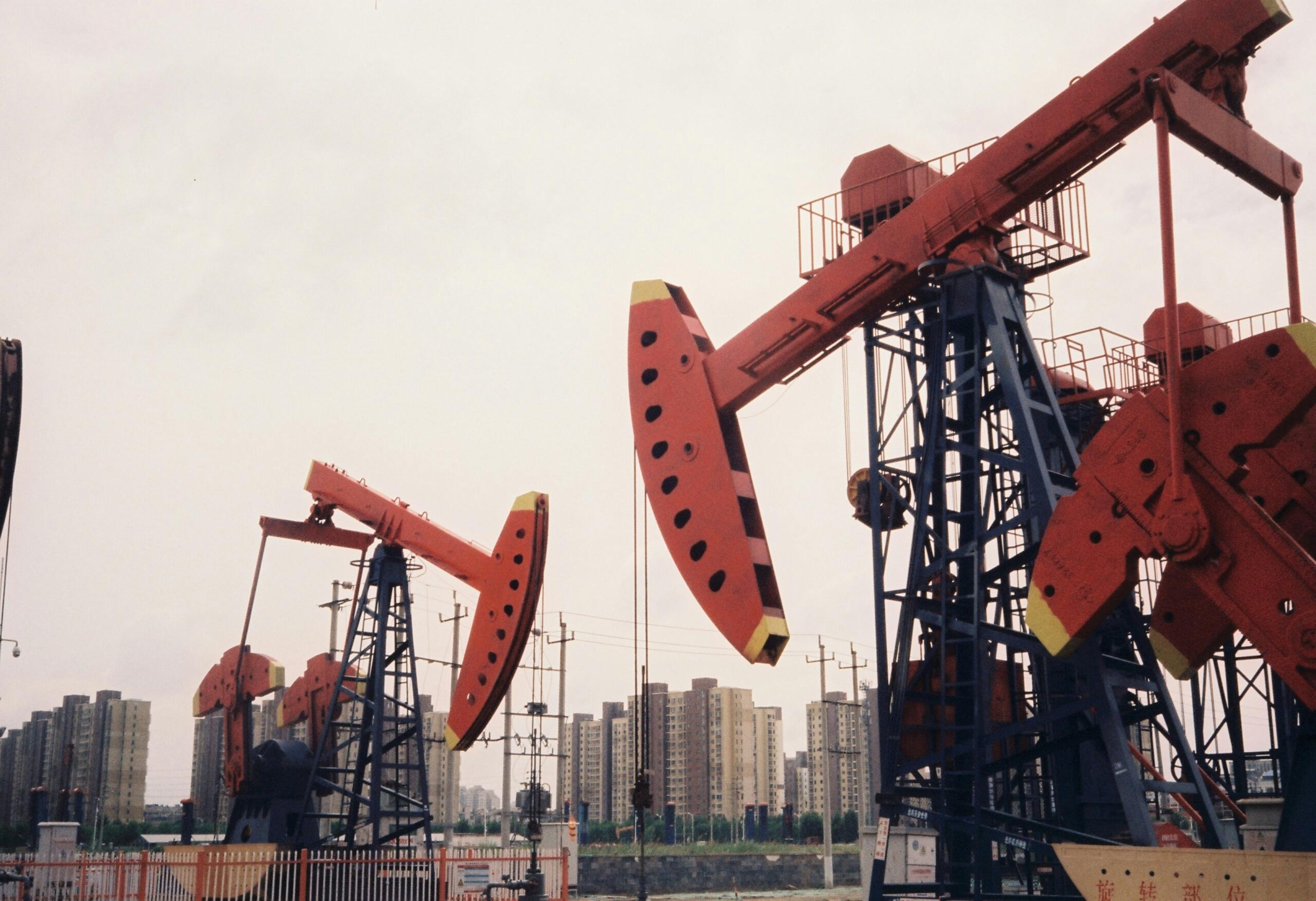
Despite facing severe and unprecedented economic sanctions, price caps, and trade restrictions over the last few years, Russia remains a dominant player on the global energy map. The country continues to export approximately 4.5 million barrels of crude oil and refined products every single day.
The impact of geopolitical factors on Russian export volumes has resulted in a massive redirection of its trade routes. Instead of sending the majority of its petroleum westward to European nations via traditional pipelines, Moscow has successfully pivoted its logistics toward Asian markets. Today, China and India have emerged as the primary buyers of Russian Urals crude, taking advantage of discounted prices while keeping global supply levels relatively stable despite geopolitical isolation.
Canada
Canada possesses some of the largest proven oil reserves on Earth, primarily trapped within the vast oil sands of Alberta. The country exports approximately 3.6 million barrels daily, making it a critical pillar of energy security in the Western Hemisphere.
Historically, Canada's primary export partner has been the United States, which relies heavily on Canadian heavy crude to feed complex refineries along the Midwest and Gulf Coast. However, Canada has long suffered from infrastructure bottlenecks. Recent pipeline expansion developments, such as the completion of the Trans Mountain Pipeline expansion project, have finally allowed Canadian producers to move higher volumes of crude to the Pacific coast, opening up direct shipping access to lucrative markets across Asia.
United Arab Emirates (UAE)
The United Arab Emirates is a dynamic and forward-thinking energy giant. Moving approximately 2.7 million barrels of crude oil to the international market every day, the UAE plays a pivotal role in keeping global industries moving.
The geopolitical landscape of Middle Eastern energy underwent a massive shift in April 2026, when the UAE officially announced its exit from OPEC, choosing to pursue an independent path for its domestic production targets
UAE,Minister of Energy: Suhail Al Mazrouei
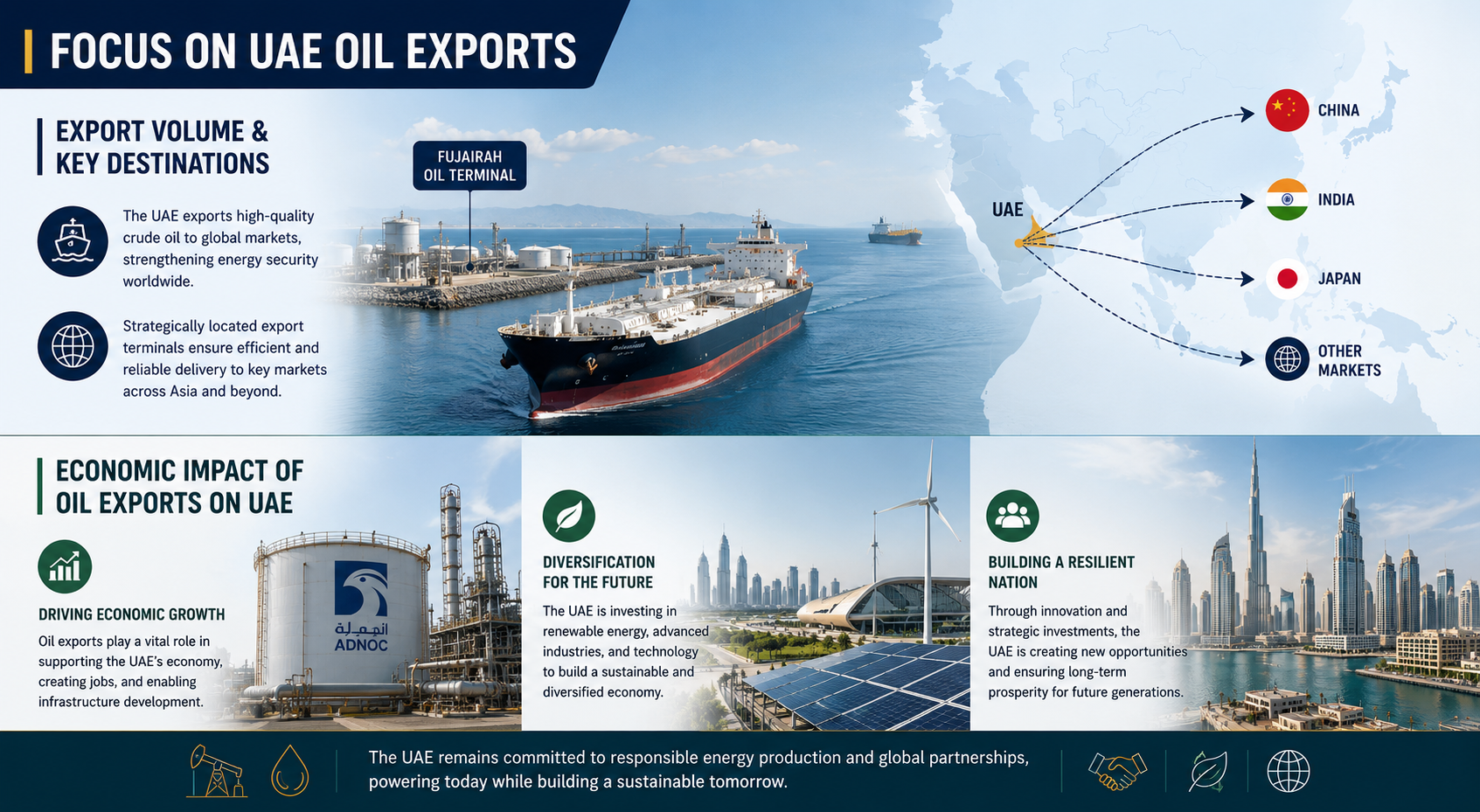
Focus on UAE Oil Exports
To truly grasp the dynamics of the Middle Eastern energy trade, we must look deeper into the specific logistics, numbers, and destination profiles that define the UAE's oil economy.
Export Volume and Key Destinations
When evaluating the Middle Eastern trade balance, analysts often look closely at UAE oil exports by country to determine regional dependencies. The UAE's daily export volume of 2.7 million barrels is backed by highly sophisticated logistics networks, modern deepwater ports, and advanced storage terminals located outside the immediate Persian Gulf, such as the port of Fujairah.
- Japan: Historically the largest single buyer of Emirati crude, relying on it to power its advanced industrial economy.
- India: A rapidly expanding demographic powerhouse that imports massive volumes of UAE oil to fuel its nationwide urban development.
- South Korea: Utilizes UAE crude for both domestic energy consumption and its massive petrochemical manufacturing sector.
- Thailand and Singapore: Major regional refining and transport hubs that consistently process Emirati energy products for wider redistribution.
Economic Impact of Oil Exports on UAE
The financial rewards generated by these vast shipments serve as the foundational bedrock of the UAE's modern economy. For decades, oil revenues have provided the necessary capital to build world-class cities like Dubai and Abu Dhabi, fund advanced education systems, and establish powerful sovereign wealth funds that invest globally.
However, the UAE government is highly aware that fossil fuel resources are finite. Therefore, the country is channeling its current oil profits into an aggressive economic diversification strategy. Through massive initiatives under the "We the UAE 2031" vision, the nation is expanding its footprint in global finance, artificial intelligence, tourism, and aerospace. Interestingly, the UAE is also investing heavily in clean energy alternatives, building some of the world's largest solar parks and operational nuclear facilities, proving that even a prominent oil exporter can prepare diligently for a post-hydrocarbon future.
Factors Influencing Global Oil Exports
The international petroleum market never stands still. It is continuously shaped and reshaped by an array of unpredictable external forces ranging from regional conflicts to technological breakthroughs—that directly impact critical choke points and global hormuz energy services daily.
Geopolitical Events
No factor can trigger immediate, dramatic spikes in oil prices quite like geopolitical instability. The Middle East remains a focal point for these anxieties due to its critical maritime trade routes.
Approximately one-fifth of the world's total oil consumption passes through this narrow passage. Any disruption or potential blockade here immediately impacts hormuz energy services, halts global shipping, and forces nations to scramble for alternative supplies.
A prime example of this vulnerability is the ongoing and historical tension between Iran and the United States. Whenever geopolitical friction escalates in the Persian Gulf, threats to close the Strait trigger immediate panic in international energy markets, highlighting how quickly local political standoffs can destabilize the supply chain of the biggest oil exporter in the world.
When supply routes are threatened, the global community realizes just how delicate the balance of energy security truly is. Countries that rely entirely on imports must maintain strategic petroleum reserves to survive sudden, unexpected supply shocks caused by localized conflicts.
Technological Advancements
Technology is the hidden engine that keeps the oil industry alive. Innovations in extraction methodologies have repeatedly turned depleted fields back into highly profitable assets. From deepwater offshore drilling platforms in the Gulf of Mexico to advanced seismic imaging techniques that pinpoint underground deposits with absolute precision, technology expands what is humanly possible to harvest.
Future Outlook for Oil Exporting Nations
As we peer into the future, the global energy map will likely look significantly different than it does today. New players are rising, while established powers are adopting entirely new strategic economic models.
Emerging Exporters
While the United States, Saudi Arabia, and Russia currently dominate the headlines, several emerging nations are rapidly scaling up their production capacities to challenge the status quo.
In South America, Guyana has become an international sensation after discovering massive offshore oil reserves, rapidly climbing the ranks of global exporters. Similarly, nations like Brazil are continuously expanding their deepwater pre-salt drilling operations, positioning themselves to capture a larger share of the global market. These new sources of supply provide vital alternatives for importing countries looking to reduce their reliance on traditional Middle Eastern or Russian sources.
Challenges and Opportunities
The coming years will present a delicate balancing act for the biggest oil exporter in the world. Market volatility remains a persistent threat, with prices susceptible to sudden crashes during economic downturns or unexpected spikes during political crises.
However, these challenges also birth significant opportunities. Energy companies that utilize advanced digital intelligence tools and integrate hormuz energy services into their operations can manage risks far better than their predecessors. The nations that survive and thrive in this changing landscape will be those that use their current oil wealth to innovate, reduce the carbon footprint of their extraction processes, and successfully transition into diversified, multi-energy powerhouses.
Summarise with AI:
Did you like this article? Leave a rating!

 Loading...